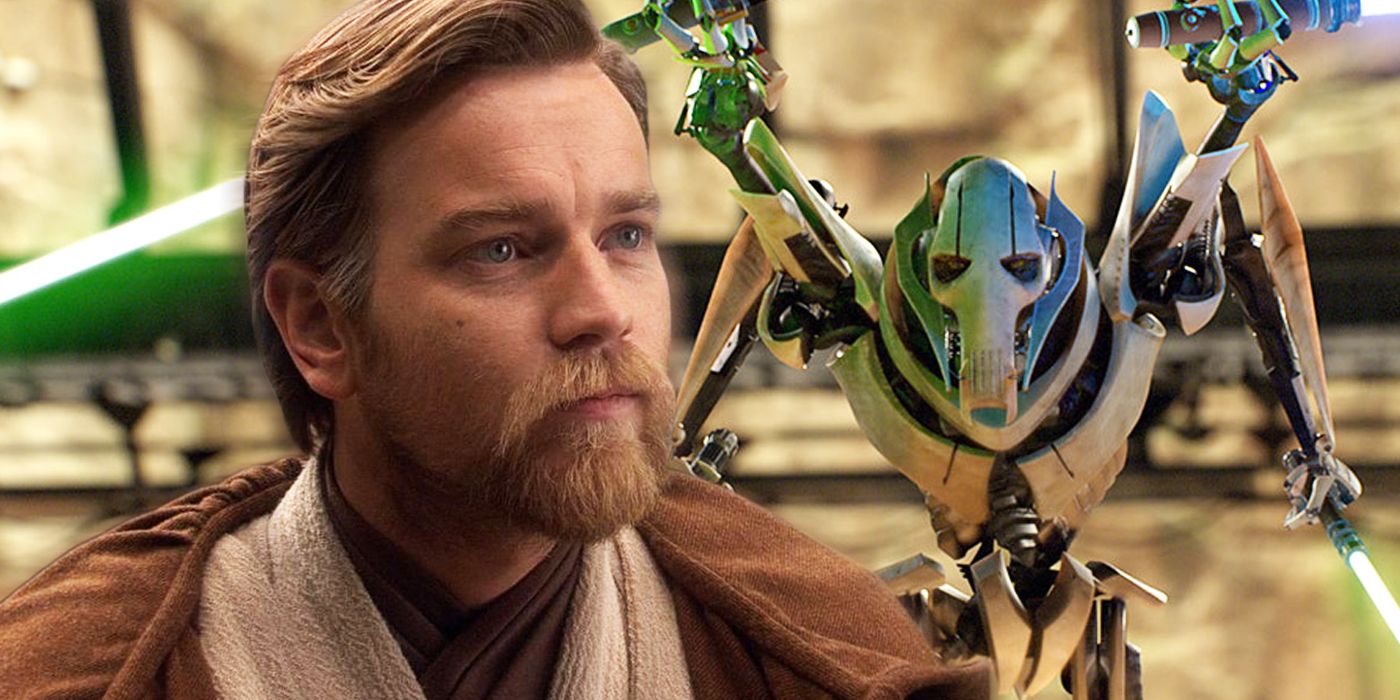
Star Wars‘ pool of villains is deep and terrifying, so much so that, in order to leave an impression, a given antagonist has to be truly memorable. This is especially true for non-Sith villains, who lack the flashy theatrics of Dark Force use to make an impression on viewers. General Grievous, in particular, forms a case study on delivering such villains the right way, standing out amid a crowded field in Star Wars: Episode III – Revenge of the Sith to become one of the most menacing figures of the Clone Wars era.
Yet, despite that, Obi-Wan Kenobi dispatched him with seemingly effortless ease. Some of that came about retroactively, as the one-off storytelling of Revenge of the Sith gave way to the prequel series Star Wars: The Clone Wars. But the mystery of how Obi-Wan — even at the height of his powers — took down a foe who had killed so many Jedi still remains.
Star Wars has a habit of killing off its villains, which springs both for in-universe reasons and narrative necessity. The Skywalker Saga boasted an embarrassment of riches in the antagonist department, and it all started when Grand Moff Tarkin died in the explosion of the Death Star and Darth Vader lived on. That presumably was to allow a satisfying climax for A New Hope in the expected event that the movie would spawn no sequels while keeping a spare bad guy in reserve in case it was a hit. It became more than a hit, of course, and the subsequent films followed a similar pattern. In order to share the screen with Vader, new villains needed to distinguish themselves, and yet, because they were less central to the story, they needed to be dispatched before they had a chance to steal the show.
That included such memorable villains as Boba Fett, Darth Maul, Count Dooku and even Emperor Palpatine himself, who initially only appeared briefly in Empire Strikes Back and Return of the Jedi. The tradition then extended into both the Sequel Trilogy and the two spinoff movies, which revealed the likes of Snoke, Phasma, Orson Krennic and Dryden Vos, only to kill them off with comparatively little fanfare. But as the franchise has expanded, many of these figures have returned — Fett and Maul, most notably — which makes their all-too-swift deaths stand out even more in retrospect.
And then there is Grievous, who made a huge splash with his first appearance in the non-canonical Star Wars: Clone Wars animated micro-series. The series originally aired in 2004, providing a build-up for Grievous’ big-screen introduction, and it was necessary because of the impact both Maul and Dooku had made in the previous prequel installments. However, once again, the pattern of offing the interesting bad guy continued. Though Grievous initially appeared as a serious threat, Kenobi still took him down with little problem. The second Clone Wars animated series later resurrected him — covering events before Revenge of the Sith — and had to keep him alive for him to meet his predestined death. Suddenly, he became all but unstoppable, and his swift demise felt right into the cycle of so many of the franchise’s other antagonists.
Thankfully, Star Wars also has a good deal of in-universe explanations to explain the discrepancy, as well as numerous fan theories expounding upon them. As he explains just before his fateful battle with Kenobi, Grievous received training from Count Dooku in Jedi techniques, which Reddit theories — including one by Kitchen-Ad1594 — and similar ideas from the likes of Stupendous Wave have built on. They hold that Obi-Wan’s defensive style of fighting confounded Grievous. The villain defeated many Jedi by turning their own styles against them, but Kenobi played the long game, protected himself and waited for an opportunity. That’s further supported by the manner in which Obi-Wan finally dispatched him, using a blaster, which other Jedi would not have used.
But, in the end, it may simply be a matter of timing that allowed Kenobi to prevail. While the two of them were fighting, Palpatine was completing his corruption of Anakin Skywalker. Grievous — always a tool for the Dark Side and ultimately in the Emperor’s thrall — may have lacked his master’s attention when he most needed it. And, like all of Palpatine’s servants, he became superfluous after serving his purpose. That means Obi-Wan may have survived only because the Emperor had bigger fish to fry at the time.
About The Author
