Movie characters are among the most iconic and celebrated fictional individuals in modern history. Not only do they embed themselves in the hearts of their audience, but they often ask and answer essential questions about the human condition. In fact, it’s not a stretch to assume that movie characters have altered the very nature of society’s cultural dynamic.
Although popular movie characters generally earn their reputations, there are quite a few whose level of public acclaim feels superficial upon analyzing their personal motivations and expectations. In other words, popularity is not the only benchmark with which a film character’s relevance can be judged.
9 Harley Quinn Is Not A Fraction As Self-Reliant As Her Comic Book Version — Suicide Squad (2016)
Suicide Squad‘s Harley Quinn is nothing if not a divisive character — many fans like the fact that the Joker takes a step back and allows the Clown Princess of Crime to bask in his spotlight, whereas others consider Harley’s manic demeanor a bit too scattered for their tastes.
The problem with Harley is neither: it’s that her emotional development is a compulsory extension of the Joker’s. In many ways, he chooses the path for her character arc, effectively preventing Harley from becoming her own person. In fact, the Harley Quinn in Suicide Squad is not a fraction as self-reliant as the comic book version designed by Amanda Conner and Jimmy Palmiotti.
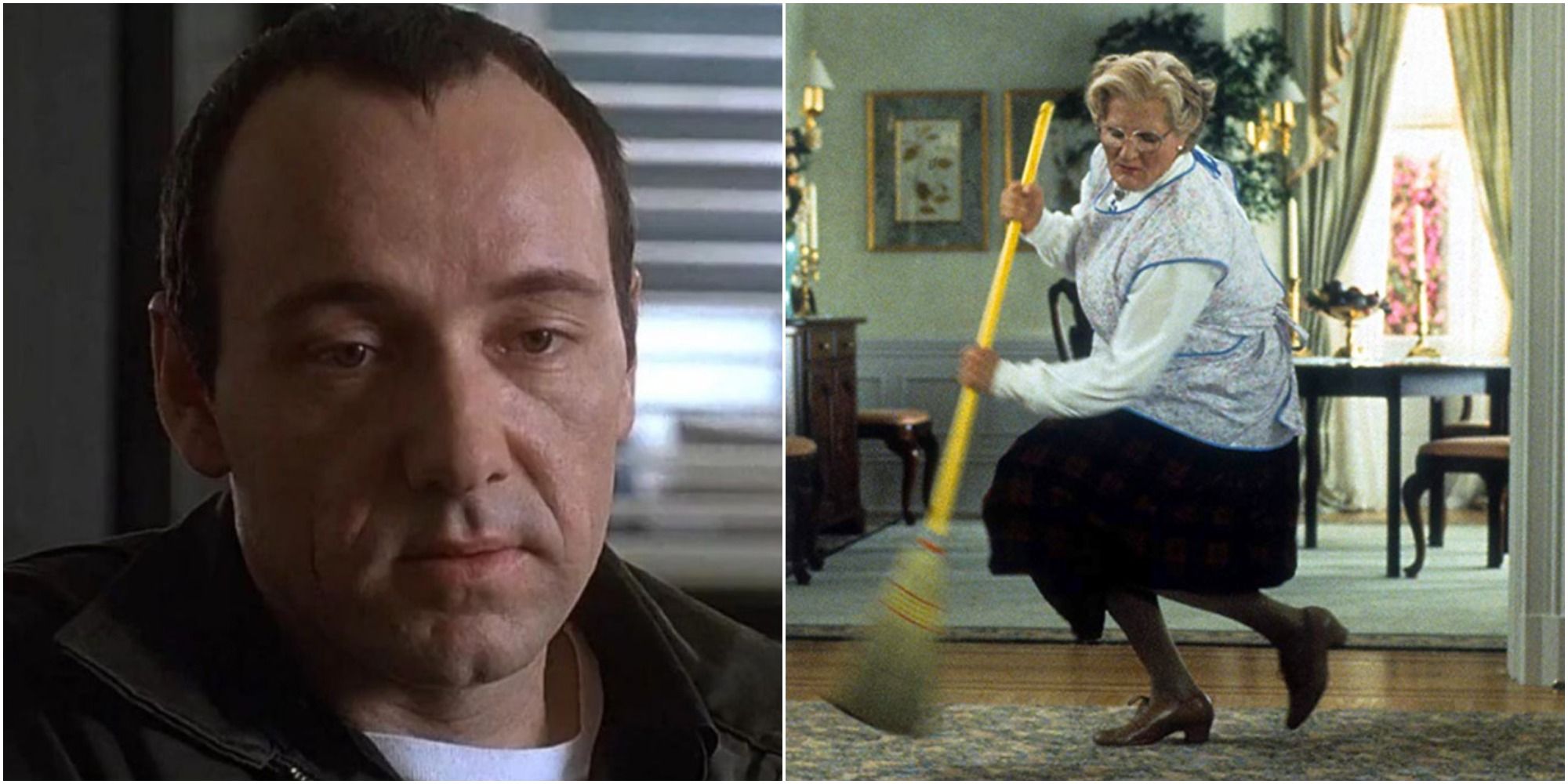
8 Daniel Hillard Tricks His Family Rather Than Engage With Them Directly — Mrs. Doubtfire (1993)
’90s movies weren’t exactly known for their political correctness, and Mrs. Doubtfire is no exception. Daniel Hillard loves his family very much, but his reckless parenting style forces his wife to demand a divorce. Instead of landing a real career and earning the right to be with his children, Daniel decides to trick them into believing that he’s actually Mrs. Euphegenia Doubtfire.
Daniel goes the extra mile for his kids, which audiences find adorable; however, his manipulation tactics don’t translate well through 21st-century optics. Daniel is ironically a better father when disguised as a stolid English nanny.
7 Harry Callahan Enacts Vigilante Justice Without Caring About The Law — The Dirty Harry Franchise
Clint Eastwood went from the iconic Man With No Name in Sergio Leone’s Dollars Trilogy to Dirty Harry in less than a decade. Harry Callahan is a legend both within the franchise and among the cult fandom that arose as a result. He is acknowledged as one of the best film characters in Hollywood history, largely for his no-nonsense take on crime and penchant for vigilante justice.
Badass cop cliches aside, Callahan’s savior complex allows him to take revenge on so-called criminals without concern for the law. Several critics, including Pauline Kael and Roger Ebert, have noted elements of fascism embedded in his personality.
6 Ariel’s Rash Actions Put The Entire World In Danger — The Little Mermaid (1989)
Ariel is a sophisticated character — on one hand, she displays a level of independence greater than most Disney characters, on the other, she sacrifices her family and her voice to chase after a human. Ariel’s rash actions put the ocean, and perhaps the whole world, in extreme danger.
She and Eric eventually manage to defeat Ursula, but one can only imagine the outcome if they had failed. Though Ariel isn’t malicious or sadistic, she is clearly incapable of making sensible decisions at the beginning of her journey. It’s a good thing that she has fortune on her side.
5 Keyser Söze Is A Murderous Sociopath Placed On A Pedestal — The Usual Suspects (1995)
The big twist at the end of The Usual Suspects is the revelation that the big-bad villain, the mysterious Keyser Söze, is the one character nobody suspects. It turns out that the mild-mannered Verbal Kint, a man suffering from cerebral palsy, had been playing everyone for patsies since the start.
Critics have called Söze a “perfect postmodern sociopath” — an apt description that explains why his character should never be placed on a pedestal. And yet, Keyser Söze’s popularity indicates that audiences enjoy him too much to care about the lives he destroys.
4 Danny Zuko Forces Himself On Sandy Without Her Consent — Grease (1978)
Grease was well-received when it was released, with reviewers praising the film’s parallels to the “1950s teenage musical,” except “larger, funnier, wittier, and more imaginative.” John Travolta’s performance as the protagonist Danny Zuko obtained critical acclaim.
There are certain issues with the entire movie, many of which manifest in Danny’s behavior. He forces himself on Sandy without her consent and justifies his attempts by claiming that “nobody’s watching.” If that’s not problematic enough, a line in “Summer Nights” has Danny’s friends ask him if “she put up a fight.”
3 Ace Ventura’s Dramatic Overreaction Is Thinly Veiled Transphobia — Pet Detective (1994)
Jim Carrey usually knows what he’s doing. Several of his characters have gone on to become pop-cultural icons, from Stanley Ipkiss in The Mask (1994) to Bruce Nolan in Bruce Almighty (2003). One of Carrey’s more popular roles is Ace Ventura, an endearingly bizarre pet detective with a flair for hyperbolic comedy.
Although Ventura is mostly hilarious, the film takes an unfortunate turn towards the conclusion. Pet Detective transforms into a transphobic travesty when it exaggerates Ventura’s reactions upon discovering that the villain is a trans woman.
2 Bella Swan’s Existence Carries Little Emotional Weight — The Twilight Saga
Bella Swann deviates from feminine stereotypes, but there’s nothing substantially unique about her attitude or her ambitions. Bella’s popularity is linked to the Twilight craze that swept the world in the late 2000s, but she is a one-dimensional character at best.
Fans of the franchise might find her personality enthralling, but critics have consistently indicated their displeasure with her unrelatability — “Bella’s appeal is based on magic rather than character.” Bella’s existence carries minimal narrative weight: a faint reflection of genuine emotional depth.
1 Severus Snape Inflicts Unnecessary Violence On Harry — The Harry Potter Franchise
Snape went from being one of the most hated characters in the story to one of the most beloved, neither of which makes sense in the larger context. He betrays Lily by serving Voldemort, but later returns to serve Dumbledore as a form of atonement for his mistakes.
While this appears like character growth at first glance, it doesn’t take into account Snape’s irrational behavior towards Harry simply because the latter looked like the former’s school bully. Further, Snape is a flawed individual who spends his life hankering after a dead woman who never wanted to be with him in the first place.
About The Author
