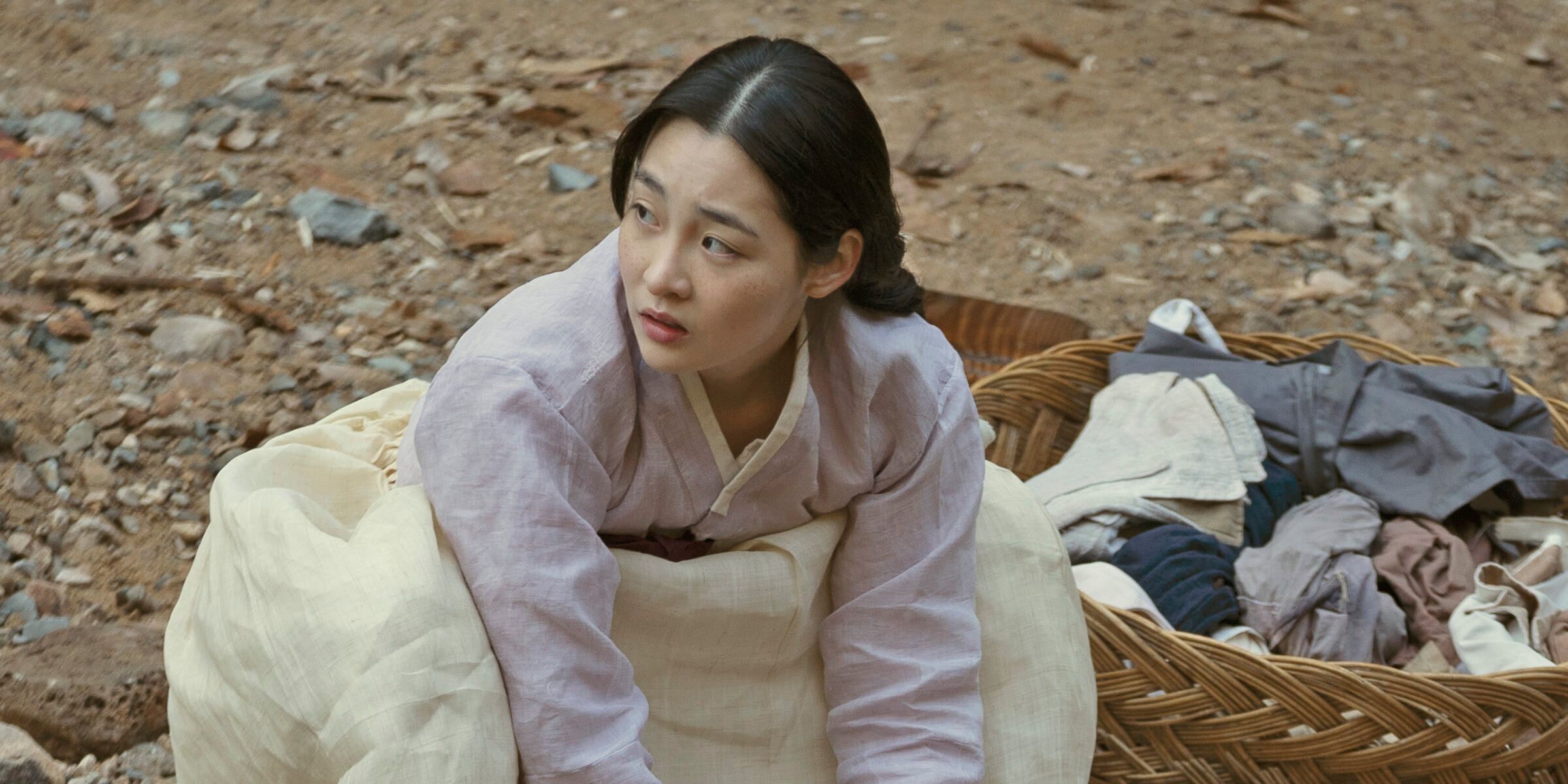
Adapting Min Jin Lee’s bestselling historical novel Pachinko for television was no small feat, but the Apple TV+ production was more than up to the task. Directing the sweeping historical drama are acclaimed filmmakers Kogonada and Justin Chon, who also serve as executive producers on the series. Pachinko follows Sunja from her youth during the Japanese occupation of Korea to her adventures with her grandson Solomon in the 1980s. Pachinko tells a compelling story of love and loss about the 20th-century Korean experience.
In an exclusive interview with CBR, Chon and Kogonada discuss their personal connection to Pachinko‘s story, explained what appealed to them about the series’ script, and revealed the behind-the-scenes secrets involved in crafting a time-jumping story that spans decades.
Both of you have helmed acclaimed projects where you have developed the stories yourselves. What was it about Min Jin Lee’s Pachinko novel or Soo Hugh’s vision in adapting it that made you want to be a part of this project?
Justin Chon: The novel is incredible, but frankly, I read the pilot and thought this was incredible writing, and they found a very engaging and compelling way to traverse the story in a non-linear fashion that I thought was incredibly brilliant. It was such an emotionally engaging script that — at first, I was a little skeptical, but after [reading] the pilot, I was like “What do I need to do to be a part of this?”
Kogonada: The writing in both the book and series was next level. You read a lot of material and the writing is so good and compelling. Obviously, we’ve both done our own films but I think anyone from the Asian diaspora has this real longing and we all look to our parents’ stories and know that there are real stories to be told. There’s something very dramatic [about] anyone who has emigrated. There are layers behind that. It also felt deeply personal, as epic as that story was. It was very personal.
With Pachinko covering such a vast breadth of Korean history, was there any particular time period you really wanted to take the time to explore?
Chon: For me, I grew up hearing so many stories from my grandmother, just like the younger Sunja. Her experience was so emotionally connective for me because I was constantly trying to imagine my grandmother during that time. That was something I was excited to explore. I’m Korean, but at the end of the day, I was born in the United States. This show allowed me to dive in so much deeper than I ever would have done on my own.
Kogonada: My father grew up in Japan and his identity was very integrated into the Japanese world and culture. Our whole world and history has been intertwined and implicated with that dynamic for him. It took us a while to understand the implications of his own story and the way he was working out his own identity. That element was very interesting and intriguing and part of the larger story of immigrants.
Were there any production tricks, be it cinematography or lighting, that you wanted to utilize to help distinguish the different time periods in Pachinko?
Chon: I think that’s part of what’s so incredibly liberating and brilliant about the show. Soo let us do our own things. [laughs] At least for my episodes, I did do camera movement, with Sunja through lenses. We used the same camera platform but I used anamorphic and handheld for younger [Sunja] and much more slick dollies and cranes for stuff with Solomon and, for older Sunja, very composed, blocked-off shots. For our episodes, that’s what we did.
Kogonada: We did the first three episodes and, in setting the ground, it was a little more harmonious aesthetically. Seeing the hand-off to Justin, Episode 4 is almost an explosion of the story and you can really feel it aesthetically as well. In some ways it was serendipitous and, in some ways, I’m sure Soo had a real idea of our styles and an understanding of the episodes that we were going to do. I thought it worked out really well. By Episode 7, which I directed, we did change the style from the first three episodes. The aspect ratios are different and it’s a little bit more subjective and intimate.
Developed for television by Soo Hugh, Pachinko is streaming now on Apple TV+, with new episodes released on Fridays.
About The Author
