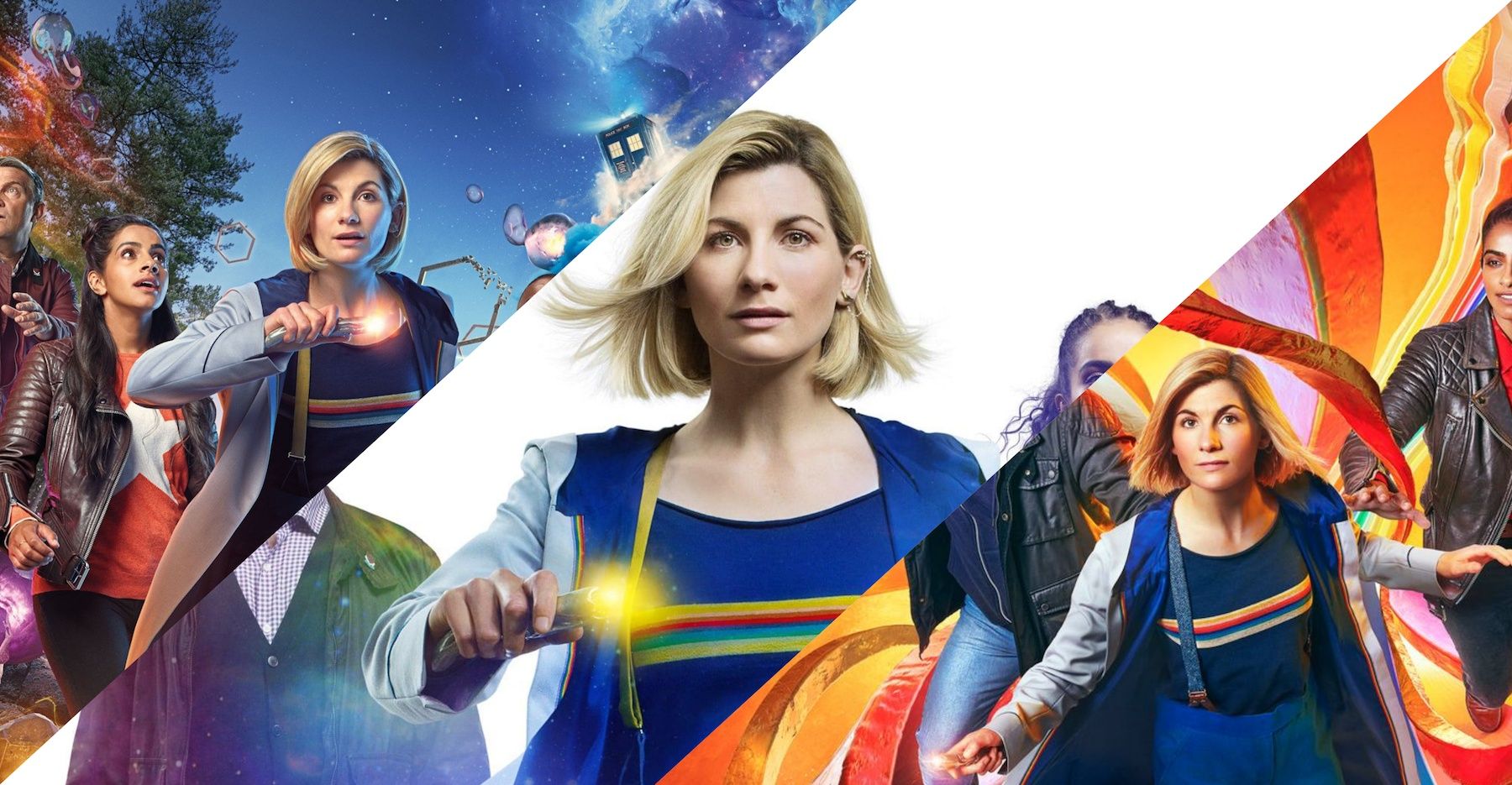
Jodie Whittaker and her Doctor Who producer Chris Chibnall are nearing the end of their time on the popular science fiction show. Considering the program’s staying power and its hugely passionate fanbase, Chibnall and Whittaker had their work cut out for them from day one. During their three years on the show, much has happened and fans have had a lot to say about it.
With Jodie’s final episode airing at the end of 2022, it is important to reflect on the pros and the cons of her time on the show, and what can be learned from them.
10 Pro: A Fresh New Face
One undeniable positive from this era was Chibnall’s willingness to revitalize the show’s protagonist. Doctor Who is an old show, and a show that relies on change. The Doctor changes, the companions change, the look and feel changes. From the jump, Chibnall’s casting of Jodie, the first-ever woman to play the lead role, sent a clear statement. This old Time Lord had some new tricks.
If The Thirteenth Doctor was another actor similar to the likes of David Tennant or Matt Smith, many Who fans hoping for something new would have rolled their eyes.
9 Mistake: The Directing Left A Lot To Be Desired
This one stands as a more subtle underlying issue, but many fans have noticed nonetheless. Doctor Who has never exactly boasted A-list directors, but at the very least modern Who has presented audiences with many well directed and creative episodes. As part of Chibnall’s new approach, the directing and editing style was updated and made more “modern.”
Modern in this case basically meant handheld cameras, shaky cinematography, close-ups, and quick editing. While this style hasn’t bothered everyone, a great number of viewers have picked up on it. A bold stylistic choice, unfortunately, one that didn’t always work out.
8 Pro: Regenerating The Show
Jodie’s casting wasn’t the only indication of bold change. Chibnall hired a roster of new writers, new creatives, and a new composer to craft a whole new glowing look for Doctor Who. Segun Akinola replaced fan-favorite Who musician Murray Gold, who had created some of the most iconic and distinct scores in the history of the program.
Segun and Chibnall, therefore, had to conceive of a totally new musical language for the show, and what they landed on was both new and unique. Akinola’s soundtrack is sweeping and atmospheric, great for stirring feelings of unease or sadness.
7 Mistake: Sci-Fi I-Dea-s
Doctor Who has always relied on clever and intriguing sci-fi concepts. From historical mysteries to mind-bending surrealism to modern fairy-tale tales, this has always been one of the show’s biggest strengths. Showrunner Chris Chibnall had previously written for Doctor Who, Torchwood, and Broadchurch, so he was not exactly a stranger when it comes to writing imaginative complicated mystery premises.
However, once he became the producer of Who, his episodes became surprisingly basic and simplistic, and fans criticized how straightforward the show became, especially in relation to other British sci-fi shows like Black Mirror.
6 Pro: A Return To Simpler Arcs
Russell T. Davies was the first producer of the modern era of Doctor Who, and amongst other things, he introduced the idea of season-long arcs for the show. The following producer, Steven Moffat, pushed this further, maybe even a little too far. Season arcs grew increasingly complicated and convoluted, which turned many fans off the program.
Chibnall thankfully took this a few steps back, mainly with Season 11 in which there were no overly complicated threads or confusing reveals, which pleased a great many Who viewers.
5 Mistake: The Companions Don’t Have A Lot To Do
Thirteen’s companions have consisted of Yaz, Graham, Ryan, and Dan. The fewest companions she’s had for any given story is two, which creates a bit of a problem. Fans have not been openly negative of her Tardis crew per se. Graham in particular has been widely praised as a standout character, not least down to Bradley Walsh’s charming performance.
The issue here is that the scripts simply struggle to give all the companions much to do. Not only that, but it became increasingly difficult to develop these characters and keep their respective arcs streamlined. Yaz, for instance, has been a part of the show for three years, yet many fans have totally forgotten that she started as a police officer because her characterization has gotten a bit lost in the crowded Tardis.
4 Pro: Villains!
Doctor Who has birthed many iconic monsters over the years. Even casual audience members are incredibly familiar with recurring ‘big bads’ like the Daleks, the Cybermen, and the Master. Maybe a little too familiar. Previous eras of modern Who had one major villain problem: an over-reliance on classic monsters. The poor Daleks were overused to such an extent that they went from fearsome alien conquerors to silly pepper pot foils whose armies could be wiped out with some ease.
Fans started to grow tired of the Daleks and the Cybermen, and Chibnall’s made a bold choice in refusing to rely on these fan-favorite monsters. Jodie’s first season, Season 11, for example solely relied on new villains, which for better or for worse, is a bold respectable decision.
3 Mistake: Villains…?
Whilst Chibnall’s reluctance to overuse classic villains is a good idea, his new creations have not all been well received by long-time fans of the show. Jodie’s first season unfortunately had a very underwhelming rogues gallery. One monster, the Pting, is basically just a small CGI beast that eats everything.
Another villain, the Remnants, are just cloth-like rags that float around. Later, when a mysterious alien, the Solitract, is revealed to be a talking frog, it’s just silly. Admittedly, these are not the main villains of the show, and Chibnall did manage to integrate more compelling and recurring villains over time. However, fans largely remained unsatisfied with this particular roster of monsters.
2 Pro: Doctor Politics
Doctor Who has always had some form of political commentary. “The Sun Makers” from 1977 for instance clearly had a lot to say about the politics of taxation. Now, politics in sci-fi isn’t a bad thing. For instance, Thirteen’s episode “Rosa” about the Civil Rights movement garnered much critical praise for its discussion of racism and the importance of Rosa Parks. However, many of Jodie’s episodes do feel a tad on the nose, or in other cases, politically muddled.
However, it should be said this is more down to clumsiness than duplicity on the writer’s part. But all in all, it is worth saying that at least Chibnall is attempting to inject the show with mature political discussions, and his heart seems to be in the right place.
1 Mistake: Doctor Who?!?
There’s no way this one could be ignored. It’s a shame that the Thirteenth Doctor’s time on the show will be forever connected with the “Timeless Child” storyline because this one idea has put many off this current era of Doctor Who. In Seasons 11 and 12, Chris Chibnall teased “The Timeless Child,” an arc which ultimately revealed that The Doctor, as a young child, was experimented on by the Time Lords, who wanted to steal her innate limitless powers of regeneration. To be completely fair, many previous writers and producers have messed around with The Doctor’s backstory with varying results. However this idea pushed it too far and fans were divided, to say the least.