Philip K. Dick, the famed sci-fi author of more than 150 novels and short stories, has been a consistent muse for filmmakers with his dark visions of alternate histories and unmade futures. Beginning with Ridley Scott’s Blade Runner in 1982, PKD would inspire a dozen movies over a three-decade span, including Paul Verhoeven’s Total Recall, Steven Spielberg’s Minority Report and John Woo’s Paycheck. While each adaption is celebrated or critiqued on its own, most tend to stray considerably from PKD’s themes; only one film stays true to the original story’s focus, and that’s Richard Linklater’s A Scanner Darkly.
Starring Keanu Reeves, Winona Ryder, Robert Downey Jr. and Woody Harrelson, 2006’s A Scanner Darkly takes place in the not-too-distant future where a dangerous new drug known as Substance D is on the streets, and undercover narcotics agent Bob Arctor is investigating known dealers. Through the use of a “scramble suit” that keeps his identity secret from his colleagues, Arctor is assigned to narc on himself, beginning his descent into confusion as he attempts to keep these two identities separate amidst his growing addiction to Substance D. This has all of PKD’s usual themes of drug-infused false realities and multiple identities, which the film captures perfectly.
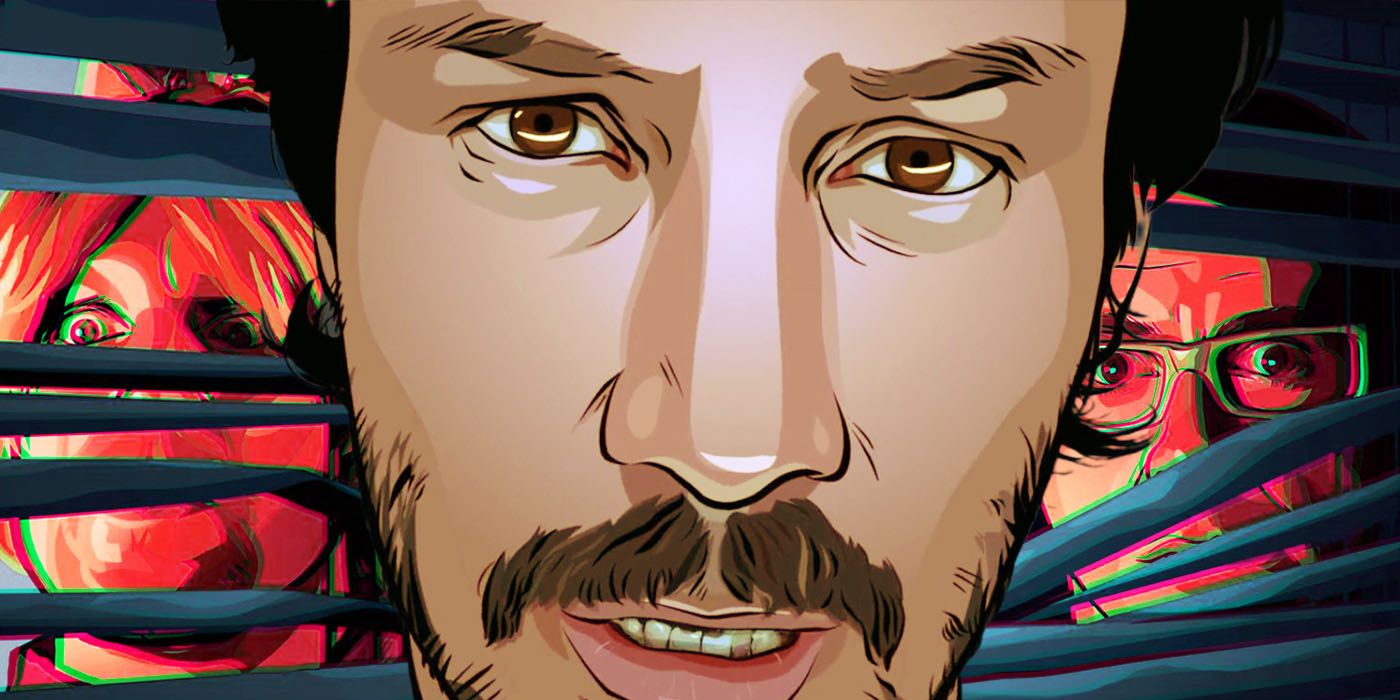
The look of A Scanner Darkly is the first noticeable difference that sets it apart from other adaptations and is a crucial decision to pull off PKD’s vision. PKD’s themes of warping identities, hallucinations and false realities are often difficult to capture on film, and Linklater’s return to rotoscoping — an animation technique that traces over live-action cels which he also used in Waking Life — is a spot on visualization of these themes.
This is evidenced in the very first scene, which shows a frantic Charles Freck (Rory Cochrane) dealing with an infestation of imagined insects. The fact that the bug hallucinations look identical to the real world drags viewers into the uncanny valley, creating a simultaneously lifelike and artificial setting where it is difficult to know what is actually taking place.
In addition to the look of A Scanner Darkly, the film also avoids the most common missteps that other films have made when adapting PKD’s work. Featuring heroics without heroes, action without resolution and romance without lovers, PKD worlds are perhaps too incongruous for film, especially the bombastic style found in this era of the Hollywood blockbuster.
Harrison Ford, Arnold Schwarzenegger, Nicolas Cage and Tom Cruise have all starred in action-packed PKD films, even when the stories they are based on are decidedly mundane. While there are laser guns and hover car chases in PKD stories, this violence is typically brusk and cold, rarely focused on the act itself but lingering on the aftermath.
This is another element that A Scanner Darkly gets right. Even with a post-Matrix Keanu Reeves in the lead, Linklater’s film steers clear of action set-pieces and remains faithful to PKD’s novel. Instead, the action is mostly limited to interpersonal relationships, highlighting the character’s misguided motivations and the futility of their meager accomplishments.
It’s also fascinating to see that almost every other PKD film adaptation becomes a romance story by the end. While there is almost always a love story element in his work, PKD focuses on failed relationships: a collapsing marriage or unfulfilled affair. Yet, from Blade Runner to The Adjustment Bureau, so many of these adaptations end with a happy love story, even when the original story finished with exactly the opposite.
A Scanner Darkly understands this tension, as it includes the relationship between Bob and Donna while maintaining the conflict that goes along with it. Just like in the novel, the pair briefly brush against the beginnings of a romance, but as Bob’s brain decays and Donna’s traumatic past resurfaces, there’s no hope for anything to come of it. Just like with his use of action, PKD is not interested in love stories when they succeed, only those incompatibilities that never lead to a happy ending.
Despite this, almost every other PKD adaptation concludes in triumph. Probably the most intense perversion of PKD’s themes comes at the end of Minority Report, as John Anderton (Tom Cruise) and the rescued precogs live out their happy lives in the countryside. Still, even the most complicated PKD films misunderstand the basic premise that just because a PKD character succeeds doesn’t mean there is cause for celebration.
This is ultimately the element that seems to be most misunderstood in the other PKD films: success doesn’t necessarily mean accomplishment, and confusion isn’t necessarily the problem. In fact, amidst the double lives and dreamlike realities, PKD usually presents understanding as the truest tragedy. While films like Blade Runner and Total Recall focus so heavily on all that the characters do not know — Is Decard a Replicant? Is Quaid still dreaming? — A Scanner Darkly confidently ends with a clarity that is so much more devastating and exactly what PKD had in mind.
About The Author
