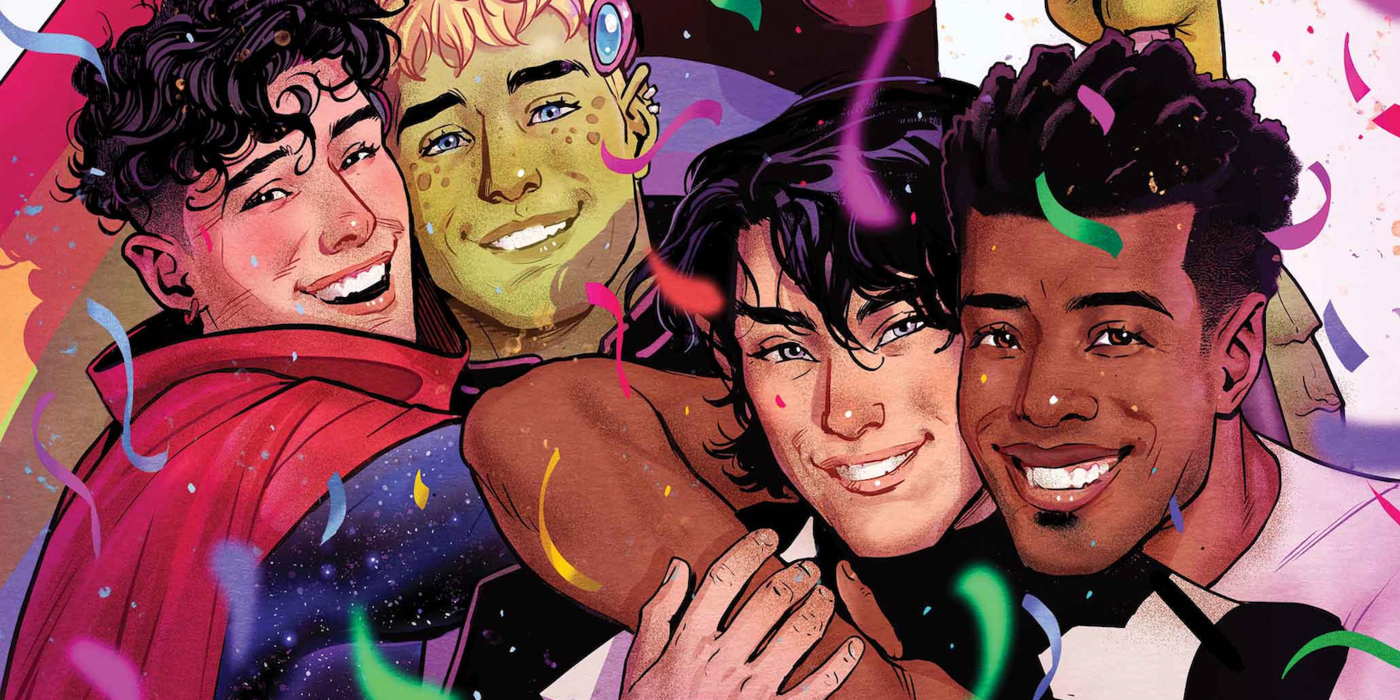
In Marvel’s Voices: Pride #1, the story “Man Of His Dreams” (by Steve Orlando, Claudia Aguirre, Luciano Vecchio, and VC’s Ariana Maher) introduces Somnus, a closeted gay mutant who had a short-lived relationship with Wolverine’s son Daken during the 1960s. Although Somnus would go on to live the rest of his natural life without coming out of the closet, a reformed and remorseful Daken brought his former lover’s body to Krakoa and used the mutant nation’s unique resurrection protocols to revive Somnus in a younger body, giving him a second chance to live his life as an openly gay man.
Although Somus’s introduction into the Marvel universe was treated with an impressive level of fanfare, the character went on to appear in a single issue of Gerry Duggan and Matteo Lolli’s Marauders and Si Spurrier and Bob Quinn’s stand-alone X-Men: The Onslaught Revelation. Somnus’s absence in the wake of his dramatic debut reflects a long-standing problem with Marvel Comics’ representation of the LGBTQ+ community. While Marvel has introduced a staggering number of LGBTQ+ characters into its universe, many of them have all but vanished after their debuts, with only a few going on to become major recurring characters. Not only is this a major failing in terms of the visibility of queer characters within Marvel, but many of these characters were engaging in ways that weren’t related to their sexuality or gender identity, and bringing them back could open up opportunities for new and exciting stories that reflect the diversity of the Marvel universe.
In many ways, Marvel was ahead of the curve when it came to positive LGBTQ+ representation in mainstream comics. While positive representation within other major comic book publishers was almost non-existent (outside of Comics Code Authority-defying imprints like DC Vertigo), Marvel began to actively introduce characters who were of non-traditional sexual orientation and gender identities into their mainline series, with characters like Alpha Flight’s Northstar being recognized by most comic historians as one of the first queer characters to appear in comics.
In recent years, as public awareness and acceptance of the LGBTQ+ community became more widespread, Marvel has gotten even bolder with its representation of LGBTQ+ characters. Not only have many of the Marvel universe’s newer queer characters (like America Chavez, Hulkling, and Wiccan) gone on to become prominent figures within the superhero community, but many of Marvel’s long-standing heroes have begun to explore diverse sexualities and identities. Free from the strict societal restrictions that existed when many of them were first created, long-time Marvel heroes like the X-Men’s Kitty Pryde have come out and embraced their gender and sexual diversity, allowing traditionally straight and cisgender characters to express themselves in new and exciting ways.
Unfortunately, while Marvel has undoubtedly improved its LGBTQ+ representation in the years since it first began introducing these characters, cases like Somnus prove that the publisher still has issues with allowing them to remain in the spotlight for long. Although Marvel seems to have no qualms about introducing queer characters and even does so with a sense of respect and grandeur, many of them have faded into obscurity soon after their debuts, making sporadic appearances before vanishing entirely. This trend began shortly after Marvel first began including LGBTQ+ characters, possibly as a result of the widespread prejudice that many readers held against the community. One of the most prominent examples of this trend is Jessie Drake, a shapeshifting mutant and Marvel’s first openly transgender character who all but vanished after her debut in Marvel Comics Presents #150 (by Ann Nocenti, Steve Lightle, Marianne Lightle, and Michael Higgins), in which she was rescued from an abusive research facility by Wolverine and Typhoid Mary.
Thankfully, Jessie made a surprise reappearance in Marvel’s Voices: Pride #1 in the story “When A Black Cat Crosses Your Path, You Give Them The Right-Of-Way” (by Leah Williams, Jan Bazaldua, Erik Arciniega, and Maher), and her return (and potential relationship with Black Cat) sets a good example for how Marvel could reintroduce many of its long-lost LGBTQ+ characters. While representation has come a long way since Marvel first introduced queer characters into its universe, it’s more important than ever for it to keep up the momentum by having these characters visible in their stories. With prejudice still serving as a major issue, younger members of the LGBTQ+ community should have positive role models within mainstream media. Given the wide range of its audience, Marvel has the unique opportunity to step up and be a role model for other comic book publishers.
Bringing back many of their lesser-known LGBTQ+ characters would help improve the diversity of the Marvel universe in new and exciting ways. Characters like Jessie Drake are not only icons of the queer community, but also legitimately interesting characters who could easily become engaging main characters. With their unique power sets and strong personalities, many of these characters have already established themselves as recognizable figures in the superhero community, and their storylines could explore relevant and poignant themes and topics that are rarely addressed in the Marvel Universe.
With the recent controversy surrounding Marvel’s parent company Disney’s lukewarm response to Florida’s controversial “Don’t Say Gay” bill, LGBTQ+ representation is more important than ever to many modern media fans. Reintroducing its long-lost queer characters could go a long way toward establishing Marvel as a juggernaut of positive representation. The venerable comic book universe is home to a wide variety of diverse and unique characters, and now may be the perfect time to provide their fans with the positive LGBTQ+ representation they’ve been asking for by giving some of its lesser-known queer characters a chance to shine.
About The Author
