The proliferation of long and short-form true crime programming across broadcast networks and streaming services has led to subsets within the genre. The recently released Netflix series Worst Roommate Ever focuses on the troubled relationships between housemates, one of whom being the titular “worst roommate ever.” The premiere episode “Call Me Grandma” recounts Sacramento, California boarding house owner Dorothea Puente’s murder of several tenets and partners for financial gain, noting that due to the landmark status of her late-Victorian era house it couldn’t be torn down, as these grim sites frequently are. This opens the door for a very, very different type of reality programming to step in.
First, a refresher: Quibi was former Walt Disney Studios chairman Jeffrey Katzenberg’s streaming platform effort with content limited to ten minute or less (Quibi being a portmanteau of “quick bites”). It might have done well for viewers seeking short videos while on the go, but it’s April 2020 launch date and inability to run on anything other than mobile devices sunk it’s growth. By the year’s end Quibi was shuttered and it’s programming library sold to Roku for a fraction of it’s nearly two billion dollars of original investment capital. And it turns out Quibi’s home renovation series Murder House Flip just so happened to attempt a facelift on Dorothea Puente’s former home.
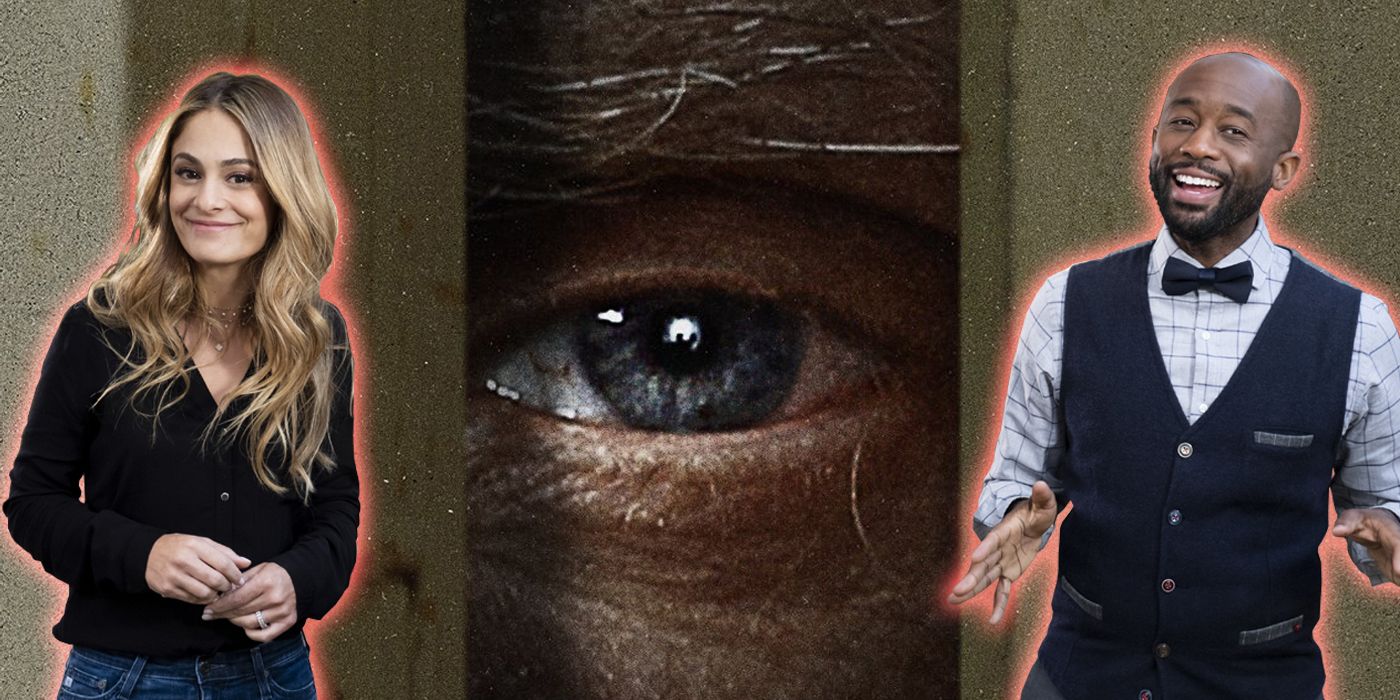
Contrary to it’s rather lurid title, Worst Roommate Ever is a fairly standard and somber true crime series. Murder House Flip, on the other hand, is exactly what it says on the label. Hosts and interior designers Joelle Uzyel and Mikel Welch travel to houses that were formerly the setting of grim deaths and attempt to make the best of a bad situation for the current homeowners.
If the prospect of combining true crime and home décor sounds an odd mix, it most certainly is. Aware of the subject matter, hosts Uzyel and Welch attempt to add levity by pointing out how spooky things seem or where the bodies were literally buried, but their banter comes off more ghoulish than disarming. There’s also the standard upbeat tone of a home renovation series butting up against the reality of the situation and the locale. A sharp-eyed viewer of both series however, would spot a detail that links MHF to WRE in their respective premiere episodes.
Part of the attempt at making over the lawn surrounding the former Puente house sees the MHF crew erecting a swing set over a portion of the lawn which was — as is pointed out repeatedly and through archival news footage — where a dismembered torso was uncovered. This very same swing set can be glimpsed at the end of WRE’s “Call Me Grandma” when the present-day location is revisited. In theory the dichotomy between a chipper and upbeat home renovation show combined with true crime is absurdly amusing and a curious diversion from a typical home makeover show. In practice, even at six minutes a pop it wears thin.
It must be noted this wasn’t even the weirdest program to be gifted (or foisted) on the world by Quibi — that would be 50 States of Fright and it’s premiere segment “The Golden Arm” (the idea behind the show being it would travel across the 50 United States telling scary stories, but it only got as far as nine). It remains to be seen if the sub-genre of home renovation/true crime reemerges in the future, but, if nothing else and for better or for worse, MHF is a prime example of Quibi’s “see what sticks” attitude.
About The Author