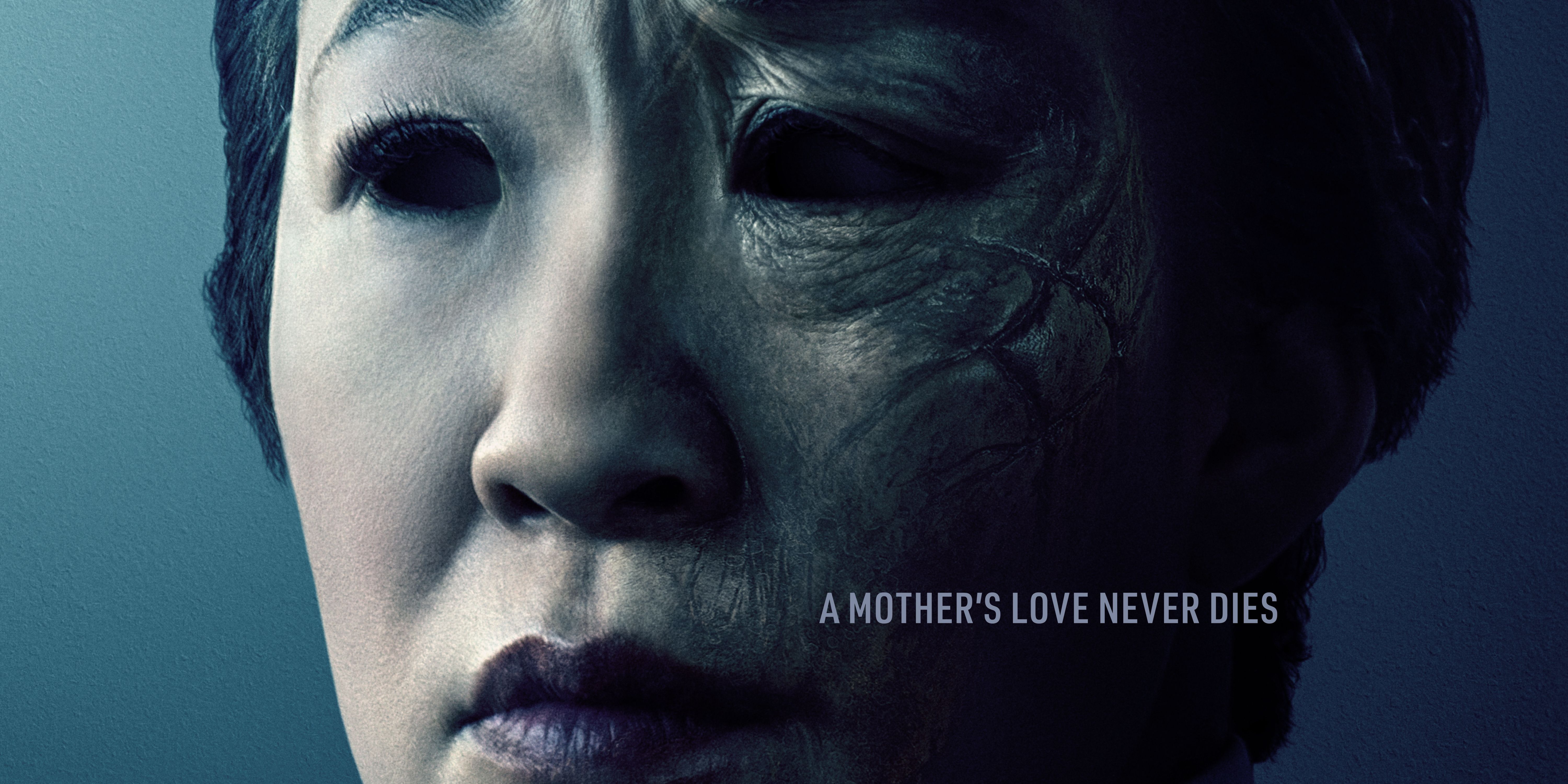
Horror’s haunted house sub-genre is a reliably scary one. There are a few things that often appear in films that fall under this genre — jump scares, a spirit upset by their past, familial trauma, limited lighting, etc. Sony Pictures’ Umma includes all these elements with a few unique moments added into the mix. At the end of the day, however, this film delivers something that is too familiar, making viewers want more from its haunting potential.
Umma, directed and written by Iris K. Shim, is about Amanda (Sandra Oh), a beekeeper who lives off the grid and cannot be around electricity. She’s raising her daughter, Chris (Fivel Stewart), to be like her. Amanda hopes she breaks the cycle of abuse started by her mother; although, she hasn’t gotten over that past trauma. Things only get worse when Amanda’s mother — Umma (MeeWha Alana Lee) — dies. Umma’s remains are delivered to Amanda, which then cues the haunting aspects of the film to start. Tensions grow between Amanda and Chris as Chris doesn’t know the truth about her mother’s past.
The mother/daughter relationship between Chris and Amanda stands out in Umma. It’s clear the two genuinely love one another. Despite being isolated from the world, it’s believable that Chris does not hold animosity toward her mother over their way of living — even though she wishes to attend college. But this also makes some of the growing tension between the two feel jarring. Seeing Chris care for her mother, even when she does not know what’s going on, proves there’s unconditional love for one another, and it shows that parents can be vulnerable too.
Amanda is both vulnerable and closed off at the same time. Oh manages to display both emotions without her character feeling too contradictory. Her past and how it impacts her is complicated, and that is perhaps best seen in how she is trying not to be like her mother, but she is in a different way creating a new set of problems. Amanda is an imperfect mom, and that works in Umma’s favor; however, there are many more complexities to explore between Amanda and Umma’s abusive relationship that are not fleshed out enough for what the film wants to accomplish. Unfortunately, audiences get glimmers into what that could have been like. But by the time viewers get to the resolution of Umma, this story thread and its emotional resonance feel rushed.
There are also story beats and variables in Umma that are not established strongly enough. Audiences are teased with something innovative and captivating, but it is not integrated into the rest of the film thoroughly. These few moments break away from the traditional haunted house narrative, delivering creepy and intriguing imagery that connects to Amanda and Umma on a personal level. Seeing more of these would have been favorable, especially as Umma relies too much on some of the more tired tropes of this genre — dim lighting, a tilted camera, and jump scares.
Umma‘s lightning had an opportunity for greatness. Since Amanda and Chris do not use electricity in the house, seeing how this limited lighting could create haunting shadows could have been great. There are moments where one can see the film almost doing so; unfortunately, this lack of lightning leads to a dark film, obscuring some of Umma‘s most interesting visuals.
Umma is a movie you want to root for as a viewer. Its opening credits establish a dark past, with a score that is heart-pounding. Umma‘s unique imagery gives a glimpse into themes of imperfect motherhood, abuse, and trauma. Oh’s dedication to the role, as well as her dynamic with Chris and Umma, set up what should be a captivating film about generational trauma.
Yet Umma suffers from a rushed plot, an expositional-heavy script, and the tried and true tropes of a haunted house film. Umma teases something provocative, complicated, and unique, but it’s not quite there; although, one can get excited for what Shim has in store next, as this is her first feature film. Plus, for fans of classic haunted house movies — especially those from the late 2000s and early 2010s — Umma will likely feel familiar, and deliver what one expects and enjoys in this subgenre.
About The Author
