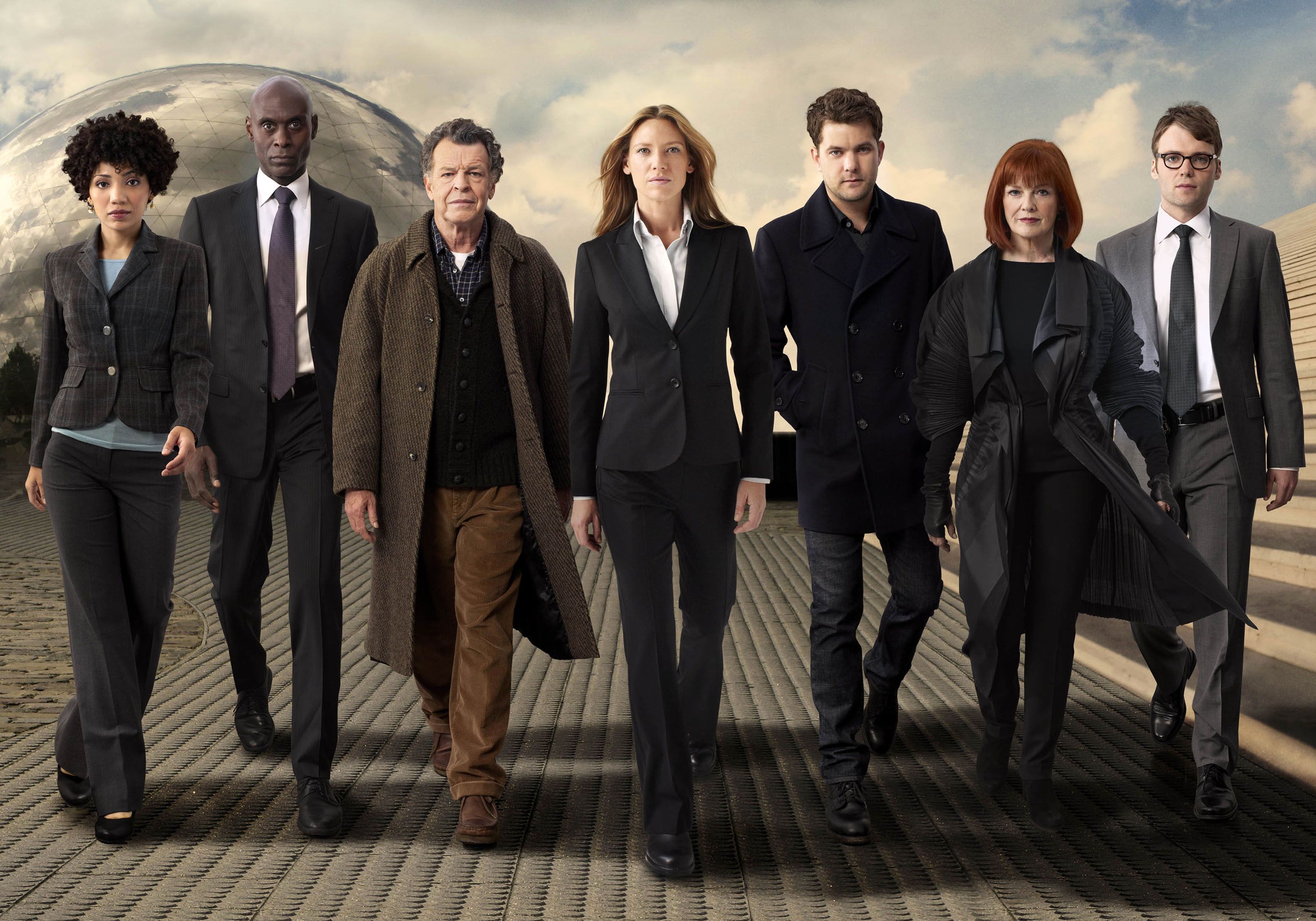
Most Fringe fans remember it as a science-fiction show that continually morphed its premise and constantly upended its storylines over its five-season run. The Fox series followed the exploits of Olivia Dunham, Peter Bishop and Walter Bishop (played by Anna Torv, Joshua Jackson and John Noble) as they explored strange unexplained events and averted impending catastrophes. Fringe was a marvelous sci-fi adventure — yet an element of All of Us Are Dead-esque horror and the macabre ran through the show like an undercurrent of blood, often splashing across the screen in gruesome detail. From gross autopsies with slimy fluids to visceral death by monster (and not in a cathartic way), Fringe embraced the idea of science gone amuck.
Science fiction melding with horror is not new. Properties like the Aliens franchise, Snowpiercer and the animated series Futurama have incorporated shocking and graphic elements to varying degrees. Fringe elevated this blend of genres to new heights. The pilot episode set the tone for this aspect of the show with a plane full of people literally liquefying from a strange contagion. The show didn’t shy away from the terror of that scenario, painting it in grim visuals that included dripping flesh and falling jawbones.
The following episode “The Same Old Story” did not hold back either, with arguably the freakiest birth ever — the process not only killed the mother but then had the child age eighty years in a matter of minutes. A few more Season 1 horror highlights included “The No-Brainer,” where viewers got a scene of trepanning and liquid brain oozing from a skull, and “Unleashed” which focused on with mutilated bodies and genetically engineered monsters. That episode also included a revolting scene of hundreds of squirming maggots pouring from a corpse — a sight not for squeamish viewers.
Fringe‘s first tonal shift began in Season 2 when the show moved away from the fringe science and into the ongoing parallel universe storylines, but it still threw in a few stomach-churning plotlines. The episode “Earthling” saw people randomly disintegrate into ash and “Snakehead” dealt with squid-like parasites infesting the crew of a cargo ship. “Grey Matters” treated viewers to a scene of unconsenting brain surgery with the bonus of watching brain matter hang out of the skull of the still-alive patient. One scene from “What Lies Below” had a man’s veins explode in a shower of blood. Even as Fringe evolved, it held true to its roots in monstrous scientific madness.
Subsequent Fringe seasons delved further into the mythos of the series, including the eerie Observers and the menacing shapeshifters. Yet the show didn’t back away from the shocking completely and sprang a few more horror surprises. “Marionette” dealt with obsessive love, reanimation and organ harvesting when a man resurrected his dead lover by reclaiming her donated organs. In the Season 4 opener “Neither Here Nor There,” the team faces killers with translucent skin, and “Alone in the World” ntroduced a parasitic fungus with homicidal tendencies. Season 5 moved into dystopian sci-fi similar to Star Trek‘s Borg storylines, with less of the nightmare fuel but still featured a few disturbing interrogations and unsettling death.
So why isn’t the show remembered more for its graphic content? Fringe tempered its graphic nature with humor, often through the character of Walter and the nuanced acting of John Noble. And because the nature of the show was constantly changing from cases of the week to more ongoing storylines and bigger-picture material, the horror element was often buried underneath high-concept sci-fi. However, as much of a sci-fi cult classic as Fringe is, it’s also equally memorable for what it contributed to the horror genre.
About The Author