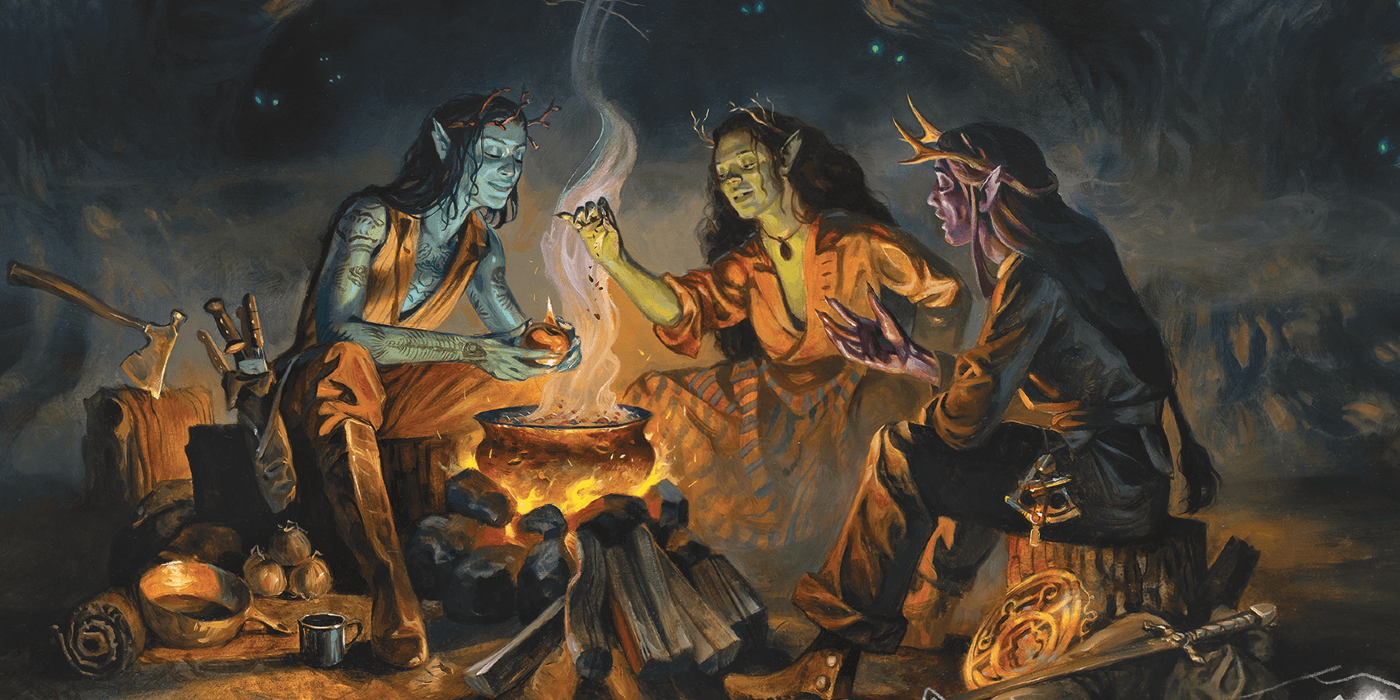
In Dungeons & Dragons, players can be almost any race of creature, even those that were originally only thought of as enemies, such as goblins and orcs. Hexbloods are another step in that direction, as they are the closest thing to a hag that players can be. From lore to gameplay, Hexbloods provide many new interesting aspects to the game.
Hexbloods are unique among other playable races because they are one of the lineages added in Van Richten’s Guide to Ravenloft. Lineages work differently from playable races, as they are not traits that a character is born with; they are something a character is transformed into after a remarkable event. A character of any race might gain a lineage’s racial traits after being attacked by a vampire or making a deal with a hag. Lineages can give players built-in backstories to explain how their characters became what they are now.
What Are Hexbloods in Dungeons & Dragons?
Van Richten’s Guide to Ravenloft describes Hexbloods as “…individuals infused with eldritch magic, fey energy, or mysterious witchcraft.” Hexbloods are created when someone makes a bargain with a hag or another sinister fey force. These individuals receive their heart’s wish but must pay a cost. Either they or someone close to them will be influenced by fey magic and transform into a Hexblood.
This is how hags create more of their kind. All Hexbloods bear markings that signify their connection to the hag that transformed them. These include split ears, strange colored skin, and a living crown of wood that they can’t remove. Van Richten’s Guide has a table of possible origins for Hexbloods. They could be the child of parents who made a bargain with a hag or a person cursed by the fey, among other options. Regardless of origin, all Hexbloods share a unified fate: If a Hexblood willingly undergoes a special ritual with a hag, they will permanently become a new hag.
Many Hexbloods try their best to avoid this fate and shun the hag that transformed them. They will adventure to better understand their new bodies or find a way to free themselves from their fey curse. Those willing to become hags usually do so because they have spent centuries fighting against a fate that seems inevitable and have simply lost the strength to fight.
Hexblood Abilities
Hexbloods have some of the most unique abilities of the available D&D races. These abilities are both useful and fit the unsettling nature of their cursed origins. Hexbloods retain the ability score improvements and skill proficiencies of their original race. With the new rule in Tasha’s Cauldron of Everything, these score improvements can be distributed however the player wishes, making the Hexblood great for any class. Additionally, Hexbloods have darkvision out to 60 feet and are classified as Fey instead of the usual humanoid, which means that spells like Hold Person or Charm Person have no effect.
The highlight of Hexbloods’ abilities is Eerie Token. Hexbloods can remove small parts of their bodies without harm. They can remove a lock of hair, a fingernail, or a tooth and imbue it with fey magic, creating an Eerie Token. They can use these tokens for spying or sending one-way messages. Hexbloods can send messages to creatures carrying their tokens or see and hear through them from up to 10 miles away. Hexbloods also receive innate magic and can cast Disguise Self and Hex for free once per long rest. These abilities make Hexbloods great information gatherers.
Hexblood Names
Because Hexbloods are created from preexisting races, they don’t have a specific naming convention. They will often be named according to the race or culture they were born into. Some Hexbloods were taken as children and raised by hags, so they might have a name fitting a hag creature.
Other Hexbloods might choose to take on a name that they feel best matches their new fey bodies. These names can vary drastically and often are more descriptions of the creature than true names. If a Hexblood was transformed by a sea hag, they might take on a name that evokes images of water or fog. If it was a green hag, they might adopt a name related to the forest or nature. There is a lot of room for creative freedom when naming a Hexblood.
Why You Should Play A Hexblood
Hexbloods let players try out a different type of character, one that is a little bit scary. They provide plenty of opportunities for engaging and interesting role-playing experiences. Maybe a Hexblood is ashamed of their fey nature and is constantly in disguise so that no one ever knows their true nature. Or, a Hexblood could revel in the strange looks they get and have fun scaring people with their bizarre body.
The Hexblood’s built-in origin and possible endpoint can make for a compelling character story. They could be on the run from the hag that transformed them and is constantly harassed with dreams beckoning them to complete the ritual. Alternatively, a Hexblood could feel they have been avoiding their fate for far too long and are actively seeking to confront the hag that changed them.
The options are nearly limitless, and all of them create interesting hooks for a Hexblood character. Their abilities make them terrifying figures, as those who encounter them never know if they’re being watched or listened to. Both mechanically and narratively, Hexbloods are a fantastic choice for anyone looking for something different in a Dungeons & Dragons character.
About The Author
