Heavy promotion isn’t a guarantee of success. Sometimes a network or streaming platform will hype up a TV series, only for it to premiere with a thud and be quietly canceled after only a single season. Despite whatever feathers they had in their caps, from popular actors in leading roles to beloved source material, sometimes a series just doesn’t connect with critics or, more importantly, viewers.
Television is littered with examples of this phenomenon, but there are several stand-out examples of TV shows where the makers had high hopes for but the end result crashed and burned.
10 Heroes: Reborn Hammered The Last Nail In The Coffin
The current trend of TV is the revival – if a series was canceled prematurely but has a dedicated fanbase, it can get a second chance, usually on a streaming service. Heroes was an odd choice for this. For one, the series was infamous for its sophomore slump, a decline that the series never really recovered from. Moreover, the show had only been off-air for five years when Heroes: Reborn debuted – hardly enough time for the nostalgia filter to set in. Needless to say, Heroes: Reborn failed to recapture the magic of the first season and fizzled out after 13 episodes.
9 Kings Was A Strong Series, But A Very Expensive One
Kings set out to retell the story of King David in a modern context. It was also Ian McShane’s return to television after Deadwood. Unfortunately, the series had an even more truncated run than McShane’s previous role: only 13 episodes. Kings demanded a pretty penny from NBC – the feature-length pilot alone reportedly cost $10 million, then every subsequent episode $4 million. This wouldn’t have been a problem if the show got sufficient ratings, but it didn’t – even the premiere only came in fourth place. NBC pulling the show midway through the season then burning off the remaining episodes left it no chance to improve.
With no time to build up an established fanbase, it’s doubtful Kings will get a movie conclusion like Deadwood did in 2019. It’ll have to settle for the occasional article pointing to it as a series gone before its time and deserving of more love.
8 Caprica Failed To Bank On Battlestar Galactica’s Good Will
It seems mandatory that every popular sci-fi series has to get a prequel at some point. Battlestar Galactica had its go with Caprica. Set 58 years before the fall of humanity, Caprica focused on both an earlier generation of the Adama family, including Bill’s father/Lee’s grandfather Joseph (Esai Morales), and the creation of the 12 Colonies’ Cylons.
The setting differs drastically from the predecessor – there are no spaceships. Instead, the series takes place totally on the ground while the titular planet is at the height of its civilization. However, the series continued to focus on many of the same subjects as BSG, such as politics and religion. However, this change of setting and slow drip of explicit sci-fi elements likely alienated fans, not to mention the characters were nowhere near as memorable as BSG‘s. Thus, Caprica had a much shorter run than its source material.
7 Mob City Was Frank Darabont’s Short-Lived Return To TV After The Walking Dead
Another common trend in TV these days is directors who usually work in film turning to the small screen. After all, the mid-budget genre film made for adults is practically extinct these days. One of the least successful examples of auteur-driven TV was Frank Darabont’s Mob City. Darabont had previously show-run the first season of The Walking Dead, but despite the massive success, he was fired after disputes with AMC. Mob City was his follow-up, but it aired only six episodes on TNT before getting the plugged pull.
6 The Cape Is A Forgotten Superhero Show
2011 was the cusp of the superhero boom. The Dark Knight had just dazzled audiences and brought superheroes unprecedented prestige, while The Avengers would turn superheroes into the kings of the multiplex. NBC tried to get in on things with The Cape, an original superhero story. David Lyons is a presumed cop who must clear his name and does so by adopting the most generic superhero identity ever conceived – The Cape. Not even the inclusion of nerd favorite actors like Summer Glau and Keith David could save this show; the finale never even aired on television, instead premiering only on NBC’s website.
5 Low Winter Sun Was Supposed To Be AMC’s New Prestige Series – It Wasn’t
By 2013, AMC was in an anxious place. Breaking Bad was coming to an end and it wouldn’t be long before Mad Men wrapped up as well. The Walking Dead was a massive commercial hit but not in the same league as the former two. The network banked on Low Winter Sun and even aired the series after Breaking Bad in hopes of picking up viewers from that – their gambit failed.
Adapted from a 2006 British mini-series (and reusing mini-series lead Mark Strong), Low Winter Sun failed to match other shows about police corruption, like The Shield and The Wire. Many critics said it was so cliché-filled it felt like a parody. Low Winter Sun ended after 10 episodes and AMC found their Breaking Bad successor with, fittingly enough, Better Call Saul.
4 Inhumans Got An IMAX Premiere, Then Totally Flopped
The MCU’s overall strong track record obscures the handful of failures. The blackest of the franchise’s black sheep is Inhumans. In what was either false confidence or obfuscation of doubt, the series’ pilot actually premiered on IMAX screens ahead of its TV premiere. And it was panned – hard.
The only Marvel series that earned a comparable reception was Iron Fist. Both shows were run by Scott Buck, in what is definitely not a coincidence, as the man got his show-running start driving Dexter into the ground. Inhumans was canceled and quietly forgotten. Ironic, since Agents of SHIELD had been featuring Inhuman characters since its second season and was clearly hoping for a crossover.
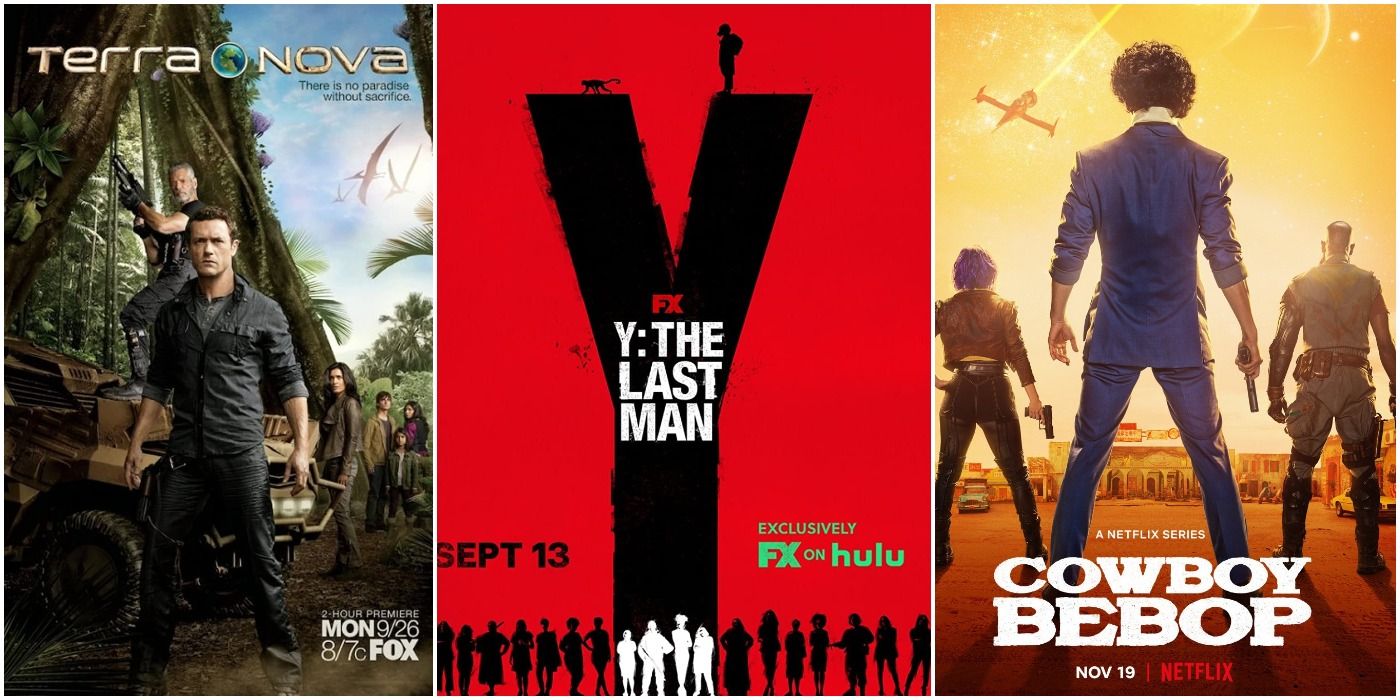
3 Y: The Last Man Spent A Decade In Development And Was Canceled After One Season
Brian K. Vaughan and Pia Guerra’s Vertigo comic series Y: The Last Man was a critical and popular darling. Talks of adaptation had been in the air since 2010 when Louis Leterrier expressed interest in making a film. In 2015, the adaptation was officially a go, redeveloped as a TV series. The series would air on FX with Michael Green as the showrunner. It ultimately took six years from the announcement for the series to air.
Green departed the series in 2019, while the original castings for Yorick (Barry Keoghan) and Agent 355 (Lashana Lynch) exited the next year. The series ultimately debuted in September 2021 and ended after a 10 episode first season. Attempts to find a new home for the series came up short. The fact that the series languished in development hell and only premiered 13 years after the comic ended didn’t do it favors – adaptations need to strike while the source material is hot.
2 Netflix’s Cowboy Bebop Had An Incredible Legacy To Live Up To… And Failed
In 2021, Netflix made Cowboy Bebop into the latest anime that was totally mistranslated into live-action. Told over 10 episodes, the series mixed and matched episodes from the series, stretched out storylines (especially Vicious and Julia), and was canceled three weeks after premiering. The series’ recreation of many scenes or moments from the anime just rang hollow, while missing the mark with the characters themselves. It felt less like Cowboy Bebop and more like a worse, even kitschier Firefly (itself a similar show to Bebop, but which pales to Shinichiro Watanabe’s anime in artistry and depth).
1 Terra Nova Failed To Be The “Lost” Successor It Tried To Be
Produced by Steven Spielberg himself, Fox clearly intended for Terra Nova to be a runaway hit – the premise is basically Jurassic Park plus Lost, after all. In the end, the series didn’t come close to either of those heights. Terra Nova was overseen by Star Trek alum Brannon Braga, who lacked confidence in the material – he did it because of his contract with FOX and the chance to work with Spielberg. The series struggled to find its voice, none of the characters were memorable, and the mysteries were vague with dull answers, a perfect recipe for instant cancellation.
About The Author