Today, we look at how Neil Gaiman had the Riddler deal with the darkening of superhero comics in the late 1980s
In Meta-Messages, I explore the context behind (using reader danjack’s term) “meta-messages.” A meta-message is where a comic book creator comments on/references the work of another comic book/comic book creator (or sometimes even themselves) in their comic. Each time around, I’ll give you the context behind one such “meta-message.”
Decades before the release of the current The Batman movie, 1989 saw the release of Tim Burton’s Batman and as I pointed out in a recent Comic Book Legends Revealed, that thing was NUTS. It was so crazy that even the Marvel Universe kept talking about the movie. When the Batman TV series was released in January 1966, it started not only a Bat-mania with fans, but also saw a big comic book boom where pretty much EVERY superhero comic book got a sales bump and almost 25 years later, Tim Burton’s Batman somehow had a very similar effect. It wasn’t quite as dramatic as the 1966 Bat-Mania, but it was still a really big deal.
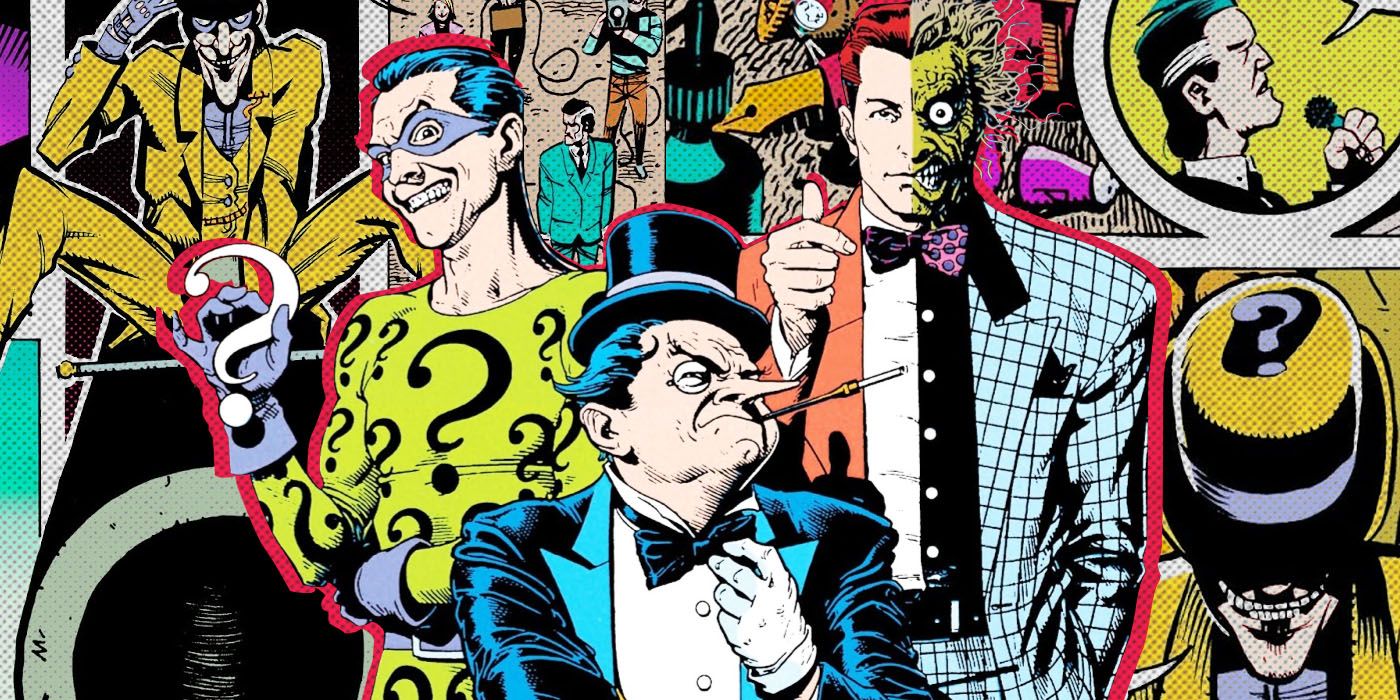
Naturally, enterprising comic book editors who wanted their comic books to, you know, sell, would come up with ways to tie into that Bat-Mania of 1989 and that’s what Mark Waid came up with when he did a Secret Origins Special in 1989 spotlighting three of Batman’s main Rogues, the Riddler, Two-Face and the Penguin (perhaps someone else at DC higher up than Waid came up with the idea, but I dunno, so I’ll give Waid the credit, as the editor of the issue). Neil Gaiman wrote a framing device, but he also wrote the Riddler story, drawn by Bernie Mireault, with inks by Matt Wagner and colors by Joe Matt and my goodness, the story is just brilliant all the way through and a fascinating commentary on that era of superhero comics, which was, of course, famously influenced by the dual 1986 masterpieces, Watchmen by Alan Moore and Dave Gibbons and Dark Knight Returns by Frank Miller and Klaus Janson.
THE RIDDLER REFLECTS ON BATMAN HISTORY
The conceit of the story is that Riddler is being interviewed by a news crew in an old warehouse filled with the various oversized props that Gotham City was known for. This was the stuff that the classic Dick Sprang/Lew Schwartz/Sheldon Moldoff stories were filled with and had become nostalgic props as long as about a decade before this story (Steve Englehart wrote a fight during his run on Detective Comics in a giant typewriter display, homaging Batman’s history).
Mireault has an iconic page where Riddler rides a cannon as the page layout forms a question mark…
Next to Riddler is the corn cob from his first appearance (which I wrote about yesterday).
Gaiman then quickly has Riddler detail his actual origin (the whole cheating at puzzles as he became a puzzle expert), but that is really not the point of this story at all…
No, this is about Riddler expressing his nostalgia for the past Batman comic book stories, which is, of course, perfectly displayed by this warehouse of old Batman relics…
This is Gaiman being very cognizant of the earlier Bat-Mania, but at the same time, this is 1989, which is all about post-modernism.
THE RIDDLER REFLECTS ON BATMAN PRESENT
A standard thing, which I’ve written about before about this era, is a tendency to portray older Silver Age villains as sort of losers. There were a number of excellent stories written with this approach, so I get where it is coming from, but I never really liked it that much and what I really admire about what Gaiman does here is that he gets that same basic point across (that the villains of the past appear a bit outdated in the then-present), but does so with so much more sympathy than a story like this typically took. Here, the Riddler legitimately wonders whether things changed and no one thought to tell him.
Of course, as I noted yesterday, the Riddler was killing people a decade before this comic book came out (and had always been nominally TRYING to kill people, although you could argue that he did so knowing that Batman would stop him), so perhaps the Riddler doesn’t slide in quite as easily as some other villain would into a whole “Wow, the villains are KILLING PEOPLE NOW” type of story, but the general idea is still an excellent one.
However, what I really appreciate here is something that I think was missing from Marvel’s whole Scourge era, where “wasted” villains were murdered by the Scourge to clear the deck for more modern villains. As the Riddler notes here, the past comics were not bad, there really is no such thing as an inherently dumb villain, and that there is just a case where a writer needs to step it up to make these characters work again and that, of course, is all that the Riddler (or any comic book character) really wants, for a writer to step up and write them well again. No one HAS to be kitschy, but their charm also doesn’t have to be lost in an attempt to make them grittier and more “realistic” (whether that means).
At the end, the Riddler turns the tables on the interview with a brilliant line about how of course he is enigmatic, he is literally E. Nigma. You don’t come to the Riddler for the answers, you come for the questions.
The news crew admits that while he is not much of a villain (at the time), he would be a great TV personality. Note, by the way, that this story is the debut of the classic Riddler suit that became so iconic in the years since then. This was meta-commentary at its finest and a sign that even early in his career, Gaiman was a striking comic book writer.
If anyone has a suggestion for a future Meta-Messages, drop me a line at brianc@cbr.com
About The Author
