Everyone’s cinema palate is different — some audiences enjoy the comfort of rom-coms, while others prefer the thrill of action. However, there is no genre dedicated entirely to movies that trigger nausea or make viewers squirm in their seats. While difficult-to-watch films usually fall in the Horror category, many of these movies simply cannot be boxed into a single genre.
In general, however, it can be assumed that the presence and intensity of violence, blood, gore, and scenes of extreme brutality play a major role in a film’s uncomfortability factor. Further, there are a few movies that are so over-the-top graphic that they continue to haunt their viewers’ dreams.
9 Cannibal Holocaust (1980) Was Arguably Designed With The Intention To Offend Its Viewers
Cannibal Holocaust was arguably designed to offend audiences — impalement, skinning, and animal mutilation are some of the many horrific scenes in this movie. In fact, the director and crew were subjected to high-profile court cases where they had to legally prove that the graphic imagery and onscreen killings were faked.
The larger problem with Cannibal Holocaust is its representation of the Ya̧nomamö tribe, who were depicted as uncivilized savages despite not actually indulging in murderous cannibalism. Interestingly, the movie has acquired a notable cult following, including a few critics who believe that Cannibal Holocaust‘s message bears artistic value.
8 Un Chien Andalou (1929) Links A Bunch Of Nauseating Scenes Using Stream-Of-Consciousness
The NYT referred to filmmaker Luis Buñuel as “a leader of avant-garde surrealism in his youth.” His first movie Un Chien Andalou, a collaboration with artist Salvador Dalí, was a revolutionary achievement for the Silent Era. Un Chien Andalou doesn’t have a straightforward narrative but rather employs stream-of-consciousness techniques that link a bunch of nauseating scenes together.
One of the most violent and memorable images in the film is that of an eye being sliced open. Buñuel had intended to expose the flaws in avant-garde cinema with Un Chien Andalou, but it proved to be a monumental triumph, much to his chagrin.
7 A Serbian Film (2010) Is Filled With Unnecessarily Gruesome Shock Value
The overtly barbarous visuals in A Serbian Film allegedly critique the despondent conditions in Serbia following the fall of Slobodan Milošević’s dictatorship. Critics, however, note that any such comparison is nothing more than “specious lip service.”
A Serbian Film is filled with unnecessarily gruesome elements, which resulted in the movie’s ban in several countries. Although the filmmakers claim that A Serbian Film is a layered metaphor, its shock value extends beyond the audience’s capacity to stomach its hollow sado-masochism.
6 The Human Centipede Trilogy’s Uniquely Grotesque Approach Is Squandered In The First Instalment
The Human Centipede‘s feeble plot and haphazard narrative didn’t stop it from winning awards at various horror movie festivals. Credit must be given to the film’s uniquely grotesque approach, even if it mostly just “revel[s] in its sick humor.”
The Guardian called The Human Centipede “sort of brilliant” as well as “entirely deplorable and revolting,” a perfect summation of the movie’s pseudo-surgical nightmarescape. On the other hand, The Human Centipede‘s sequels, subtitled Full Sequence and Final Sequence, were widely panned.
5 There Is Little Meaning To Be Found Beneath The Overtly Pornographic Surface Of Caligula (1979)
As unbelievable as it may sound, many of the events that occur in Tinto Brass’ Caligula are historically accurate. The Roman Emperor was known for inflicting his brutal perversions on anyone he could get his hands on, even his own sisters.
Caligula starred Dame Helen Mirren, who went on to defend the film as “an irresistible mix of art and genitals.” There is little meaning to be found below Caligula‘s brazenly pornographic surface — to quote Roger Ebert, the movie is a despicable “excursion into base and sad fantasies.”
4 Surrealism And Silliness Don’t Mix Well Together In Hostel (2005)
An abattoir for lost tourists doesn’t seem like an ideal premise for a horror movie, but Hostel twists the concept into an entertaining experience for the right audience. The film delivers a smorgasbord of torture sequences in varying degrees of detail: limbs, eyes, and organs are hacked, sheared, and sliced out of unwilling bodies.
There is a certain surrealism to the rivers of blood that flow out of Hostel, although the movie’s silliness factor drastically curtails its queasiness. On the political side of the spectrum, several people were deeply offended by Hostel‘s incorrect stereotypes about life in Slovakia and Czechia.
3 Salò, Or The 120 Days Of Sodom (1975) Is A Brutally Gutwrenching Take On Fascism
Salò, or the 120 Days of Sodom, is a bizarre take on fascism during the short-lived Italian Social Republic. The movie delves surprisingly deep into its themes, which range from capitalism and nihilism to unbridled sadism disguised as sexual exploration.
Salò was heavily censored upon release, particularly for its portrayal of underage characters. The only thing more dreadful than the movie’s imagery is the sound of its hapless victims crying and begging their monstrous captors to spare them. That said, Salò can be deemed an intelligent film because it manages not to indulge in its own depravity.
2 Man Bites Dog (1992) Blends Fiction And Reality When The Documentary Crew Ends Up Aiding Their Serial Killer Subject
Belvaux, Bonzel, and Poelvoorde push every boundary imaginable with their macabre mockumentary, Man Bites Dog. Fiction blends with reality when the initially unbiased film crew ends up helping their serial killer subject carry out his crimes.
The director trio star in Man Bites Dog as themselves, taking their movie to realm of metacommentary and beyond. Man Bites Dog sparked controversy for its excessive use of violence, but the film also won the International Critics’ Prize at the 1992 Cannes and received exceptional praise from a number of critics.
1 Se7en (1995) Gets Darker And Darker As It Hurtles Towards Its Inevitable Conclusion
David Fincher’s Seven was called a “relentlessly grimy shocker […] with slick gore effects and a haunting finale.” Despite having built immunity against violence, the film’s cop protagonists have their work cut out for them when John Doe enters the picture.
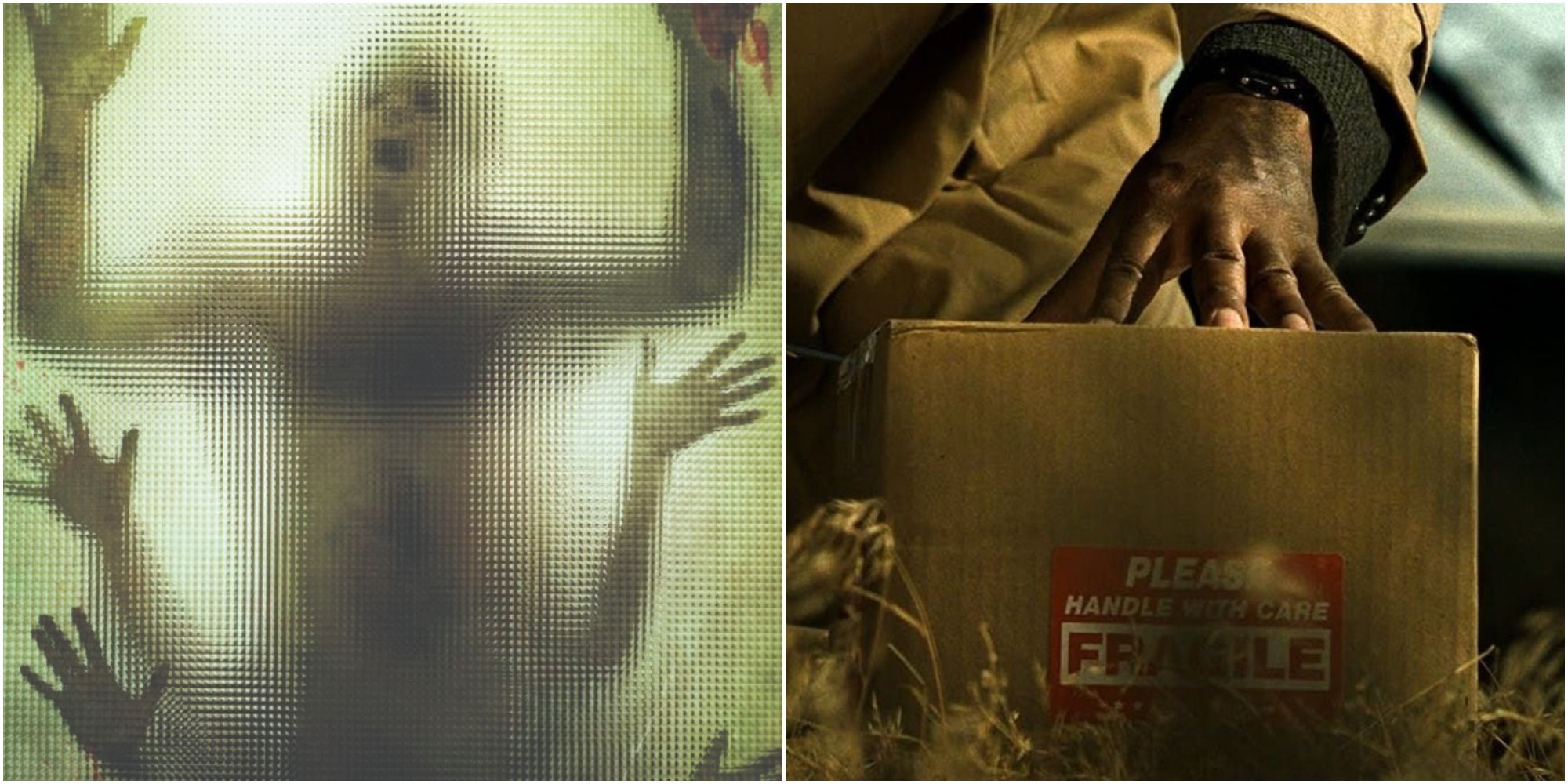
Spacey’s antagonist is extremely hateable, not only for his crimes but also for the glib manner in which he discusses his hideous process. Seven gets darker and darker as it hurtles towards its inevitable conclusion, a package that presumably contains the severed head of Tracy Mills. There’s no worse feeling than watching a smug villain win in the end.
About The Author
