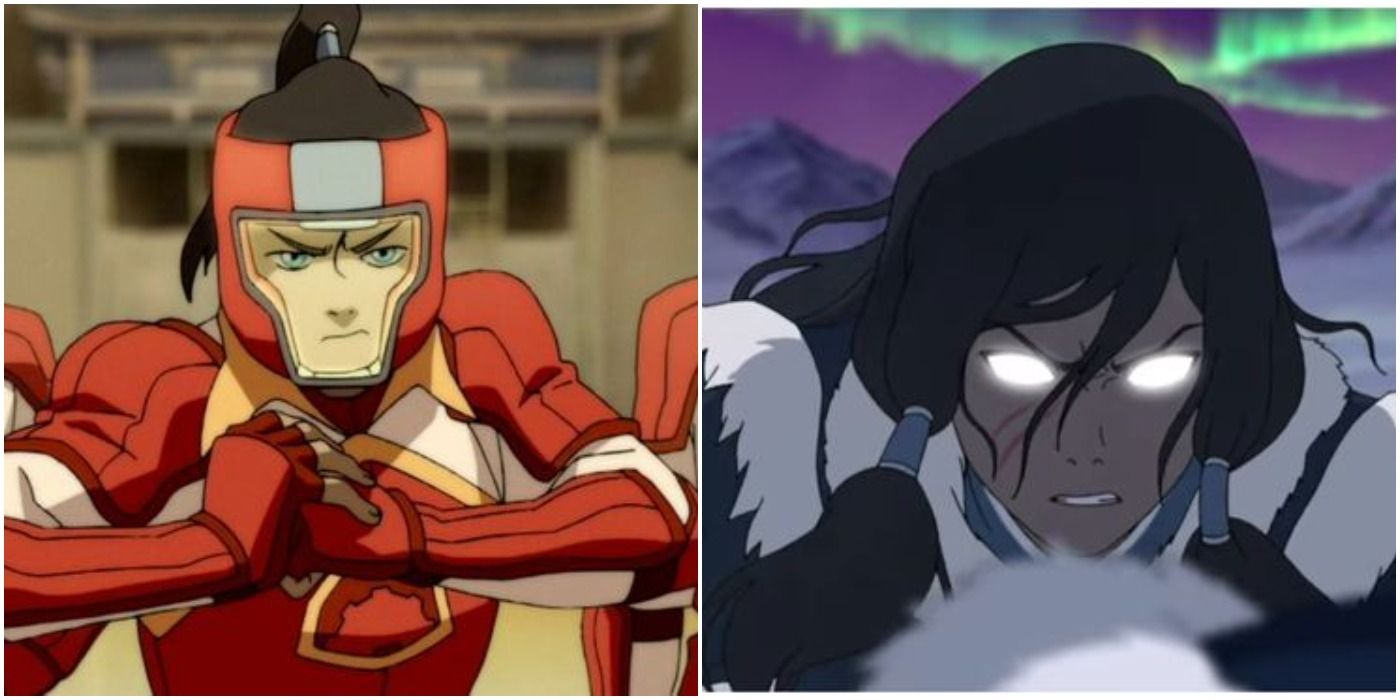
The Legend Of Korra is the spiritual successor to Avatar: The Last Airbender, although most will agree that it’s better for both if they’re viewed as their own individual series. Many fans of the original series are mixed when it comes to Korra, but there’s no denying that it handles many heavy themes that can be exciting to watch. Several characters end up incredibly beloved — such as Lin Beifong — almost as much as their original counterparts.
However, that doesn’t mean that those viewers who decide that Korra isn’t their cup of tea are wrong. In fact, when taking a look at many of the plot points and decisions regarding character relationships within the series, there are a ton of missteps that hurt the series far more than they help it.
10 There’s Far Too Much Focus On Poorly-Written Romance
Likely a response to Avatar fans who begged for more romantic interactions between characters, The Legend Of Korra leans more heavily into its romantic themes. The issue with this is that in Avatar, many character relationships are well-written and compelling. There are reasons for fans wanting to see more of them.
In Korra, however, it feels like romance is shoehorned in where it doesn’t belong, and much of it is messy and poorly written. Mako constantly bounces between Korra and Asami, which ultimately feels fruitless as the two girls get together at the end, anyway.
9 Korra & Asami Spend Most Of Their Time Being Love Rivals
It’s true that Korra and Asami being confirmed on-screen is a huge win for the LGBT community. However, it could have been handled far better, which makes it hard to fully accept the way things turned out for them.
After all, Korra and Asami spend most of their time on-screen as love rivals rather than potential love interests for each other, let alone good friends. It feels like their relationship revolves more around competing for Mako’s attention.
8 A Lot Of Characters’ Major Development Happens In Comics That Many Don’t Read
Although there are ultra-dedicated fans who keep up with the after-series comics, this isn’t true for many. For the casual audience, The Legend Of Korra ends with the end of Season Four, and that’s a huge problem.
Things like Tenzin’s children reaching older teenage years, the aftermath of defeated villains like Kuvira, and even Korra and Asami’s romantic relationship are delegated to solely the comics. Some type of flash-forward at the end of Season Four detailing at least some comic content would have helped alleviate this problem.
7 The Way Korra Regains Her Lost Bending Elements Feels Like Badly Written Plot Armor
At the end of Season One, after losing most of her known bending abilities, Korra is heartbroken. Everyone is celebrating the defeat of Amon, but Korra goes off to be alone with her thoughts, clearly hurt about losing her abilities.
However, she soon connects with Aang through the Avatar State — something she’s always struggled with — and immediately regains her lost powers. This could’ve been a great heartwrenching cliffhanger to leave the first season on and fleshed out during a small arc at Season Two’s start, but instead feels like poorly written plot armor.
6 The Classic “Team Avatar” Structure Falls Short In Nearly Every Aspect
The Legend Of Korra seems to attempt to follow the motto of “if it’s not broken, don’t fix it” with many of their writing decisions. However, they also seem to miss what made the original so beloved.
The only aspects from the original Team Avatar that seem present are each character representing a bending element, aside from air, as there aren’t many airbenders. They also tried to throw in romance. The bonds between the New Team Avatar feel rocky at best, and Korra likely would’ve been better off trying to follow a different format.
5 The Original Team Avatar Fans Loved & Wanted More Of Are Hardly Seen
Although fans go into The Legend Of Korra expecting a departure from the original, it’s true that they also hoped to see more of their old favorites. Toph and Zuko are given minor moments to shine, but it feels like Sokka and Aang are forgotten entirely aside from one or two quick flashbacks or off-handed mentions.
It wouldn’t have been difficult to give them an episode dedicated to highlighting events that happened between the two series, and fans would have positively adored it. It honestly feels like it would’ve been better not to mention the original Team Avatar at all, considering the treatment they receive.
4 Korra Is Portrayed As A Fighter But Loses Most Of Her Important Battles
Aang is an incredibly spiritual Avatar who prefers not to fight by whatever means necessary. He’s even shown to simply take away any power Lord Ozai had instead of using his bending abilities to kill him outright.
In stark contrast to this, Korra is seen as more of a fighter from the very beginning. Korra has no problems getting into scraps with others and proving her skills. There wouldn’t be much of an issue with this except Korra is shown to lose most of the fights that she engages in, especially if they’re more skilled than simple street thugs.
3 Korra’s Avatar State Feels Incredibly Weak In Comparison To Aang’s
When used in Avatar: The Last Airbender, the Avatar State feels like an ultimately powerful form where Aang is able to perform the impossible. It takes a long time for him to properly connect with and use its powers, and it’s fittingly incredibly strong.
However, not only does Korra struggle way more with her spiritual side than Aang does, but she’s somehow shown to magically unlock the Avatar State at the end of Season One without really doing anything to earn it. She’s also shown to lose against many of her opponents while using it, which makes Korra’s Avatar State feel pointless.
2 Pro Bending Has A Lot Of Potential & Is Essentially Forgotten About
Pro Bending plays a big part at the beginning of the first season. Not only is it vital to Mako and Bolin’s livelihoods, but it’s also a big reason why Korra is finally able to absorb what Tenzin was trying to teach her about readying her mind for airbending.
It’s also just an incredibly fun way to show how bending and its uses have evolved with the times, now being something that people can use for playful competition and as a fun spectator sport. Despite all of this, it’s just another case of wasted potential that ultimately ends up forgotten about.
1 The Show Is Written On A Season-By-Season Basis Rather Than Having Overarching Plots Spanning Multiple Seasons
When The Legend Of Korra received its first season, the writers were under the impression that a single season is all they had to work with. This leads to each season feeling more like its own self-contained plot rather than having big buildups and payouts.
This is also a big reason why viewers have such a problem with the ending of the first season. Korra unlocks the Avatar State and has free access to all four elements. If that was all for Korra, fine, but they then had to pull three entire additional seasons out of nowhere with a protagonist who felt like she’d already finished developing.
About The Author
