Adapting a work of literature is challenging in the best of times, and when it’s as beloved as Frank Herbert’s Dune, the pressure goes up all the more. Embellishment and symbolism work far better on the printed page, where the reader’s imagination allows for more flexibility, than the movie screen where the images are set and permanent. No less a cinematic giant than David Lynch made an effort at adapting it, and the results were heavily mixed at best.
Denis Villeneuve’s 2021 version performed significantly better than Lynch’s on all fronts: earning high praise and a slew of Oscar nominations for its powerful rendition of the story. That meant tackling concepts that Herbert deliberately distorted for dramatic effect, including major characters like Baron Harkonnen. Dune’s principal antagonist is almost cartoonishly evil in the book, and while Lynch went all in on the Baron’s bizarre qualities, Villeneuve needed to take a more measured approach. In order to find it, he turned to a cinematic inspiration: Colonel Kurtz, the mad U.S. Army officer played by Marlon Brando in Francis Ford Coppola’s war epic Apocalypse Now. That role, and the film itself, have become a legend among film lovers. It turned out to be the perfect fit for Villeneuve’s Baron.
Who Is Baron Harkonnen in Frank Herbert’s Dune?
Herbert’s character was the head of House Harkonnen, an aristocratic dynasty supporting the galactic Emperor in the novel’s far-flung future. They were depicted as savage, cruel, under-handed and duplicitous, with an ancient feud against the noble House Atreides that comes to a head during the events of the novel. The Harkonnens control the planet Arrakis – the sole source of the vital spice that makes interstellar travel possible – and are ordered to surrender it to the Atreides at the beginning of the story. It’s part of an elaborate ruse of the Baron and the Emperor to destroy the Atreides. It also results in Paul Atreides ultimately seizing his destiny and freeing Arrakis from the Emperor’s rule.
The Baron himself was depicted as corpulent and corrupt. He uses a hover suit to travel because he can no longer move under his own power. The suit appears to be fused to his skin, which is covered in pustules and tumors. Despite that, he remained a cunning adversary with the Machiavellian skills to force his hated foes into a trap. He was also an unspeakably cruel man, prone to torturing friend and foe alike. As villains go, there was very little subtlety to him.
How Villeneuve Used Apocalypse Now to Shape Baron Harkonnen in Dune
Removing the cartoonish aspect obviously required toning the character down: even Lynch pulled back from some of Herbert’s descriptions. Yet to reduce his monstrosity too much was to dull the character’s impact. The Baron is supposed to inspire revulsion in the reader, as well as presenting a terrifying foe for the heroes to battle. Brando’s performance in Apocalypse Now made for an apt template on which the movie could build. As revealed in the documentary Hearts of Darkness: A Filmmaker’s Apocalypse, Kurtz was written as a Green Beret and hardened combat veteran: a formidable physical presence perfectly capable of killing someone with his bare hands. Brando infamously arrived on the set completely unprepared for the role: overweight, out of shape and without having studied the script. Yet his salary was paid and Coppola had a limited amount of time to make use of him.
In response, the director re-imagined Kurtz’s as a man who had given in to his baser appetites. He cloaked the character’s quarters in shadows to better mask Brando’s obvious physical condition, then gave the actor leave to improvise dialogue. The results were brilliant, intense and terrifying: turning Kurtz into the figure he was intended to be despite the actor’s recalcitrance and the harsh conditions of the film’s production.
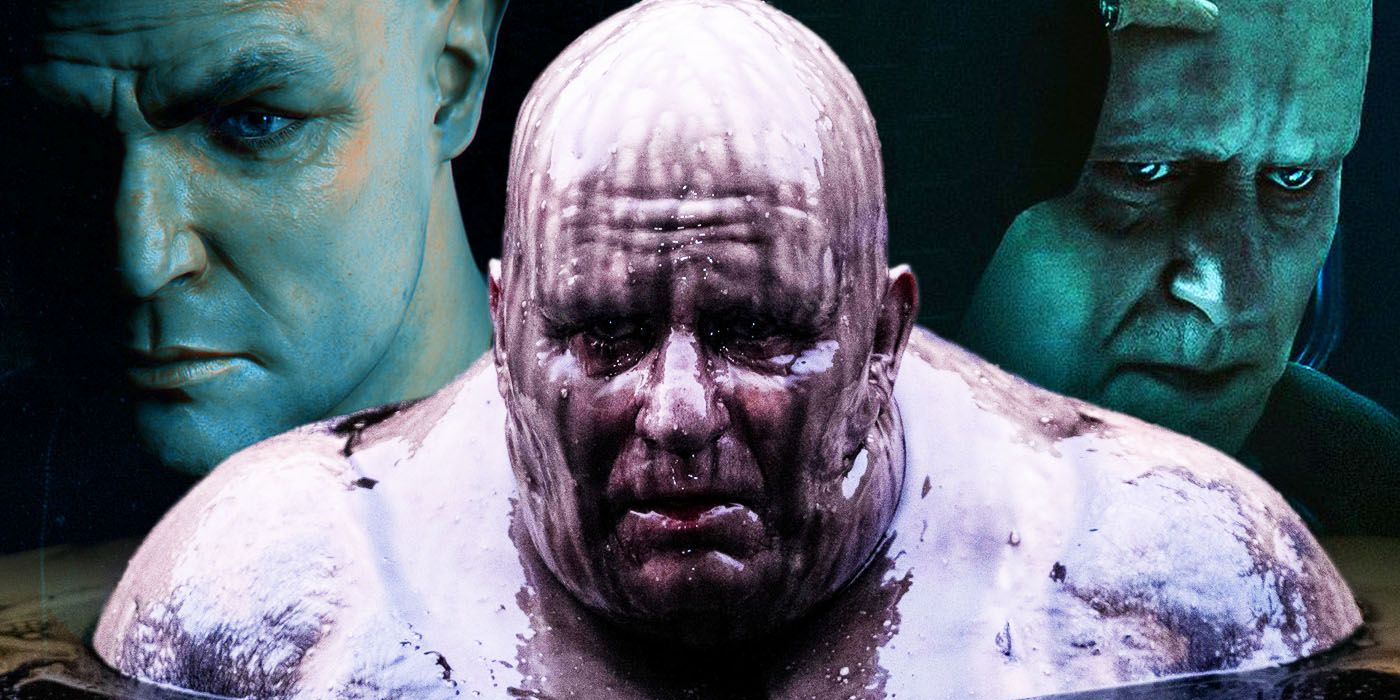
It’s an apt model for Baron Harkonnen, which played out not only in actor Stellan Skarsgard’s performance, but in Villeneuve’s direction and visuals. According to an interview with SlashFilm, he was concerned that the Baron would come across as a joke. Kurtz became the ideal model to help steer clear of that. The film thus includes images such as the Baron drenched in a healing goo after an aborted assassination attempt, and an overall gloom and shadow to his chambers that echo Coppola’s cinematography and Kurtz’s perennial existence in darkness. His appetites are also emphasized, as when he mocks Duke Leto by eating dinner prepared from the Atreides larder. It captured the surreal, dreamlike atmosphere of Apocalypse Now, along with the inherent menace of the character, all without pushing over the top into kitsch. Classics beget other classics, which is nowhere more true than in Dune’s inspiration for its villain.
About The Author
