Star Wars is chock-full of iconic rivalries, often spanning multiple movies and featuring numerous fights. What usually separates a good lightsaber battle from an uninteresting one isn’t the choreography, but the context and meaning behind it. While the first to come to mind are rivalries like Obi-Wan and Darth Vader, or Luke and Kylo Ren, arguably the best one was presented in Star Wars: The Clone Wars.
That’s not to say the other rivalries aren’t compelling. Obi-Wan trained Anakin from a young age and was a brother to him during the prequel era. When he became Darth Vader, no one was hurt more than Obi-Wan (except possibly Padme), as his pleas to Anakin showed more emotion than any Jedi was expected to have. However, by the time their rivalry reaches Star Wars: A New Hope, Obi-Wan doesn’t even view Vader as the person he once knew, claiming that Anakin died long ago.
The rivalry between Luke and Kylo carries the same weight, as once more they’re a failed master and apprentice. The flashbacks seen in Star Wars: The Last Jedi reveal the mistakes of both sides. Ben Solo was misguided by Snoke and seemed set on choosing the path of the dark side. Luke, however, saw what was to come, and for the briefest of moments thought he could strike down his apprentice and save countless lives. But it only created a regretful master and a betrayed apprentice.
Both rivalries feature great climatic lightsaber fights, even if they do vary in quality. Obi-Wan versus Vader is slow and a product of its time, but Obi-Wan sacrificing himself so that Luke can be pushed forward on his journey gives a hopeful end to the character. And the Luke versus Kylo fight on Crait provides a unique confrontation in Star Wars. Luke’s entire purpose was to stall for time, whereas Kylo’s hatred kept him from seeing that his former master wasn’t truly there.
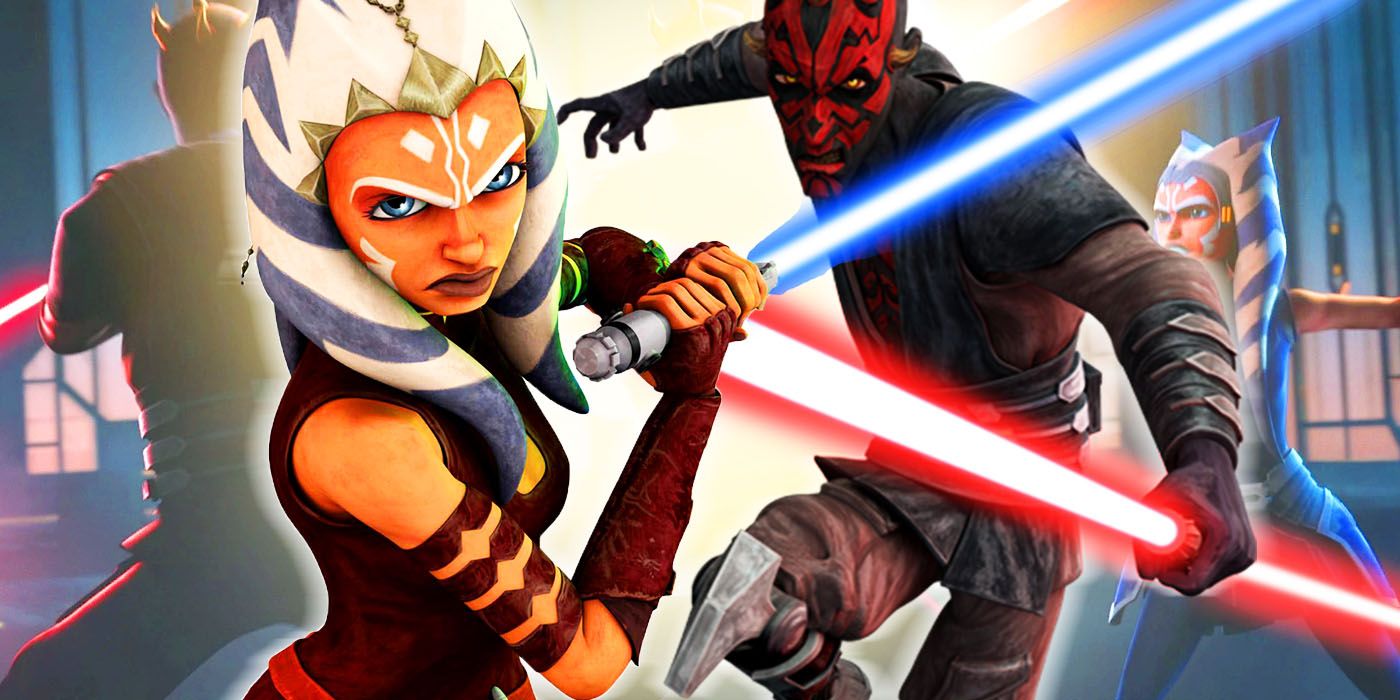
Despite these compelling rivalries, the best arguably comes from Darth Maul and Ahsoka Tano. While Maul and Obi-Wan had a more personal hatred, Maul and Ahsoka’s relationship was much more complicated. During The Clone Wars episode “The Phantom Apprentice,” Maul attempts to lure Obi-Wan and Anakin to Mandalore, only to be met by Ahsoka.
What’s unique about their relationship is that Maul is actually willing to cooperate and tell the truth. He explains Palpatine’s entire plan and that Anakin has been groomed to become the next Sith apprentice. What’s so conflicting about the moment is that Maul is actually trying to save everyone, yet Ahsoka’s loyalty to Anakin is so strong she refuses to believe he could do such a thing.
Despite Maul almost convincing Ahsoka to join him, the conversation results in undoubtedly the best lightsaber fight in the series, and one of the best in all of Star Wars. Not only is the choreography amazing, with original Maul actor Ray Park returning for motion capture, but the meaning behind it is great as well. It’s easy to want Ahsoka to win because she’s the hero, yet Maul isn’t wrong about Anakin and could be the only chance to stop Palpatine.
That fight ultimately ends with Ahsoka capturing Maul. But once again their relationship is tested, as she breaks Maul free during Order 66. While he appreciates being set free, he still holds resentment towards Ahsoka as she only uses him as a distraction. Finally Maul leaves, leaving Ahsoka for dead, and they don’t cross paths again until the second season of Star Wars: Rebels.
Even thought their final meeting could be seen as underwhelming, it’s rare in Star Wars that a rivalry ends with each side no longer caring. Ahsoka isn’t one to hold a grudge and cautiously accepts Maul’s help exploring the planet Malachor, whereas Maul is a broken shell of what he once was, only fixated on finding Kenobi. And after he unsurprisingly betrays them, Ahsoka goes to deal with the bigger problems at hand.
So while Maul and Ahsoka may not have the longest rivalry, or the most personal, they hold a unique relationships in Star Wars. The classic good versus evil theme is put into question when Maul’s motives are for the good of the galaxy. And their constant switch between fighting each other and working together makes for an interesting dynamic.
About The Author
