What’s in a name? Would a video game known by any other name be any less of a classic? Romeo had the right idea when posed that initial question to Juliet, as there’s more to someone or something beyond their name or label. That they are best defined by their individual qualities. Video games are no different as there are plenty of games, including those from iconic series, that are known by different names in different regions. Despite this, these games are mostly the same.
These name changes, more frequent during the early decades of gaming, were often done for reasons such as marketability and avoiding conflict. Today, players from across the world have a growing number of outlets for video game discourse. This often results in confusion as a player who knows a game by one name can easily find themselves in a conversation with another player who knows of that game by another name.
10 Dark Chronicle Is Known As Dark Cloud 2 In North America And South Korea
Dark Chronicle was released in late 2002 in Japan and early 2003 in other regions. Dark Chronicle is a spiritual sequel to 2000’s Dark Cloud and centers around dual protagonists, Max and Monica, as they seek to shape the present by altering the past.
It’s because Dark Chronicle is a spiritual sequel to Dark Cloud, and shares similar gameplay elements such as the city building mechanic, that Dark Chronicle was released in North America and South Korea as Dark Cloud 2. This made it easier for players to recognize the title and understand what to expect.
9 The Resident Evil Series Is Still Known As Biohazard In Japan
A classic example of a game known by different names in different regions is the Resident Evil series, which is known as Biohazard in Japan. This name change was due to the anticipated difficulties in securing the naming rights to “Biohazard” in the United States as there had been another game with that title. The Resident Evil name was the result of a contest within Capcom to find a new name.
Capcom would make a play on this naming by utilizing alternate subtitles for the seventh Resident Evil title in Resident Evil 7: Biohazard and Biohazard 7: Resident Evil.
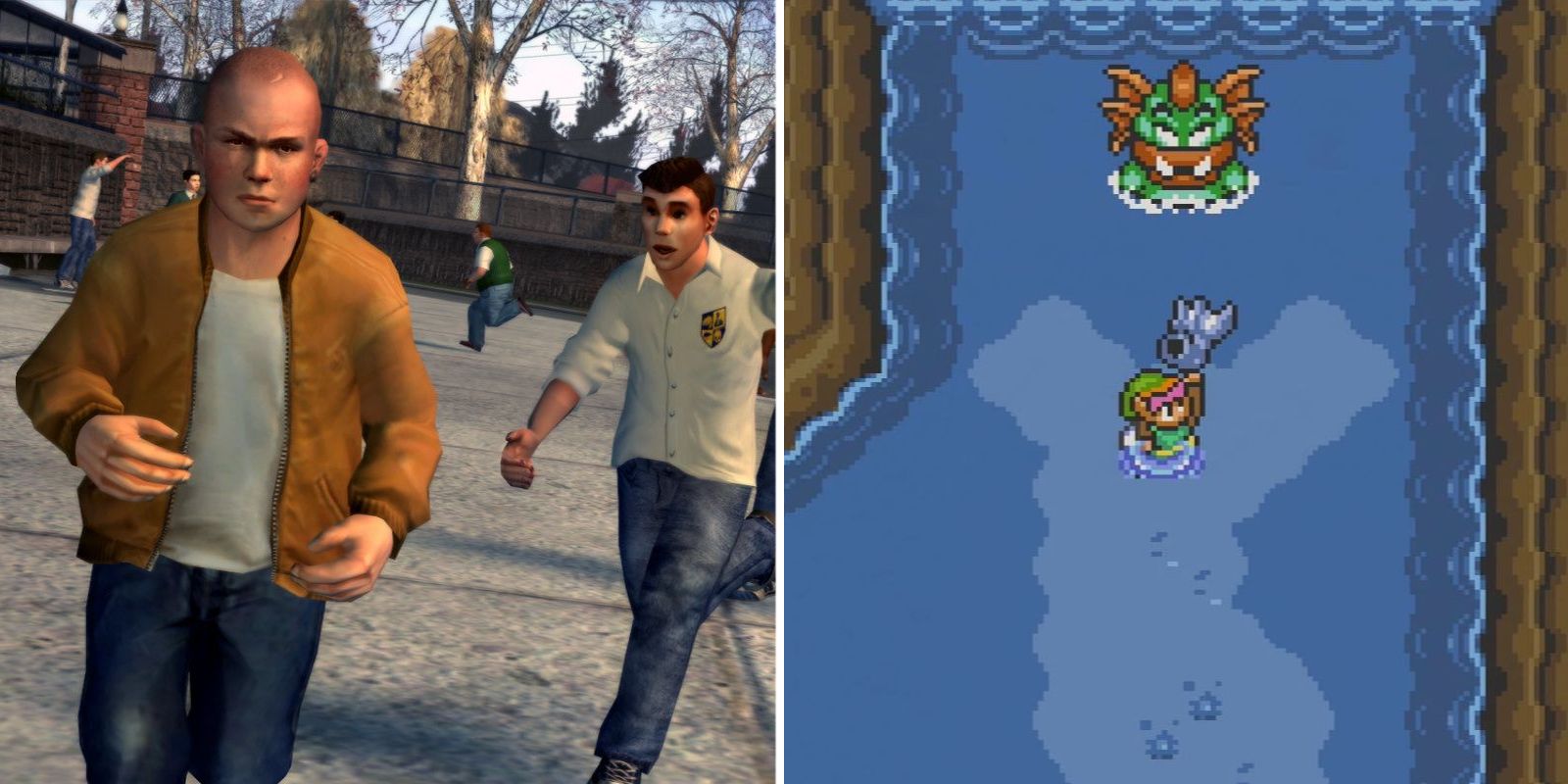
8 Bully Is Known As Canis Canem Edit In Europe
Rockstar Games has long been a controversy magnet thanks to their Grand Theft Auto series. This trend would continue with their release of Bully in 2006. Despite Bully being rated for teenaged players, as opposed to mature/adult ratings for the GTA series, Bully would garner controversies for the perceived glorification of bullying. This in large part led to Bully’s alternate name of Canis Canem Edit in PAL regions (Asia, Africa, Europe, South America, and Oceania).
Canis Canem Edit isn’t a random choice for a name, as it is Latin for “dog eat dog,” which very much fits the narrative of Bully as Jimmy Hopkins seeks to pave his way in a Bullworth Academy that is divided by numerous cliques.
7 The Ratchet & Clank Series Is No Stranger To Using Different Names
One of the biggest reasons the Ratchet & Clank series is so beloved in the gaming world is its humor. Much of that humor made its way into Ratchet & Clank’s subtitles from throughout the series. Many of the U.S.-based names are innuendo-filled such as Ratchet & Clank: Going Commando. However, these early Ratchet & Clank subtitles were changed for other regions such as Europe and Japan (Going Commando was known as Ratchet & Clank: Locked and Loaded, for example).
These name changes are likely due to Insomniac Games not believing these innuendo jokes would land in other regions, or may potentially affect sales. As for Ratchet: Deadlocked (Ratchet: Gladiator outside the U.S.), the reason for this change is unknown.
6 Final Fantasy IV And Final Fantasy VI Were Originally Known As Final Fantasy II And Final Fantasy III In North America
Two of the most iconic JRPGs ever released were once known by different titles in North America. Final Fantasy IV and Final Fantasy VI were released as Final Fantasy II and Final Fantasy III, respectively. This was due to the true iterations of FFII and FFIII having not been released in North America.
The true FFII would later release in North America as a part of the Final Fantasy Origins collection for the original PlayStation in 2003. The true FFIII was released for the first time outside of Japan through a Nintendo DS remake in 2006.
5 Game Boy Color’s Metal Gear: Ghost Babel Was Released As Metal Gear Solid Outside Of Japan
Long before titles like Metal Gear Solid: Peace Walker and Metal Gear Solid: Portable Ops allowed players to take the long-running stealth series on the go, Konami had previously released Metal Gear: Ghost Babel for the Game Boy Color in 2000. Ghost Babel, however, was released outside of Japan as Metal Gear Solid. Despite sharing the same name as its PlayStation counterpart, Ghost Babel is set in an alternate universe and carries over much of the early Metal Gear’s top-down perspective and gameplay. Metal Gear: Ghost Babel was well-received upon release pulling in numerous perfect scores, which make it among the highest-rated games on the GBC.
4 The Tactical XCOM Series Was First Known As UFO In Europe
The inspiration for the alien invasion strategy series XCOM comes from the British television series UFO, which many of XCOM’s original developers were a fan of. This likely resulted in the original XCOM’s title to initially be UFO: Enemy Unknown. When UFO: Enemy Unknown was released in the U.S., however, the name was changed to X-COM: UFO Defense. X-COM’s name is a reference to XCOM’s central UFO defense force, which means “eXtraterrestrial COMbat.” The X-COM naming would subsequently be used for future games in the XCOM series likely due to more easily obtainable (and sellable) naming rights.
The “Enemy Unknown” subtitled would later be reused in the series reboot XCOM: Enemy Unknown in 2012 (notably removing the hyphen in the XCOM name).
3 Jet Set Radio Was Initially Known As Jet Grind Radio In North America
The stylish, cel-shaded, Jet Set Radio was released in 2000 under two different names. In most regions, the Jet Set Radio name remained consistent. However, in North America, Jet Set Radio’s name would be changed to Jet Grind Radio. This is due to trademark complications as “Jet Set” was trademarked in the U.S.
This name change would be short-lived as a sequel titled Jet Set Radio Future would release in 2002 with consistent naming across regions. Later remasters and ports of Jet Set Radio ditched the Jet Grind Radio name as well.
2 The Legend Of Zelda: A Link To The Past Is Known As The Legend Of Zelda: Triforce Of The Gods In Japan
The Legend of Zelda: A Link to the Past is often argued as not only the peak of The Legend of Zelda series but among the greatest video games ever created. ALTTP is actually known as The Legend of Zelda: Triforce of the Gods in Japan. This name change was due to localization removing religious references to avoid potential controversy (a localization practice that still continues in series such as Yu-Gi-Oh!).
The Legend of Zelda: A Link Between Worlds, the spiritual sequel to ALTTP, was titled The Legend of Zelda: Triforce of the Gods 2 in Japan.
1 The Curious Case Of Bust-A-Move And Bust-A-Groove
Puzzle Bobble is the tile-matching puzzle game spinoff of the adorable arcade platformer Bubble Bobble. Puzzle Bobble would later go on to release more entries than its main series counterpart. Puzzle Bobble was released in North America and Europe as Bust-A-Move. This name change could be because the Bust-A-Move name would be more eye-catching in arcades and consoles in other regions.
In Japan, developer Enix would later release a game titled Bust A Move: Dance & Rhythm Action in 1998. Since Bust-A-Move was already an established name in North America and Europe, Bust A Move’s name would be changed to Bust-A-Groove in those regions.
About The Author
