Despite being toned down and more accessibly to all-ages than it’s Cartoon Network-run namesake, DC Comics Justice League Unlimited remained an entertaining, albeit slight, tie-in to the much-beloved animated series during it’s 2004 to 2008 run. While never hitting the heights of prior animated-style titles like the Batman Adventures, JLUs primary creative team of Adam Beechen and Carlo Barberi provided two and a half years of character driven and action packed material. Occasionally tying directly into the events of the show (while other times outright contradicting it), it was a pleasant diversion for fans in between episodes.
Following Beechen and Barberis exit, the series turned to rotating creative teams. This opened the door for JLU writer/story editor Matt Wayne to step in and write multiple issues. A former comic writer and editor, Wayne’s contributions directly tied into the animated series with several stories that gave closure to a few unresolved or open story and character beats from the final season of the show.
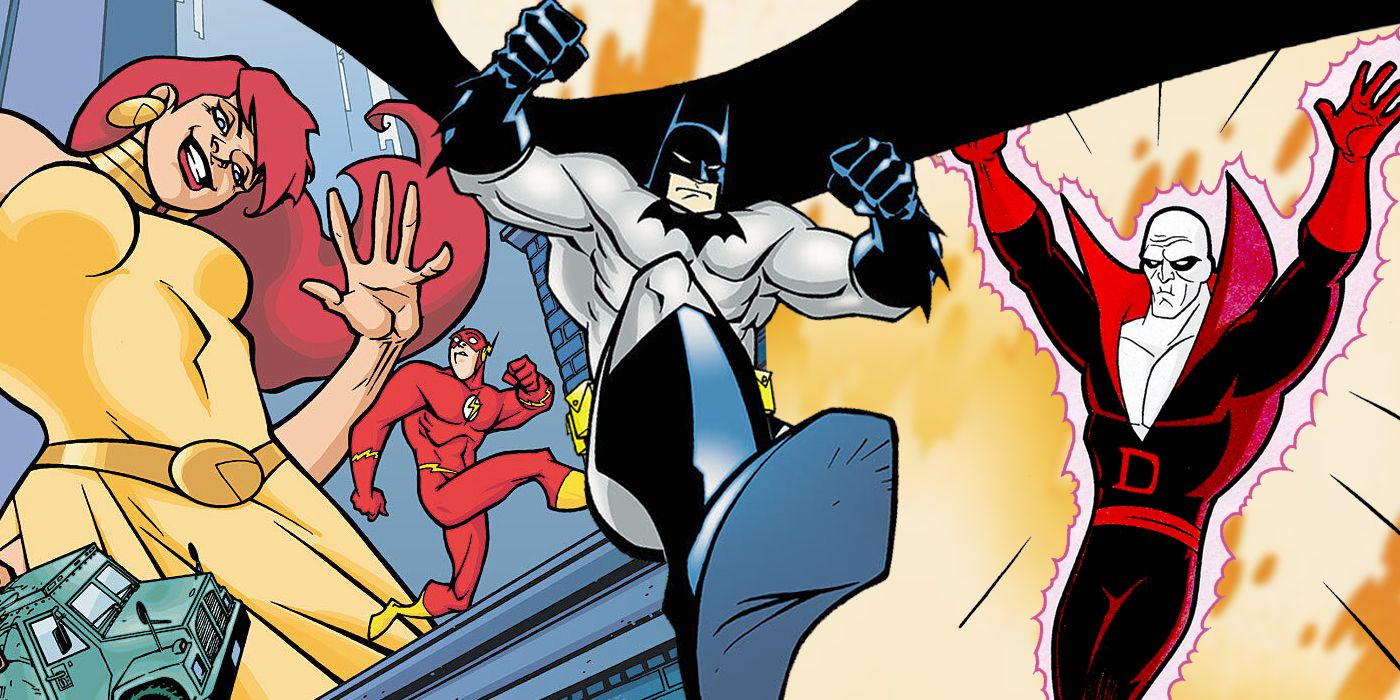
Wayne’s inaugural issue was Justice League Unlimited #37, released in September 2007 with art by long-time DCAU comic artist Min S. Ku. Titled “High Spirits,” it was seemingly a follow up to the JLU episode “Dead Reckoning.” It featured the return of Boston Brand aka Deadman and also introduced the Spectre to the series, with the spirit of vengeance running amok before being confronted by Batman and Shayera. Wayne’s experience with the more complex writing of the series is evident from the get-go; the stakes are higher and the emotions more vital. When Batman is forced to relive the death of his parents, the moment is taken directly from its depiction in the JLU episode “For the Man Who Has Everything”.
The issue ends with the revelation that the Spectre’s rampage was caused by sorceress Tala, then in the process of “reforming” herself after her apparent demise in the television two-part series finale “Alive!” and “Destroyer.” This is ultimately left unresolved, with the details behind her return untold, but this does pay off hints by the creative team that Tala sabotaged the attempted recreation of Brainiac from those final episodes. It stands to reason that if she was able to do that, then her story might not be completely over yet.
Connections to the series are clear from the outset in Wayne’s second issue, JLU #38 “When Bad Girls Do Good.” Featuring artwork by Dario Brizeula (the first animated-style title to feature his art but certainly not the last), it picks up on a moment from “Destroyer” as it’s starting point. In that episode the Justice League find themselves teaming up with the surviving members of supervillain co-op the Secret Society to stop Darkseid’s invasion. After the day is saved, size-changing villainess Giganta plants a kiss on the Flash before fleeing. This moment drives the issue, seeing Giganta try to win the Flash’s affections by fighting crime alongside him. Predictably, it doesn’t go well.
Finding inspiration from an surprising character beat would be enough, but the issue also brings in reporter Linda Park, last seen attempting to flirt with an oblivious Flash in the episode “Flash and Substance.” Linda’s affections are finally reciprocated here and the two ostensibly begin their courtship (no surprise considering she and JLU’s Flash, Wally West, had been married for nearly a decade in the mainline DCU by this time). It’s a little disheartening that Gigantas turn didn’t take, but this shows the clear potential of the title to follow up on bits that would otherwise be left in the ether.
Wayne contributed to the final issue of the JLU comic with #46, “The Dork, G’nort, Returns.” Alongside the returning Barberi, mere months before the start of his breakout run on Marvel’s Deadpool, this issue was a Green Lantern-centric story drawing little from any episode of the series. Despite closing out it’s run with a mix of new material and inventory issues — some of which it seems had been held back for years — Justice League Unlimited managed to skirt an entirely undignified end by bringing an actual series writer on board to craft stories drawn directly from the series, affording it more significance than it might have had otherwise.
While unavailable in any collected edition or digital format, the push toward seeing other JLU issues in themed collections bodes well for this eventuality. As key lost pieces of the Justice League Unlimited narrative, they’re more than deserving of it.
About The Author