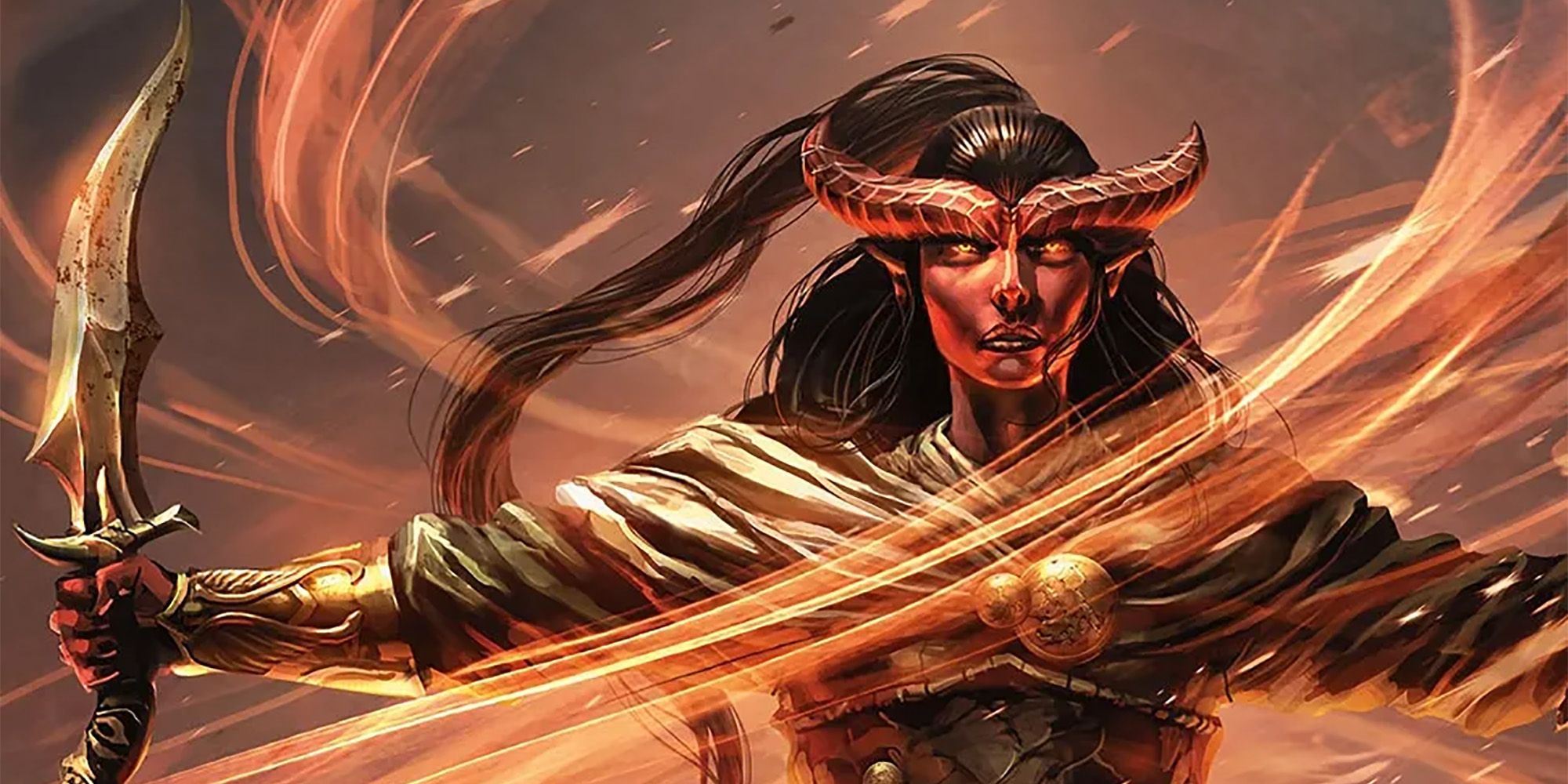
Dungeons & Dragons, especially Fifth Edition, is extremely focused on storytelling. These stories are often the most powerful and engaging when they relate personally to the unique player characters participating the the campaign. D&D stories tend to follow a campaign structure (homebrew or pre-made) that leads the players and their characters through a planned story arc, following their journey through to defeating the villain. These can certainly be memorable, but players often get most invested in stories that directly relate to their characters.
One of the best candidates for player-centric stories is the Warlock class. While backgrounds, player-created backstory and some subclass choices come with implied story elements, nothing mechanical in the game goes quite as far as the Warlock. From just first level, the Warlock comes built-in with a Patron, the supernatural being that grants them their power. This Patron is a perfect story hook for that character’s personal arc, adding their own flavor to all of the Warlock’s abilities.
Unlike some other classes, Warlocks choose their subclass during character creation, as it relates to the Patron who grants them their otherworldly abilities. Be they Fiend, Undead, Old One, Archfey or one of the many other options, this will influence the Warlock’s personal story right from the beginning. While the as-written rules don’t provide much guidance on the Patron aside from some flavor about what each subclass choice means, the Dungeon Master and player can work together to craft an interesting backstory for the Warlock.
As the one who grants their powers, a Patron is bound to be a large part of a Warlock’s personal story. The choice of Patron is only the beginning, as the subclass is just a collection of abilities associated with that type of Patron. The best way to think of this is that the Patron as it is written in the Player’s Handbook is simply the theme of the Patron as a character. If the player chooses the Archfey, that means the Patron should fit into that theme, being a chaotic, impulsive being of some kind, or perhaps a creature from the Feywild. The Undead would mean that the player’s Patron could be a lich or some other undead creature, and so on.
This Patron should be as much of a character as any major NPC from the other characters’ backstories. What do they want and how do they intend to get it? What manner of creature or person are they? Why did they choose to bestow their power on the Warlock? The DM and player should discuss what the relationship between Patron and Warlock is. Is the Patron an antagonist in the Warlock’s story, or are they trying to help them achieve their goals? How did the Patron bestow these powers in the first place, and how will they go about granting more powers as the Warlock levels up? Do they whisper secret rituals in the Warlock’s dreams, or does the Warlock suddenly wake up one day finding they possess these new powers? And, most importantly, what form does the Patron take?
A Patron doesn’t have to be a humanoid or even an incredibly powerful creature. There is, of course, a certain level of power implied in a Patron, seeing as they have enough power to share with others, but there are a number of creatures that exist in D&D that could have that sort of power. An Aboleth or a Kraken could be examples of Great Old One Patrons, and Dracoliches or powerful ghosts could be Undead Patrons.
Creating a Patron and making them feel unique and interesting is important part of crafting a personal story surrounding a Warlock. DMs should consider the Patron’s personality and motivations. While most entities that would function as Patrons lean towards the Evil side of cosmic alignment, this doesn’t have to be the case. They could genuinely want to help the Warlock. Another thing to consider is whether the Patron can revoke their gifted powers or not. If the Warlock stops observing their rituals or doing their bidding, what happens?
The answer to that question could inspire a thrilling story about a Patron trying to reclaim their powers or a Warlock discovering that they don’t trust their Patron as much as their thought. Perhaps they are being manipulated with promises of power, and having their powers taken away makes them realize this. This can also lead to some interesting in-character discussions among the party, allowing the Warlock’s player a moment to talk about their backstory and ask for the party’s help in getting their powers back. Perhaps a storyline like this ends with the player facing the Patron in a fight, and the Warlock taking their source of power for themselves — or having to find a new Patron.
Warlocks and Patrons are inextricably linked both in their mechanics and flavor. Having an important NPC like this built into a character’s subclass not only helps reinforce their story as they play, but also lends actual consequence and weight to that story. Whether the Warlock’s patron is an antagonist or not, such characters are incredible for storytelling, giving DMs lots of material to work with and weave into the larger campaign.
About The Author