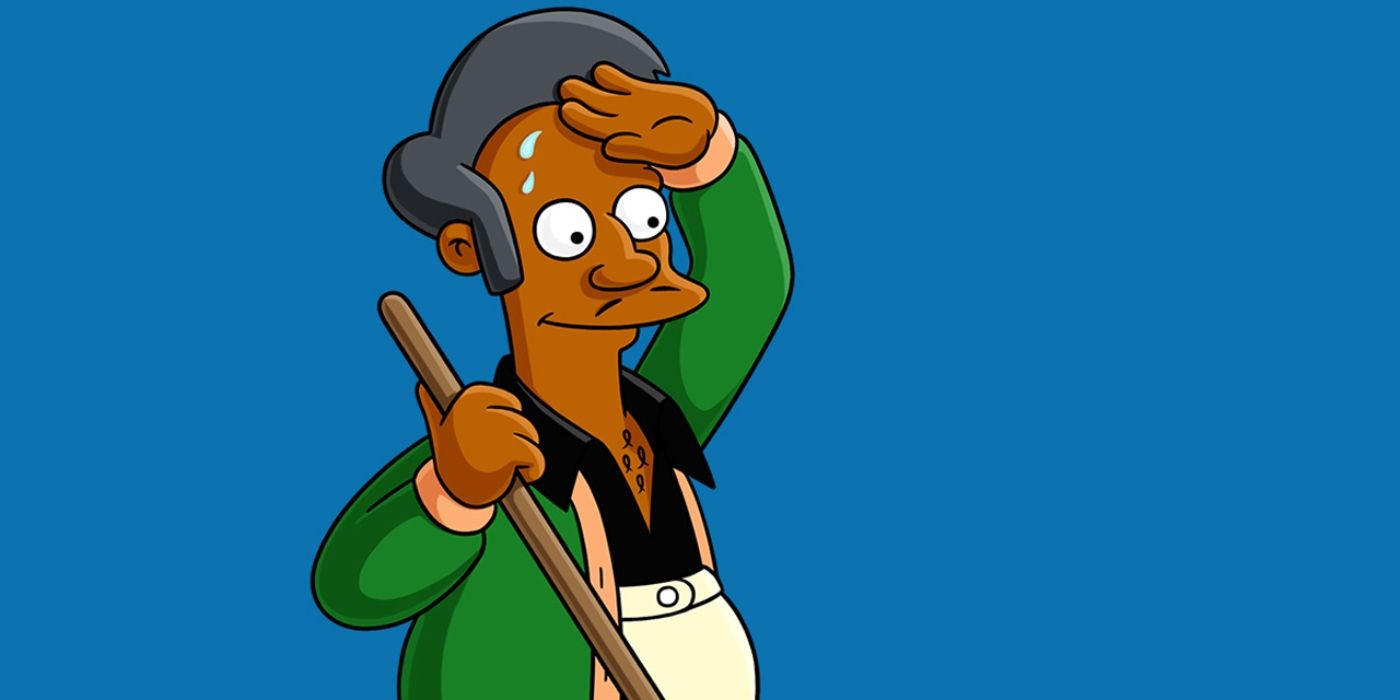
In the early seasons of The Simpsons, while still problematic on multiple levels, Apu Nahasapeemapetilon was actually a fleshed-out character — a rare paragon in Springfield. But as the series progressed and the character became more controversial, the show almost seemed to double down on the troubling aspects, turning Apu from character into a punchline in the worst way.
Apu was introduced in Season 1’s “The Telltale Head’ as the owner of the Kwik-E-Mart convenience store. He spent the initial decade of the series being developed alongside everyone else in the vaguely located town of Springfield. His appearances often highlighted his friendship with Homer, his absurd work ethic and his flirtatious nature. Season 9’s “The Two Mrs. Nahasapeemapetilons” saw Apu marry Manjula and begin the process of growing a family — resulting in their eight children. Throughout the history of the character, however, there have been legitimate concerns about the portrayal of Apu.
As one of the more prominent South Asian characters in western television, Apu’s impact cannot be understated. He debuted during a time in America when immigration from South Asian nations like India was on the rise. Notably, Hank Azaria — the white American-born actor who also plays a host of other characters on the show — received accolades for his performance as Apu, even winning an Emmy Award for his portrayal in 1998. This was likely for his work in episodes like Season 7’s “Much Apu About Nothing,” which were devoted to Apu’s experience as an immigrant. While there were many stereotypical elements to the character, the Apu of that earlier era also felt fleshed out as a character.
Apu was The Simpsons‘ only prominent Hindu, and notable for being a genuinely nice person. In a setting where almost every character was apathetic at best and malicious at worst, Apu’s simple kindness helped him stand out. He was charming and clever in a way the show rarely utilized with other characters. His marriage to Manjula, although full of jokes about his Indian heritage, was also focused on his genuine emotional reaction to feeling caught by tradition while carving out a life for himself somewhere else. While Azaria’s performance was a broad impression of an Indian-American that unintentionally played into harmful stereotypes, the character was at least given personality, motivations, and relatable flaws.
Some have defended the more stereotypical jokes about Indian culture from this period, citing the show’s habit of mocking all nationalities and cultures, such as Fat Tony being a parody of Italian-Americans in media. But the broad racial nature of Apu jokes (as opposed to the more pointed and authentic commentary Joe Mantegna brings to Fat Tony) and the lack of people of actual South Asian descent behind the scenes contributed an unseemly element to the comedy. After the birth of his children in Season 11’s “Eight Misbehavin’,” Apu appeared less frequently in actual plots. Season 13’s “The Sweetest Apu” dealt with Apu’s affair with another woman, and actually explored the emotional ramifications and fallout from his discretion — but mixed in some broad jokes about Hinduism that didn’t age well in the slightest.
RELATED: Did The Simpsons Movie Forget the Name of Moe’s Tavern?
That was one of the final “Apu episodes.” Afterward, Apu was more or less relegated to the sideline as a punchline. He was a means for making jokes about other cultures or his unhappy home life and little else. The genuine shades afforded the character were ignored, and episodes like Season 17’s “Kiss Kiss Bang Bangalore” were more or less long-form jokes about India without restraint. Becoming nothing more than a racial punchline removed any remaining sheen to the character. Apu was name-dropped as an offensive stereotype in movies like the more diverse comedy Harold and Kumar Go to White Castle, and Hari Kondabolu’s 2017 documentary The Problem with Apu explored the difficult relationship South Asian performers have with the character.
While Azaria voluntarily apologized for the unintended offense in his portrayal — even stepping away from the character entirely — the series attempted to address the issue in a heavy-handed way that added to its history of controversies. There are reportedly plans to explore Apu, and there might be merit to the idea depending on how they approach it. Reapproaching the character with authenticity, both in performance and behind the scenes, would give people who’ve grown up with Apu — either as a positive character or as a negative stereotype — the chance to see him through a modern lens. It would afford the aging series the chance to broaden their horizons in terms of the diversity of creatives and performers, and that might be the only way left to utilize Apu.
KEEP READING: The Simpsons Boss Shares Details About the Early Abandoned Spinoff
About The Author
