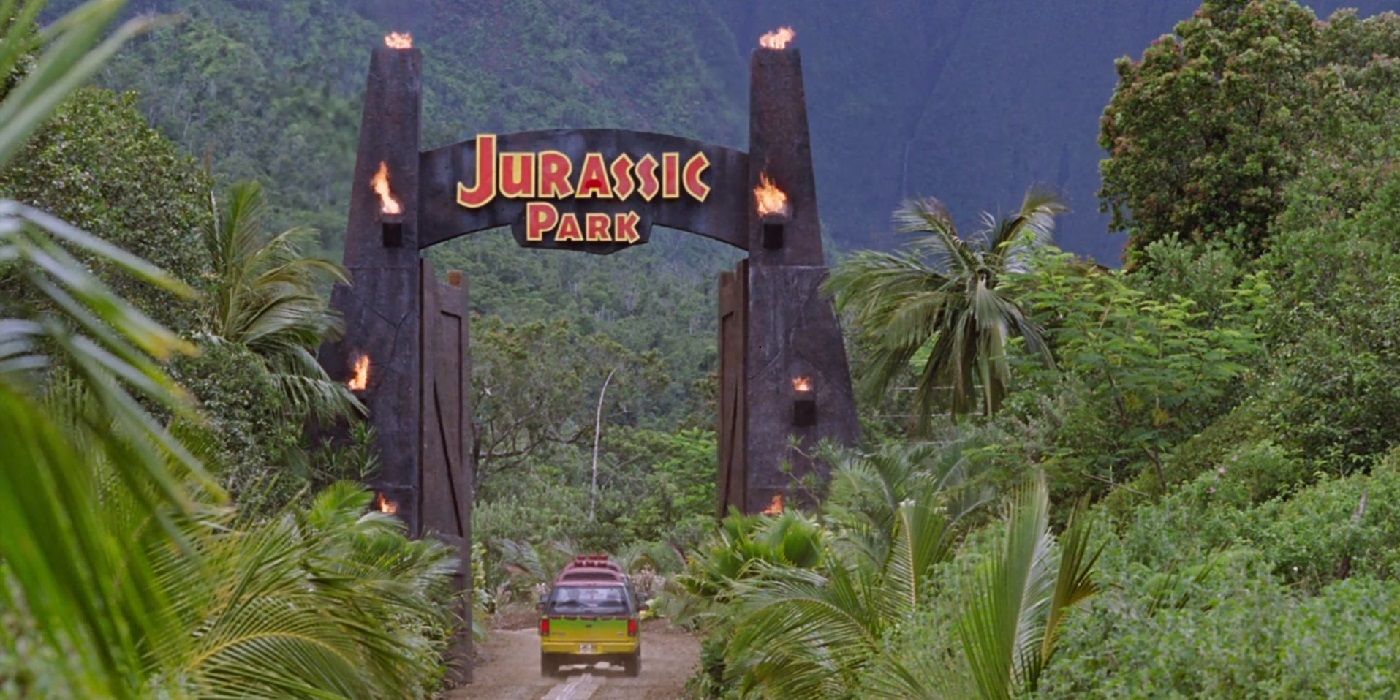
Jurassic Park is a milestone in film history. The 1993 blockbuster is Steven Spielberg’s best-known film and marked a new era of filmmaking, particularly because it showed for the first time the true capacity of computer-generated images. But that wasn’t all; the film’s script, overall look and talent are proof that big-budget filmmaking can go hand in hand with quality.
In a time when big-budget filmmaking wasn’t solely reliant on sequels and reboots, Jurassic Park had great Hollywood potential, and Spielberg perceived it. He was also a friend of author Michael Crichton, who wrote the novel on which the film is based and later worked on the screenplay with David Koepp. By 1991, pre-production was underway on what would be a game-changer in filmmaking. Usually, a blockbuster should appeal to many demographics, and Spielberg hoped that, given the popularity of Crichton’s book, the audience would believe in the reemergence of dinosaurs in the 20th century. The question was: how could he make the film look believable?
To begin with, the script is as refined as its casting. The science behind the creation of cloned dinosaurs is not extremely accurate but still utterly believable. The characters of Jurassic Park don’t lack humanity, asking the right ethical questions about the park while maintaining their backstories and personalities. Sam Neil plays a reserved Dr. Alan Grant who softens in the company of two kids. The out-of-the-box Dr. Ian Malcom gave Jeff Goldblum a screen persona that stuck till today, and Dr. Ellie Setler is a strong feminist character played magnificently by Laura Dern.
The dinosaurs in the film are a combination of puppet animatronics and CGI, the first time computer-generated images were used to mirror reality, and the work on their design was so thorough and meticulous that Jurassic Park’s special effects still hold up today. Spielberg was confident that the dinosaurs would look credible not only because computers were able to create something that looked organically alive, but mainly because this technology served the storytelling.
The movie also builds up at a suspenseful pace, revealing its main attraction, the T-Rex, exactly at the midpoint of the movie, in one of the most memorable scenes in cinema. It then builds up to the other great menace of the film, the velociraptors, whose danger is only revealed during the third act.
But Jurassic Park‘s true legacy is that it defined a look for the dinosaurs that even today is difficult to change, especially after scientists discovered that most dinosaurs didn’t have lizard-like skin, but were covered with feathers. A discovery that hasn’t at all changed how these creatures continue to appear on screen in the recent Jurassic World sequels. Plus, their roaring sounds, whether they be from a T-Rex or even a Brachiosaurus or a Velociraptor, became iconic. Jurassic Park was also the first Datasat Digital Soundtrack ever made for the screen.
Of course, none of this would be complete without a memorable soundtrack. John Williams created yet another mix of instantly recognizable tracks, adding it to his portfolio alongside other grand themes like Star Wars or Indiana Jones, to name a few. The soundtrack enhances the unforgettable scene where the characters arrive on Isla Nublar and see the Brachiosaurus for the first time.
Jurassic Park exists almost as its own metaphor: the gigantic effort that was producing and creating this film, with its CGI and animatronics of real-looking dinosaurs, matched the film’s storyline of one man’s dream to create a theme park populated by these ancient creatures. Yet the real feat is Steven Spielberg’s vision of a film that, thanks to his dedicated craft and ability to lead a team, delivers exactly what it promises, something most blockbusters today fail to achieve.
About The Author
