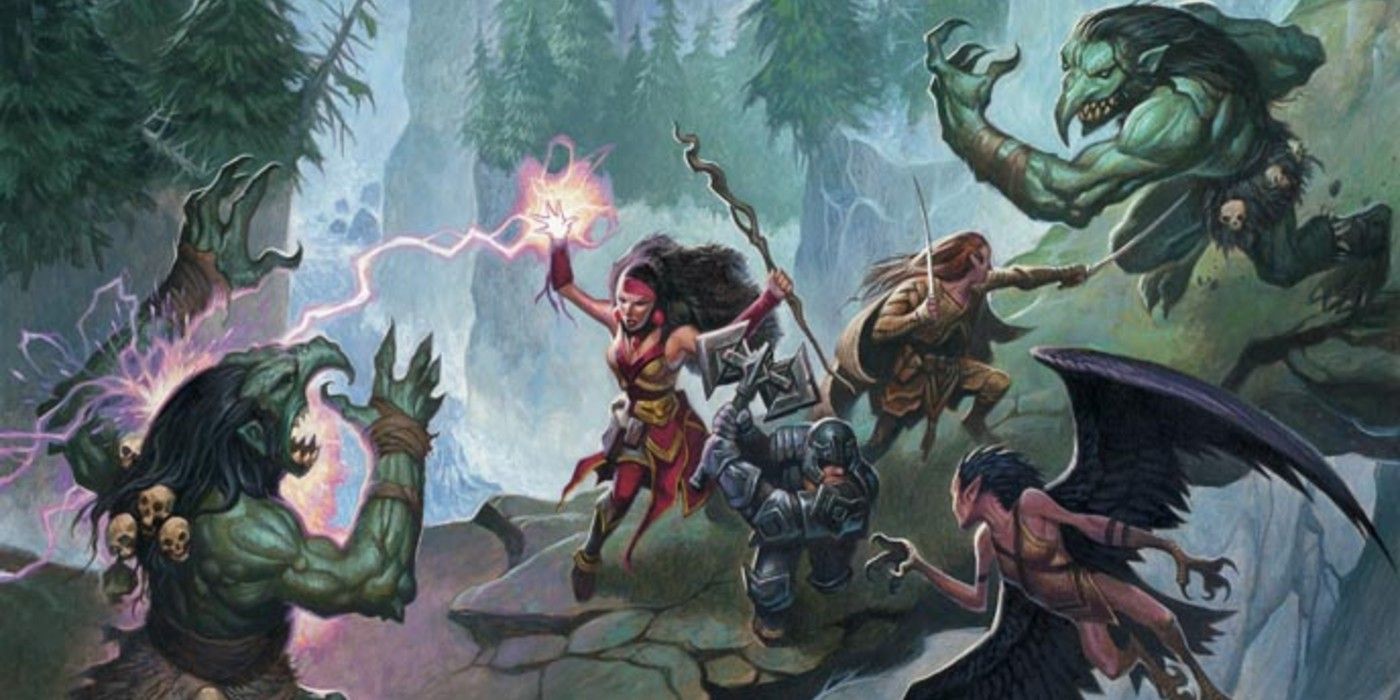
When it comes to Dungeons & Dragons, a campaign’s setting comes in many forms. From the magitech-heavy Eberron to the apocalyptic wasteland of Dark Sun, every Dungeon Master has their favorites. One that always seems to capture the quintessential essence of D&D is the Points of Light setting. This setting is an incredible blend of both swords and sorcery, balancing high magic with the ferocity of the natural world.
Often seen as the traditional D&D setting, Points of Light has the typical swords and sorcery, with a blend between high and low fantasy. Keeping this balance can be a difficult task for a DM, but when properly utilized, can give players an incredible experience that hearkens back to the traditional Dungeons & Dragons setting. The swashbuckling adventures and the fascinating ancient environments will have something for every kind of player.
Understanding The Points Of Light Setting
Points of Light takes place in a world coming out of a cosmic inter-dimensional war. To briefly explain: the Gods, creators of life, warred with the Primordials, creators of elements. When the war threatened to destroy the world, nature itself gained sentience in the form of Primal Spirits, the awakened essence of natural phenomenon, often venerated by those of the Druidic persuasion as ancestral spirits.
These Primal Spirits worked with the Gods to banish Primordials into the Elemental Plane, and the Gods took up residence in the Astral Sea. What this means is that the Gods, while present, are largely absent from the world. Primordials are always scheming to come back, but it’s the Primal Spirits who have true control over the world.
Nature has reclaimed a majority of the landscape, causing danger and darkness to exist in the wilderness. The only hope for the civilized races of the world lies in large cities which stand as light in the darkness. Hence, Points of Light. However, that doesn’t mean that the cities are happy, benevolent safe zones. Quite the opposite is true, as political corruption is rampant throughout the world, with tyrants taking advantage of the dismal situation of the people.
D&D Gameplay Styles In Points Of Light
As gleaned from the above, when it comes to running a Points of Light campaign, there are primarily two kinds of settings that the party will find themselves in: Urban and Wilderness. Both function differently from one another and should be treated as near polar opposites.
In Urban areas, most of the campaign should be focused on the strife that comes from within the city. Typically, this involves corruption, politics, and social issues that plague a city. While some cities are peaceful, many are ruled by powerful nobles who know that people won’t leave the city because there aren’t any other places they can go.
Wilderness areas, however, are vastly different. While traversing the wilds, the campaign should focus on survival and caution. Monsters and beasts roam freely through the world and adventuring is often seen as a hopeless cause. Every day outside the walls should feel like a fight for the players’ lives, because the uncivilized world is cold and uncaring.
Urban Campaigns In Points of Light
When working on an Urban Campaign, it’s important to bear in mind the world in which the players live. Because travel and resettling are such risks, corruption is not just possible, but rampant. Nobles and tyrants who run the cities are not pushovers, and low-level characters especially need to be on their guard.
While the nobles are no Count Strahd, the guards of the cities are not the bottom-tier weaklings in the Monster Manual. They must regularly defend the city from monster attacks and hordes on a regular basis. At lower levels, characters should focus on avoiding the ire of the ruling class, or if they’re more amiable, attempt to negotiate with them. If stopping some nefarious political plot, emphasize to the players that the mission is secretive and revealing their identities could spell trouble. For minor crimes, leaving the city could be a way out, but for major crimes, expect dangerous bounty hunters or even other adventurers to pursue the party.
Wilderness Campaigns In Points of Light
In many D&D games, travel is treated as a quick steppingstone between two destinations. There may be one or two combat encounters, but otherwise, the party can trust that it’s the destination, not the journey, that poses a danger. This is not the case in the Points of Light setting.
Instead, an emphasis on survival and navigation is absolutely necessary. The Primal Spirits still linger about and are as fickle as nature itself. This means that wild beasts, monstrosities, and Fey creatures wander around where they please. Many are territorial and don’t care for trespassers. Due to the Primal Spirits’ influence, the Feywild and the real world overlap in many areas, which can spell trouble for careless wanderers. Nowhere outside of cities is safe, and this is something that should be hammered home to the party.
Most dungeons that the players encounter should be overgrown relics or abandoned temples. They are often symbols of the unending drive of the Primal Spirits to reclaim anything that isn’t being actively used or shows worship to the Gods or Primordials. In order to tie these themes together, players should often encounter harsh weather conditions, wild monster and beast encounters, and monstrous races who have clung to whatever scraps of civilization they could find.
When it comes to tackling a Points of Light setting campaign, it’s important to bear in mind the brutal untamed world that exists outside of the cities. Cities, while safe in comparison to the natural world, are their own form of trouble. Because of this balance between Urban and Wilderness difficulties, it can be used flexibly with a party in order to satisfy both those who focus on RP and those with a love for combat. Switching between these two can make for a unique game experience that captures the heart of Dungeons & Dragons.
About The Author
