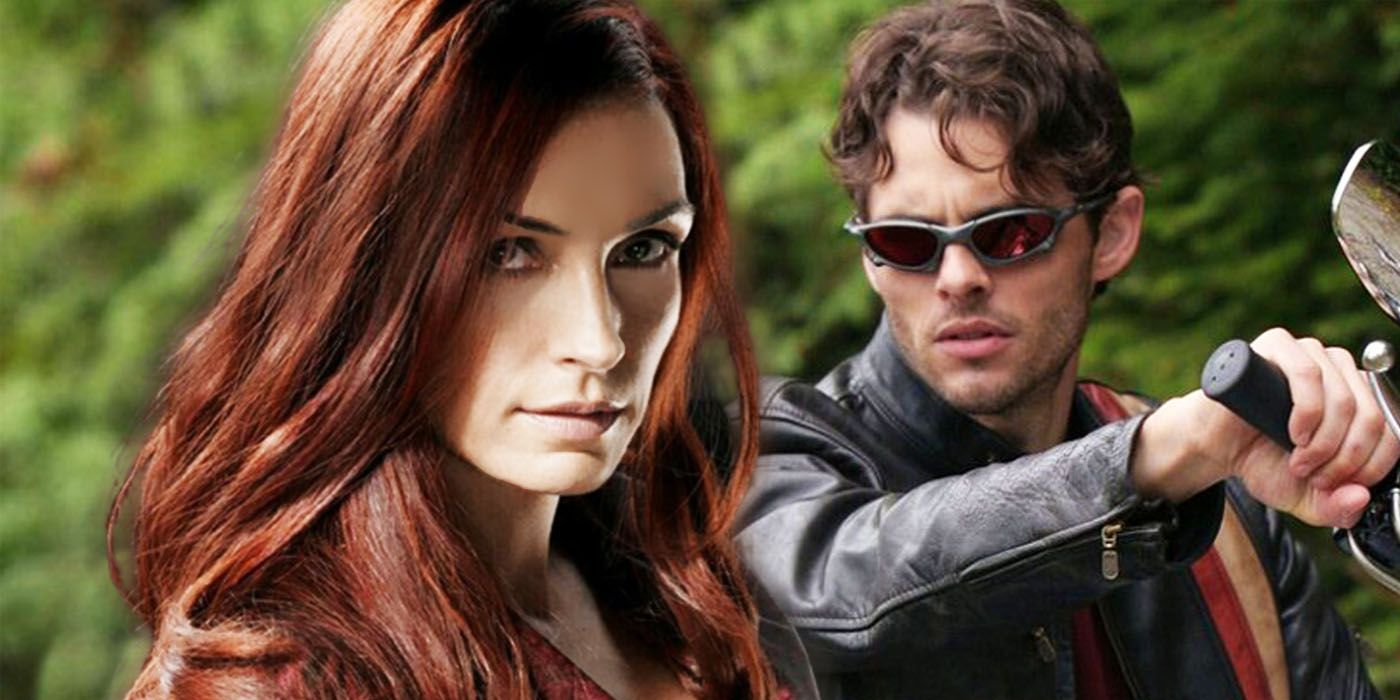
X-Men: The Last Stand has many infamous scenes for Marvel fans, but perhaps the worst is when Phoenix kills Cyclops. It happens so early in the film that it clues the audience into what the rest of the movie will be like: brutal, inexplicable and nonsensical. But why did she do it? One can try to explain it from a couple of different angles, but the real reason for writing off one of the series’ most iconic characters is pettier than one could imagine.
Let’s break down the controversial scene in question. At the beginning of the 2006 film, Cyclops hears Jean Grey‘s voice calling out to him. He heads to Akali Lake to investigate where she seemingly drowned at the end of 2003’s X2: X-Men United. Once there, Jean Grey appears to him. Not knowing why she’s back, she asks to see his eyes as she can now control his optic rays that destroy anything he can see. They kiss, but something goes horribly wrong. By the time Wolverine and Storm get to the beach, Cyclop’s floating glasses and a comatose Jean Grey are all they find.
So ends the original cinematic version of Scott Summers. However, Jean vaporizing him doesn’t make sense on an emotional level. Jean willingly gave her life to get all the other X-Men away from a massive flood, so he wasn’t responsible for her death. Scott even tried to stop her from doing this, so she has no reason to be mad at him. It also doesn’t make sense logically. Her powers as the Phoenix don’t work like Rogue’s, where they blow up anyone she kisses. At the moment, it just doesn’t track.
The movie never outright explains why he died, but it heavily implies that Jean didn’t have control of her powers and took out Scott. However, her skin turning zombie-like gray as it does in her later murders implies that her Dark Phoenix personality purposely targeted Scott and called him to the lake to die. That still doesn’t make any sense as, unlike her later victim Charles Xavier, Scott never tried to repress Jean’s Phoenix personality. The whole scene is baffling, perhaps because of the behind-the-scenes reason it happened.
Scott’s death is because of studio displeasure with his actor, James Marsden. When disgraced director Bryan Singer jumped ship to helm Superman Returns, Marsden came along to portray Clark Kent’s romantic rival, Richard White. Since both productions were shooting at the same time, 20th Century Fox decided to kill him off with only ten minutes of screen time to punish him for leaving the film. Marsden wouldn’t play the role again until Singer resurrected the character in 2014’s X-Men: Days Of Future Past.
The end result is arguably the moment when the X-Men film franchise jumped the shark. After he was a mind-controlled drone in X2, killing off Cyclops so quickly in this one felt like a permanent waste at a time when only one or two franchises had “rebooted” characters back to life. Doing this started a trend where the franchise would kill off beloved characters in quick asides to cut down cast size and build stakes. Even after the franchise brought Cyclops back, fan favorites were still dismissively written off, such as Emma Frost and most of the X-Men: First Class casts’ deaths being revealed by file folder in Days of Future Past or Cyclops (again!) and the other X-Men being killed off-screen in Logan. It made the franchise harder to get invested in because the audience knew that anyone could horribly die, and the filmmakers didn’t seem to care.
Ultimately, Jean killing Cyclops didn’t just make no emotional or logical sense. To audiences, it showed that the filmmakers didn’t care about the heart of the X-Men or making the best use of their iconic characters. For all the strengths of the Fox X-Men franchise, this lack of regard for the property can’t help but leave a bad taste. Hopefully, when Marvel Studios tackles these characters, it knows that Cyclops is worth so much more than to be reduced to a pair of floating glasses.
About The Author
