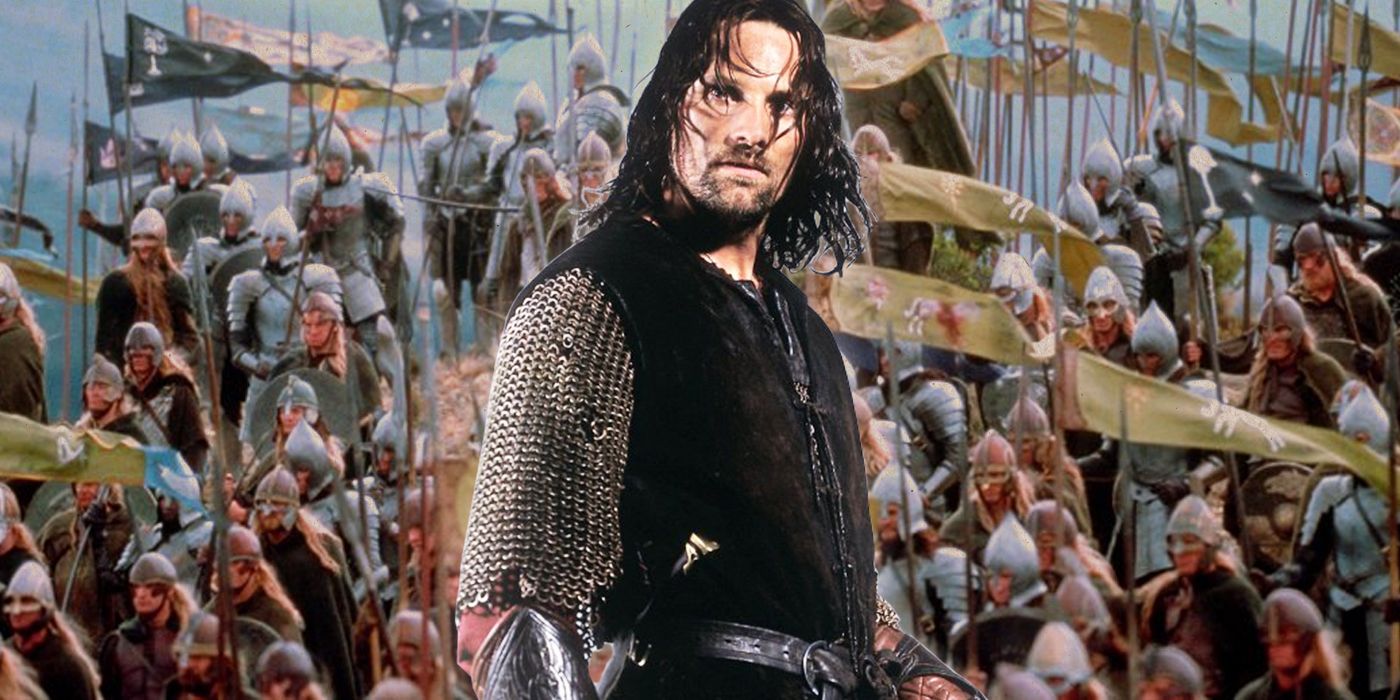
Other than Frodo, Aragorn was the most important person in The Lord of the Rings. At 87 years old, he defended the Hobbits from the Nazgul, rescued Merry and Pippin and preserved Helm’s Deep. Then, as the heir of Gondor, he summoned the Army of the Dead to win the Battle of the Pelennor Fields. And when it comes down it, Frodo wouldn’t have succeeded in his Ring-destroying quest if Sauron hadn’t emptied Mordor to contend with Aragorn at the Black Gate.
It’s fair to say that Aragorn was instrumental in everything that happened throughout the trilogy. In fact, it was also Aragorn who carried Middle-earth into the future after Sauron’s defeat. He ruled as King of both Gondor and Arnor for 122 years, kicking off the Fourth Age — the Age of Men. Here’s a look at what made the Race of Men unique from other races in The Lord of the Rings.
The Race of Man Came After the Eldar
In J.R.R. Tolkien’s legendarium, Eru Ilúvatar was the supreme being that created Middle-earth and all life therein. During the Music of the Ainur, Eru designed two separate forms of life, with the first being the Children of Ilúvatar, which were the Elves. They awoke well before the First Age and were fair, proud and immortal beings. The Race of Men awoke thousands of years later at the start of the First Age and the first rising of the Sun. As such, many Elves believed themselves better than men and called them derogatory names: Atani (“Second People”), Hildor (“Aftercomers”) and Engwar (“the sickly”). However, the Elves didn’t know that Eru planned for the Elves to eventually depart from Middle-earth, leaving Men as the future.
Men Were a Stronger Race Than the Elves
While the Elves were strong and capable warriors, they derived much of their skill from magic and thousands of years of experience. Men, on the other hand, were larger and heftier, mostly relying on their own strength in battle. One great example of Man’s strength was the Dragon-helm of Dor-lómin. Originally, the master-smith Telchar forged the helmet for a dwarf, but when it wound up in the possession of Elves, none could bear its weight, not even Fingolfin. So, the High King of the Noldor gifted the helm to the Man Hador, as only he and his descendants were strong enough to wear the helmet and reap the benefits of its protection.
The Gift of Men Allowed Them to Die
Although Elves saw themselves as superior to Men, Eru gave to his second-born The Gift of Men. The Elves were immortal, but eventually, they all became weary of life, either fading away or returning to Valinor. Eru’s gift, however, was simple — he allowed Men to die. While some saw the gift as a curse, it allowed Men to escape the trials of life and ensured that they would not grow weary like the Elves.
Men Were Free to Shape Their Fates
While the Elves were far from perfect, none of them actively chose to join Morgoth or Sauron. That was because Eru tied his will to their race so that they wouldn’t join unto evil. Men, however, had much more personal freedom than the Elves. Eru gave them the free will to serve whomever they wanted. But while countless Men never strayed from the good path, others did. Seeing the Gift of Men as a curse and attempting to prolong their lives or gain power, some men chose to chase after darkness. Thus, many evil men served Morgoth in the First Age, while others served Sauron in the Second and Third Ages.
Man’s Bad Decisions Had Physical Consequences
While Eru gave Men free will, that didn’t mean that consequences didn’t follow bad decisions. After the War of Wrath, Eru took stock of who served Morgoth and who aligned themselves with the Valar. Those who fought on the side of the light became Númenóreans, and Eru gifted them with the island of Númenor, along with prolonged life, great strength and larger stature. Those that served Morgoth, however, became Common Men. Their lives were shorter and their bodies were weaker, and it was many of their descendants that chose to align with Sauron thousands of years later.
About The Author