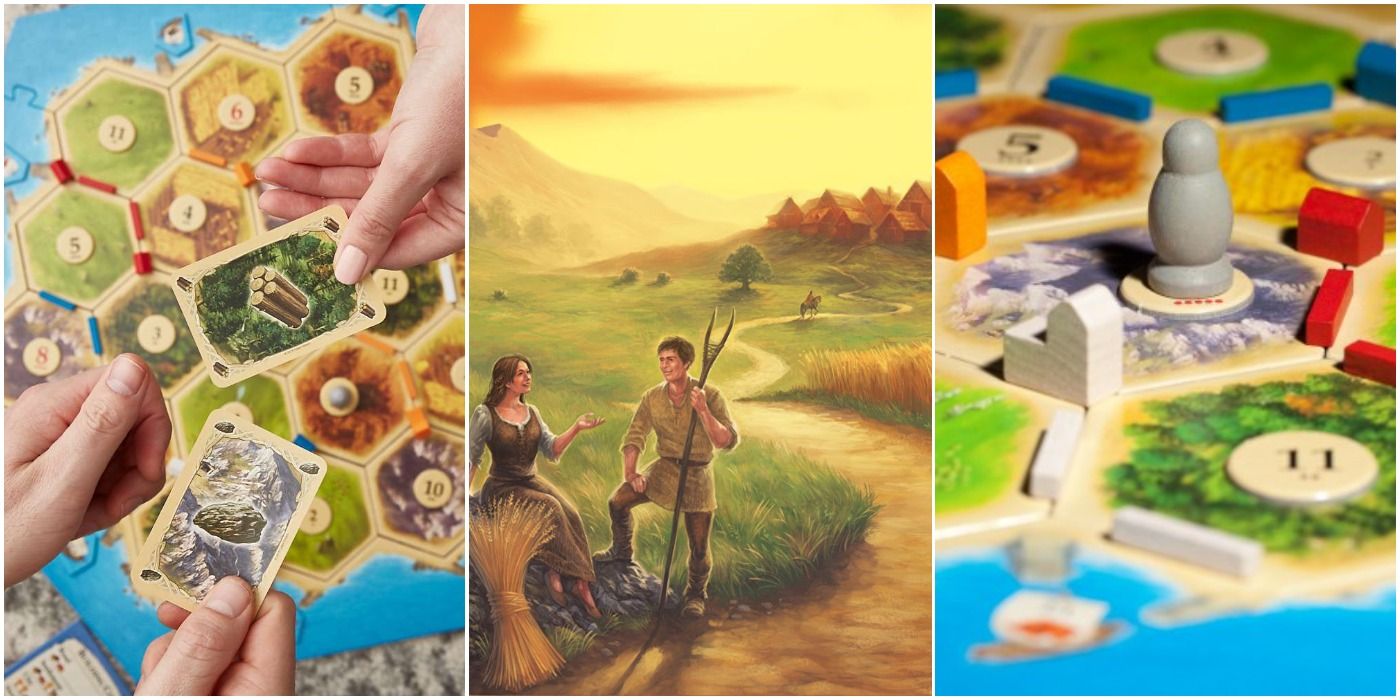
Catan, previously known as Settlers of Catan, remains a modern classic for players everywhere. It is one of the best-selling tabletop games of all time, with a number of expansions, versions, and spinoffs. Many consider Catan’s rules to be straightforward, fitting the family-style game it is. But there’s more under the surface that players always do and never talk about.
From the slightest nuances in the game to the biggest things to avoid, Catan can be much deeper and more strategic than it seems at first glance. Veterans eventually do these things instinctually and they have become as big a part of the game as the written rules themselves.
10 Don’t Worry About Sheep
Sheep are the weakest resource in Catan. After only a few plays, gamers quickly realize they would be able to open a small petting zoo with the amount of sheep cluttering their hand of cards. The two crafting recipes that require sheep only need one sheep each, and the recipes themselves are crafted less frequently than others in the game. Expansions improve this imbalance by requiring sheep for other crafting recipes, but in the base game players will find themselves trying to pawn off their sheep on their opponents.
9 Get 6s And 8s
Not all numbers are created equal in Catan. The game points this out directly by having dots under numbers based on the probability of them being rolled and boldly puts six and eight in red to show that they will likely be rolled the most. Nothing can truly be done to demonstrate just how important this is.
Players that gather more resources than others will likely win the game almost every time, making the six and the eight spots not just better, but necessary for victory.
8 The Robber Mainly Blocks Numbers
The Robber in Catan has two uses: blocking a number on the board and stealing a card from an opponent. While stealing a card can be useful, blocking the right number is the most important thing to consider. In most games of Catan, there always seems to be a number that gets rolled much more than others and it always seems to be a number opponents have settlements on. Moving the Robber to that number is the best thing to do. The number of resource cards that are blocked will far outweigh the one card that gets stolen.
7 Never Hold More Than 7 Cards
Along with moving the Robber, when a seven is rolled, every player must discard half their hand if they are holding more than 7 cards. Saving up for a big turn is a great idea in theory but is also very risky. Seven is the most commonly rolled number for a pair of dice, resulting in tons of cards going back to the bank every game. The best way to avoid this is to have seven or fewer cards when possible. Even if this means trading multiple cards for a single card, it’s better than losing half of an entire hand.
6 Achieve Longest Road As Quickly As Possible
The Longest Road card is awarded to the player that achieves 5 or more connected roads before anyone else and is worth 2 victory points. Initially, this isn’t that hard to accomplish, especially if a player has good wood and brick spots on the board. The card can be stolen, however by another player creating an even longer road. This puts the first player to achieve the longest road at an advantage over everybody else and also makes the award easier to keep throughout the game.
5 Harbors Win Games
Owning a settlement on a harbor seems like a poor proposition at first. Generally, a settlement will be connected to three spots on the board where a harbor is only adjacent to one or two. This means less resource opportunity for that settlement, but it also gives better trades with the bank.
Normally a hand of six sheep wouldn’t be very useful. But with a sheep harbor, those fluffy critters can be traded for any three resources. This leads to more flexibility for die rolls and less trading with opponents, making harbors a large factor in determining the winner.
4 Fair Trades Are Not Possible
Trading is where lots of the fun comes from in Catan and players like to do it often. Newcomers sometimes believe fair trades are a great thing and they’re mutually beneficial. Unfortunately, that is never the case. Each trade in the game helps one player more than the other to some degree, and being a better salesperson is one of the biggest ways to gain an edge over others. It’s best to watch out for trades that seem too good to be true because they usually are.
3 Upgrading Is Better Than Building
Settlements generate one resource when a number they are on is rolled, and each settlement is worth one victory point. Cities generate two resources and are worth two victory points, making them quite literally twice as good. When playing the game for the first time, it may seem like a great idea to expand to many different numbers. In reality, it is better to have cities and get truckloads of cards for specific numbers. This makes certain spots a larger target for the Robber, but it also may gain a player the last two points they need in a single roll.
2 Bluffing Is Part Of The Game
Bluffing does not appear in the rules of Catan but it is one of the key strategies to winning. Players that boast about having all the cards they need are sure to be the target of the Robber or a monopoly card.
Players that bluff about not having the right cards will likely fade into the background for a sneaky victory. While everyone sees each other get resources, it’s nearly impossible to keep up with what every player has. Cards, especially victory point cards, are secret and should be treated that way.
1 Never Trade With The Player In First
No matter how good the trade may seem, trading with the player in the first place is a surefire way to lose immediately. The player in first usually has a simple plan they are trying to carry out and giving them that one wheat may seal the fate of everyone else at the table. At the beginning of the game, this may not be too important. But when an opponent is hovering around eight or nine victory points, it is best to avoid helping them in any way. Trades proposed by the leading player should always be ignored, especially if it is their turn.
About The Author
