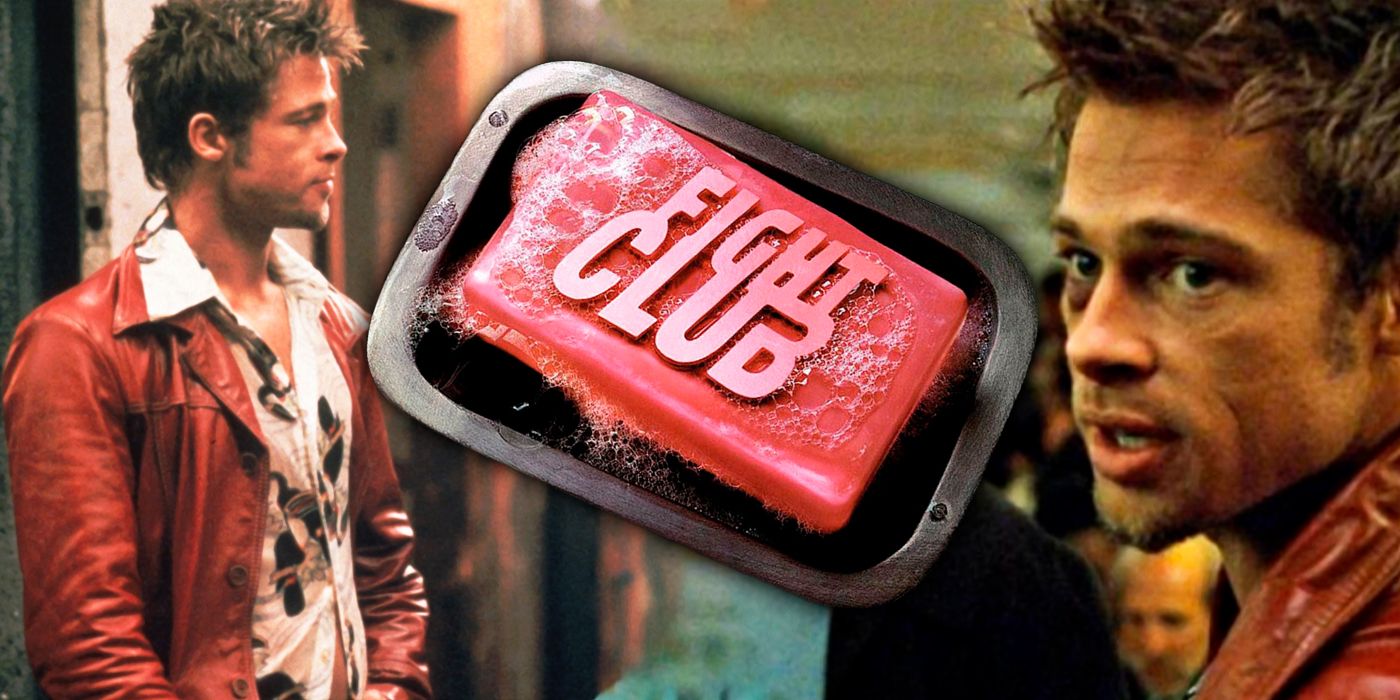
One of the most widely acclaimed films in David Fincher‘s filmography is gritty Fight Club, adapting the novel of the same name by Chuck Palahniuk. Faced with a considerable amount of controversy since its theatrical release in 1999, Fight Club has become a cult classic and earned a loyal fanbase in the years that followed. But with Fight Club receiving a critical reevaluation in recent years, including its messaging and how audiences have perceived its themes and characters, there is a lingering question if the film depicts the rise of an unlikely superhero or the dark descent of its unnamed protagonist into the world’s greatest supervillain.
Fight Club’s protagonist is a car recall specialist who feels trapped in his daily routine and endures both depression and insomnia as he lives his life in the midst of a never-ending existential crisis. Meeting a man named Tyler Durden, the protagonist and Tyler engage in fistfights, offering themselves a release from the ennui of their regular lives, inspiring a whole group to join them and similarly participate in the eponymous Fight Club. Tyler invites a group of anti-consumerists, known as Project Mayhem, into the Fight Club, with the protagonist unsettled by Mayhem’s extensive reach and increasingly volatile activities. This culminates in the protagonist realizing Tyler is an extension of his own psyche and killing this mental projection while Mayhem carries out a series of terrorist attacks across the city, targeting buildings containing credit card records.
Since its release, Fight Club has been criticized for glamorizing toxic masculinity, its depiction of violence and the philosophies of Tyler Durden. Compared to the protagonist, who appears trapped in his life, with little ambition or alternative otherwise, Tyler is presented as the personification of freedom from the prescribed societal norms. Tyler is driven by impulse, he’s able to initiate a romance with the protagonist’s friend Marla Singer and be revered among the members of Fight Club and Project Mayhem with a near-cultish reverence. However, by the end of the film, Mayhem has grown more boldly violent than the protagonist anticipated under Tyler’s influence revealing himself as something of a supervillain.
This is more pronounced in Palahniuk’s novel and his comic book continuations, with the protagonist’s killing of the Tyler persona seen as the first decision he truly makes for himself though Mayhem has grown beyond his control, expecting Tyler’s inevitable return. In 2015’s Fight Club 2, by Palahniuk and Cameron Stewart, Tyler is revealed to have existed in the protagonist’s subconscious long before their first meeting as Tyler reemerges a decade after the events of the novel. The story then takes on a meta-textual twist, with Palahniuk himself appearing in his own story observing that fans will always keep Tyler alive before Tyler personally kills Palahniuk to ensure he’ll have a happier ending.
Fight Club really is a modern-day Jekyll and Hyde narrative, with more overt socioeconomic commentary and about the duality of man imposed by society. With that in mind, Tyler Durden is definitely a supervillain — sort of a Kingpin-esque figure lording over Project Mayhem — made all the more clear by Fight Club 2 revealing Tyler plotting to destroy the entire world in a nuclear armageddon. The protagonist isn’t so much a hero but a person caught up in the machinations of his violent alter ego, trying to maintain a low profile until Tyler makes his return. The original movie ending has the protagonist and Marla watch as Tyler’s explosive plan is carried out without him. Fight Club isn’t the story of a hero, it’s about the everyman’s mounting frustrations giving birth to a new kind of self-aware supervillain.
About The Author
