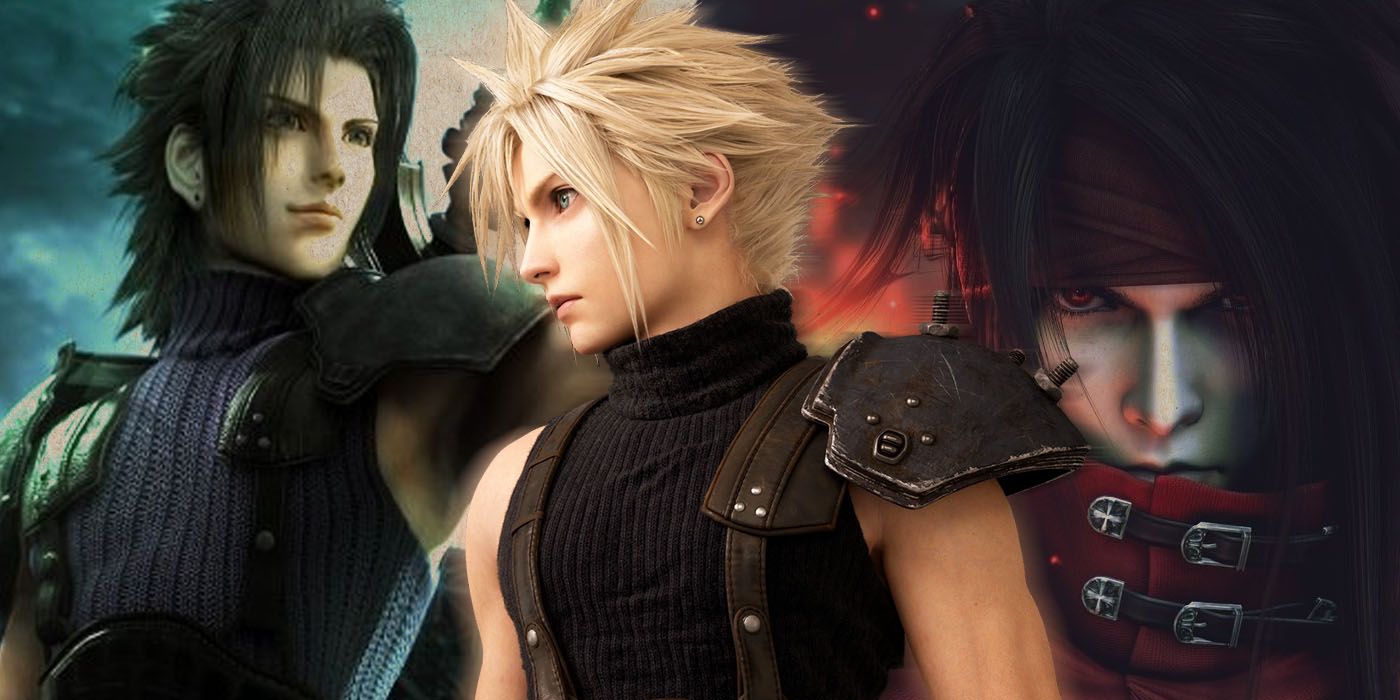
The idea of Final Fantasy VII having a chronological order to be played in might sound ridiculous. Fans who didn’t pay attention to what Square Enix did with the property between the original game’s 1997 release and 2020’s Final Fantasy VII Remake, and those who were not alive when the first PlayStation ruled the world, might consider it a list of two whole games and a DLC.
As those who were active gamers during the PlayStation 2/PlayStation Portable era are aware, Square Enix revisited Final Fantasy VII long before the remake finally made its way to home consoles. With Square adding more spin-offs to FFVII’s universe in the wake of Remake’s success, it’s worth figuring out the entire series chronology for anyone who plans on running the entire series in the proper order. For the purposes of this list, we’ll be excluding the mobile title Final Fantasy VII Ever Crisis as it has not been released as of this writing, and is a retelling of the entire Compilation of Final Fantasy VII series.
Final Fantasy VII: The First Soldier (30 years before FFVII)
It may seem odd that a Final Fantasy game jumping on the Fortnite bandwagon is the first game in FFVII’s chronology. The First Soldier doesn’t add much to FFVII narratively, because it doesn’t have a narrative to speak of. It does break new ground in the franchise by taking place three decades before FFVII. The First Soldier uses the origin story for Shinra’s elite troops, SOLDIER, as the impetus for its mobile battles royale. Players take on the role of SOLDIER recruits, fighting to be the titular franchise player in Shinra’s private army. Because it doesn’t attempt Fortnite’s level of worldbuilding, it’s not something players need to spend much time with if they’re primarily interested in FFVII’s story, which might be for the best given its many issues.
Before Crisis: Final Fantasy VII (6 years before Final Fantasy VII)
A game ripe for a remake of its own, Before Crisis was designed and released exclusively for mobile phones. Set six years before FFVII, it charts the rivalry between Shinra and AVALANCHE, which begins in the wake of Shinra defeating Wutai and functionally conquering the world. In an inversion of FFVII, Shinra’s Turks are the protagonists and AVALANCHE are the villains of the piece. Iconic FFVII heroes like Cloud, Tifa, and Aerith make cameo appearances, as does main villain Sephiroth, who appears as a member of SOLDIER before he went his own way. Before Crisis overlaps with the next game in the chronology, Crisis Core.
Crisis Core: Final Fantasy VII (7 years before Final Fantasy VII)
Crisis Core continues the focus on Shinra’s forces, in this case, SOLDIER operative Zack Fair. Like Before Crisis, multiple major characters from Final Fantasy VII make appearances, albeit in a more significant way. Zack befriends both Aerith and Cloud, setting up his importance to Cloud’s backstory. It also chronicles Sephiroth’s evolution from one of Zack’s SOLDIER compatriots to the villain of FFVII. While it begins a year before Before Crisis, its epilogue winds up overlapping with Final Fantasy VII. The game also recreates FFVII’s opening scene, with Cloud lending his Buster Sword to AVALANCHE’s cause as a mercenary.
Final Fantasy VII
The original Final Fantasy VII takes place midway through the FFVII chronology. While initially intended as a stand-alone title, like most games in the wider Final Fantasy series, playing the prequels before it does add texture to the game’s world and fills in some gaps that even a game as massive as FFVII couldn’t address. It does also spoil a major reveal in the process, which is worth taking into account before deciding to play the games in chronological instead of release order. While FFVII was originally a PlayStation exclusive, it is handily available on modern consoles and the PC via an enhanced port that offers new features like 3x battle speed and the ability to turn off random encounters.
Dirge of Cerberus: Final Fantasy VII (3 years after Final Fantasy VII)
Dirge of Cerberus is the first game to take place after the events of Final Fantasy VII. While it opens during Final Fantasy VII’s climax, it primarily takes place three years after FFVII. Dirge of Cerberus stars Vincent Valentine, a hidden character who became a fan-favorite party member. Because he wasn’t a core member of the party, Vincent didn’t have much backstory beyond his ties to Cloud and Sephiroth. Dirge of Cerberus filled in the blanks in the character’s history. The game’s main antagonists are Deepground, a group created as part of a Shinra covert operation that’s attempting to raise the WEAPON Omega.
Final Fantasy VII Remake (During & After Final Fantasy VII)
Final Fantasy VII Remake earns its name by not being more than a simple retelling of the original story with modern graphics. The first episode in a multipart project, Remake expands the Midgar section of the original game to the length of the first game in its entirety. It also makes significant changes to the original’s story, which left some characters who died in the original alive and well in the Remake. Square Enix is playing any details about where this is going close to the vest, but that Sephiroth is actively trying to avoid his FFVII fate suggests Remake takes place after the original happened, in either an alternate timeline or universe.
FFVII Remake INTERmission (Concurrent With Remake)
The Intermission DLC introduces optional FFVII character Yuffie to Remake’s universe. Although it takes place in parallel with Remake, Square has recommended playing it after finishing the base game. Opening after the bombing of Mako Reactor 5, Yuffie arrives in Midgar to steal Ultima Materia from Shinra, working with an AVALANCHE cell to achieve her goals. After her plan goes sideways, Yuffie escapes Shinra’s headquarters just as the Sector 7 plate falls towards the end of Remake. Intermission exists primarily to introduce Yuffie and flesh her character.
About The Author