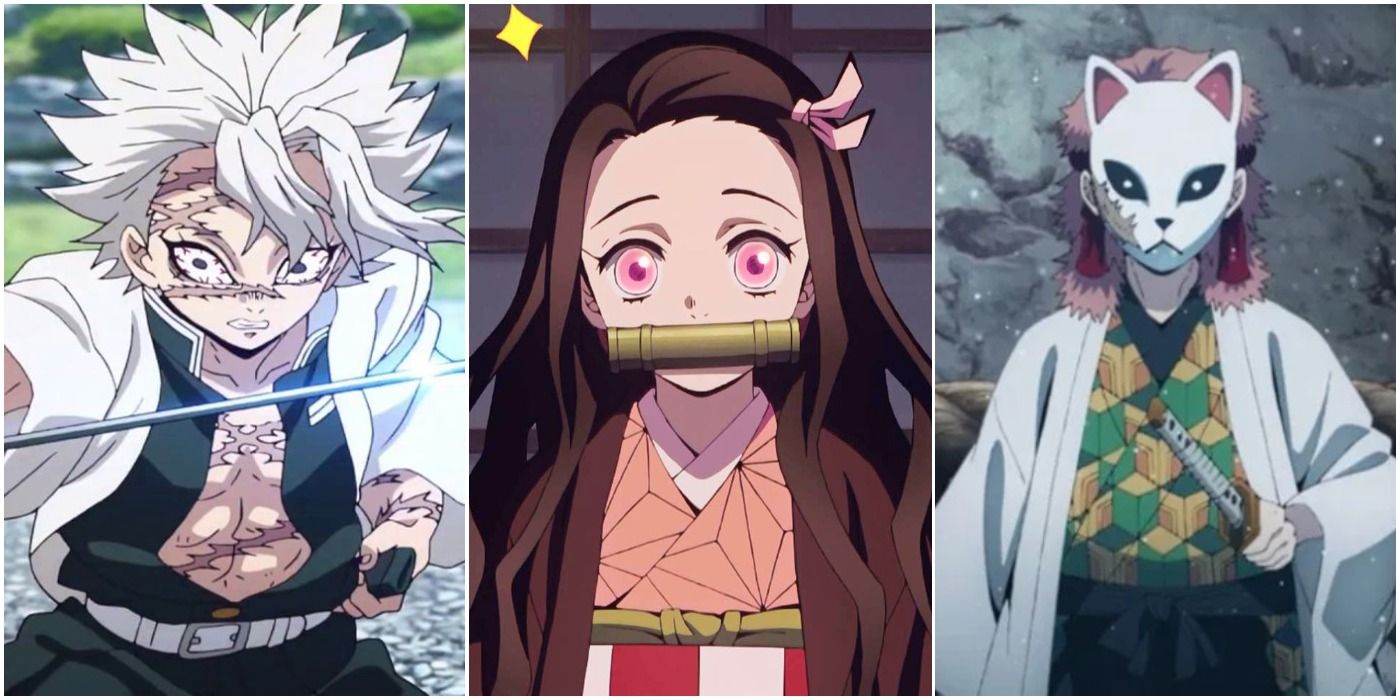
Clichés can be a good or a bad thing depending on one’s perspective. In the worst possible sense, clichés are tired and overused tropes or sayings that lack originality or novelty. In many cases, clichés should be avoided at all costs. But clichés can also be useful tools when developing characters that audiences will immediately recognize and connect with, and as long as they’re not overused, clichés can work as functional story elements.
Demon Slayer, however, is an undeniably clichéd melodramatic period piece that has some of the most clichéd characters in modern anime. Whether Demon Slayer is a good or bad story is up to personal opinion, but the clichés in its characters are indisputable and easily recognizable in other characters.
10 Zenitsu Agatsuma Is A Coward Who Desperately Wants To Change
Both Zenitsu’s current personality and backstory are pretty typical of shonen stories. Like Minoru Mineta from My Hero Academia, Zenitsu is an incorrigible womanizer, coward, and occasional pervert. And like Hinata Hyuuga from Naruto, Zenitsu has abysmally low self-esteem in his abilities and desperately wants to become stronger even though they’re both capable fighters. Zenitsu’s backstory describes how he never wanted to be a demon slayer and was instead roped into it by Jigoro Kuwajima, who believed in Zenitsu’s strength.
9 Inosuke Hashibira Is A Brash Hothead Raised By Wild Boars
Like Katsuki Bakugo from My Hero Academia, Inosuke is loud, forceful, and proud to a fault. Another example of his archetype is Sanosuke Sagara from Rurouni Kenshin, who is just as reckless and stubborn as Inosuke. Being raised by animals is a bit less common, but Natsu Dragneel from Fairy Tail was raised by a dragon while San was raised by wolf gods in Princess Mononoke. Inosuke’s personality is charming and amusing, which is why it remains a popular trope.
8 Sanemi Shinazugawa Uses Hostility & Anger To Push Others Away
Similar to Inosuke, Sanemi is also wild, hot-blooded, and dismissive to others, but his origins are very different. While Inosuke was raised by wild boars in the mountains, Sanemi had a family and still has a younger brother in Genya.
Since he’s lost so many important people in his life, Sanemi uses anger and hostility to keep others from getting close to him so they won’t end up in harm’s way. Kyo Sohma from Fruits Basket also possesses this trait, as he initially wants to keep Tohru Honda away from him.
7 Akaza’s Reason For Existence Is To Become The Strongest
Even though he’s a villain, Akaza’s obsession with power is a trait that’s also seen in anime protagonists and heroes. Roronoa Zoro from One Piece is driven to become the world’s strongest swordsman and Attack on Titan‘s Eren Jaegar is obsessed with becoming stronger so he can kill all Titans. Akaza’s thirst for power is what fuels him as a demon and gives his existence meaning. Bakugo and Endeavor from My Hero Academia are other characters who exemplify this popular trope, suggesting it’s probably not going to lose popularity any time soon.
6 Sabito Couldn’t Rest Until Urokodaki Trained A Successful Demon Slayer
Tanjiro is challenged with defeating Sabito in a duel before he can move on to Final Selection. Sabito is essentially the rival character who acts as the last challenge protagonists overcome when mastering their respective skills. But what makes Sabito especially clichéd is the fact that he’s a ghost who can’t rest in peace until his adopted father, Sakonji Urokodaki, gets over his grief for sending so many prospective young demon slayers to their deaths. Assisting Tanjiro from beyond the grave is an effective melodramatic plot point that engages viewers.
5 Kyojuro Rengoku’s Bravado & Enthusiasm Make Him Very One-Dimensional
Although his past explains why Kyojuro lives with such passion, he is nevertheless defined by that passion alone and doesn’t have much in the way of character nuances. Kyojuro’s personality is based on his belief that strong people have a responsibility to protect the weak, making him a very appealing character, but it’s still a very cliché trope. Real people are far more complicated than Kyojuro’s basic personality lets on, but his personality represents a trait that audiences can easily admire and look up to, even if it’s overdone.
4 Sakonji Urokodaki Ruthlessly Trained Tanjiro With Little Regard For His Safety
As an ex-Hashira who devoted the rest of his life to training new demon slayers, Urokodaki exemplifies the obligatory teacher character who many action-themed shonen protagonists run into. With a tortured past littered with the deaths of previous pupils, Urokodaki is understandably averse to taking on any more students.
Moreover, any student he does accept will have to go through hellish training before winning his approval. Kakashi Hatake from Naruto and Dracule Mihawk from One Piece also exemplify this trope, and they’re also both tough on their chosen apprentices.
3 Nezuko Kamado Is Both The Archetypal Big Sister & Redeemable Monster
Before her untimely death, Nezuko was the eldest daughter of the Kamado children and an exemplary one at that. She took care of her siblings with kindness and understanding. These traits followed her to her demon form, where she shows hunger for human flesh but the memories of her familial bonds prevent her from actually hurting other humans. Nezuko becomes the archetypal redeemable monster character who breaks others’ preconceptions about the monsters they thought they knew.
2 Tanjiro Kamado Fits The Roles Of Filial Son & Typical Shonen Protagonist
As the eldest son of the Kamado family, Tanjiro exemplified all the virtues of being the classic filial son. He always puts his family’s needs above his own, especially now that he’s driven to find a way to cure Nezuko. Tanjiro is also rather clichéd as a shonen protagonist since he always wins his fights no matter how many hardships he faces, and he possesses an admirable kindness that allows him to treat everyone with compassion. Even flesh-eating demons have received Tanjiro’s sympathy.
1 Muzan Kibutsuji Is Power-Obsessed & Unapologetic About It
The worst kinds of villains are those who are evil merely for the sake of it. Characters like Dio Brando from JoJo’s Bizarre Adventure and Naraku from Inuyasha embody this trope, and it’s hard to sympathize with them as villains. Muzan is no different, and his thirst for power comes from a crippling fear of being weak or dying. The worst part about Muzan’s wickedness is his apathy towards it. During his last moments, Muzan is 100% unapologetic about the harm he caused other people while pursuing his selfish goals.
About The Author
