The Big Bang Theory ran for twelve seasons, seeing 279 episodes over the course of its run, earning itself millions upon millions of viewers. Despite dislike of the show from some quarters, it managed modest critical success, and still has many fans, even after the show’s ending.
There are only so many times a person can rewatch the same group of geeks and their friends, and some fans of the former show are looking for fresh content to enjoy. Luckily, there are plenty of shows out there, sitcoms or otherwise, that should manage to delight The Big Bang Theory fans.
10 The IT Crowd Has A Similar Premise
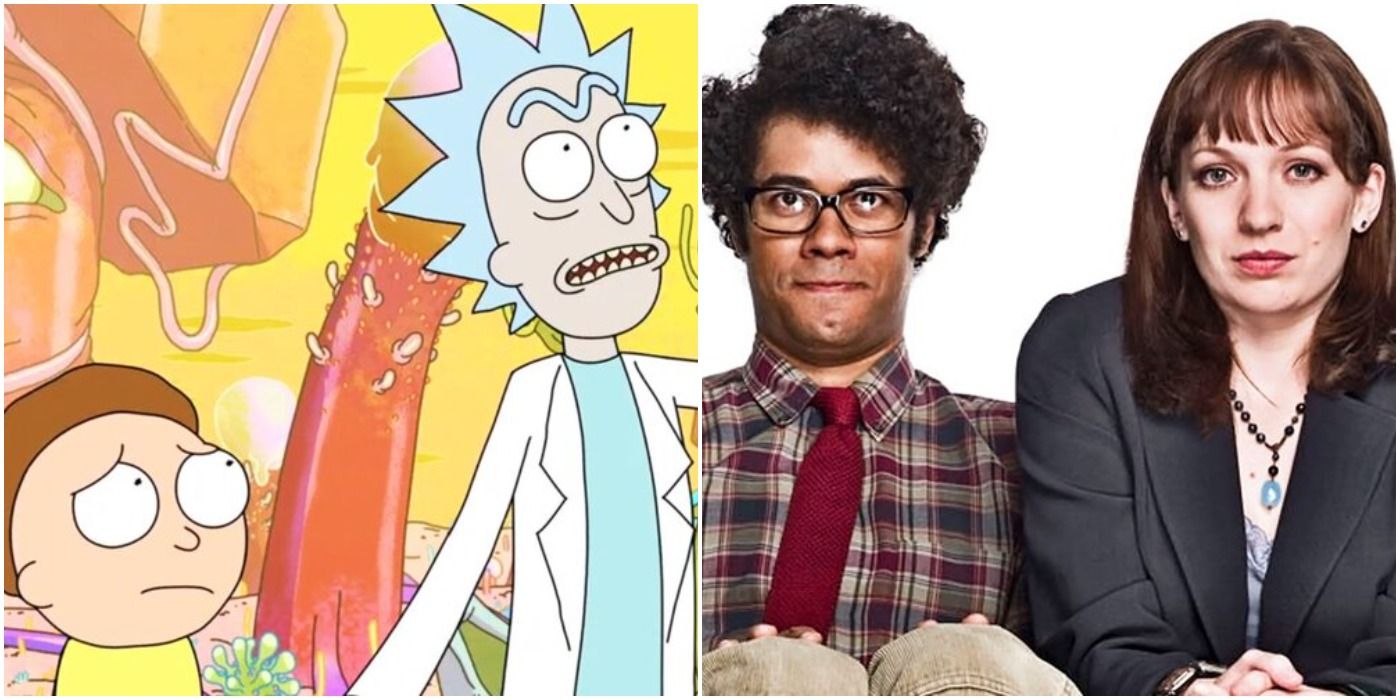
The IT Crowd has been considered by some to be The Big Bang Theory’s transatlantic cousin, despite being set in an office. It follows the IT department of the international conglomerate Reynholm Industries, consisting of socially-stunted ultra-geek Moss, somewhat more normal but ultimately nerdy lech Roy, and their tech-clueless manager, Jen.
The show covers similar ground to the Big Bang Theory, with some episodes detailing the difficulties the nerdy main cast has with everyday social situations, but it takes on a more absurdist tone with many of its plotlines. Something that fans and critics note approvingly is that it is ultimately more tolerant of nerdiness, and is written by people who care about the same things as the characters—a contrast to The Big Bang Theory writers admitting the geek references are as outside their wheelhouse as the science.
9 Unbreakable Kimmy Schmidt Gives A Familiar Message
One of the early shows that put Netflix on the map as a content producer, Unbreakable Kimmy Schmidt tells the story of a woman rescued from a doomsday cult attempting to integrate into normal society after moving away from the state where her trauma happened.
The two characters are not similar, but the struggles the bubbly, ever-cheerful Kimmy has with normal society in some way echo Sheldon Cooper’s struggles, although critics typically laud the depiction of Kimmy more so. Ultimately, the two also share a tolerant message that unusual people are not to be mocked or judged, but appreciated.
8 Red Dwarf Is The Ultimate Nerd Sitcom
A strange, funny, and cynical show beloved by the British public, Red Dwarf tells the story of the unusual crew of a mining vessel in the far future, including a hologram, a feline humanoid, a robot, and potentially the last human alive.
The show follows their disconnected adventures through space as they attempt to get by, find other humans, and deal with one another’s presence, with much of the familiar bickering from other sitcoms, including The Big Bang Theory taken up to eleven. With plenty of nods to other geeky properties, it is bound to please those who liked The Big Bang Theory‘s constant references.
7 The Good Place Is Witty, Plot-Driven, & Shows The Value Of Intelligence
A seemingly very different show from The Big Bang Theory, The Good Place follows four dead people attempting to settle into the seemingly-idyllic afterlife they find themselves in, with revelations triggered by one character admitting she doesn’t belong there.
The premise is far from a group of friends getting into science and social-related mishaps in their apartments, but The Good Place tells a story where each character’s brand of intelligence is needed, from science and philosophy, to social skills and simple intuition. This is a recurring theme through The Big Bang Theory, where the more scientific-minded characters need to work with the less-so in order to resolve their problems.
6 Silicon Valley Shows Geeks’ Changing Status
Society has come a long way since The Big Bang Theory first aired, and although it has some nods to contemporary geek culture with cameos from figures like Elon Musk. The show is nonetheless held back by its origins in 2008, before tech companies became the juggernauts they are today, and before properties like Game of Thrones and the Marvel Cinematic Universe made geeky interests cool.
Silicon Valley is fully up-to-date, following more stylish and socially-conscious geeks attempting to navigate the cutthroat business world of California’s Big Tech.
5 How I Met Your Mother Also Focuses On Maturing & Friendship
Alongside its well-known nerd and science storylines, The Big Bang Theory also fundamentally tells of the lives of seven people as they age, mature, and make life choices. Storylines involve new relationships, career developments, the decision to marry and raise children, and overcoming personal demons.
How I Met Your Mother lacks entirely the science basis of The Big Bang Theory, with its characters instead being architects, news anchors, and other non-STEM professions, but it tells similar stories about the changes in people’s lives as they mature, and how it affects their friendships and relationships.
4 Rick & Morty Is Beloved For Its Creative Humor
A similarly nerdy sitcom, Rick and Morty follows a misanthropic and cynical mad scientist by the name of Rick Sanchez, and his sci-fi adventures with his grandson, Morty. Although a far more bitter take on it, there are shades of the same character in Rick and Sheldon, with both being convinced that they are the smartest person around, and prone to unintentionally or uncaringly hurting those around them.
In a similar vein to The Big Bang Theory, Rick and Morty also blends its storylines between dealing with the more high-concept, scientific adventures, and more grounded storylines dealing with family and friends.
3 The Big Bang Theory’s fans can doubtlessly appreciate Star Trek
Of all the properties referenced on The Big Bang Theory, Star Trek is possibly the most consistent and affectionately nodded to, other than perhaps DC comics. Being a cerebral, episodic sci-fi story, the two shows have very different formats.
Despite the large differences, fans of the show can doubtlessly appreciate Star Trek for its deep storytelling, iconic characters, and the massive impact it has had on future science fiction properties.
2 Young Sheldon Is The Closest Thing To A Continuation
No other spin-offs from The Big Bang Theory have yet been announced, leaving Young Sheldon as the only one. The prequel details Sheldon Cooper’s strange childhood in Texas, dealing with his non-scientific family and attending high school several years early.
The show is largely separate from The Big Bang Theory, other than having Jim Parsons narrate in-character as an older Sheldon, but it nonetheless touches on many of the same themes and includes call-forwards to the show, such as a montage of all the main cast as children.
1 Futurama Is The Perfect Sci-Fi Sitcom
It is no surprise that fans of the Big Bang Theory are often fans of fantasy and science fiction themselves, sharing interests with many of the show’s main characters. Futurama blends pitch-perfect comedy with a well-used sci-fi setting that manages to create an interesting universe without skimping on humor.
Where the two shows do differ is in their humor style. While both have plenty of interpersonal humor, Futurama is far more likely to dip into satire, as per the tastes of its creator, Matt Groening, using the futuristic setting to satirize modern society.
About The Author
