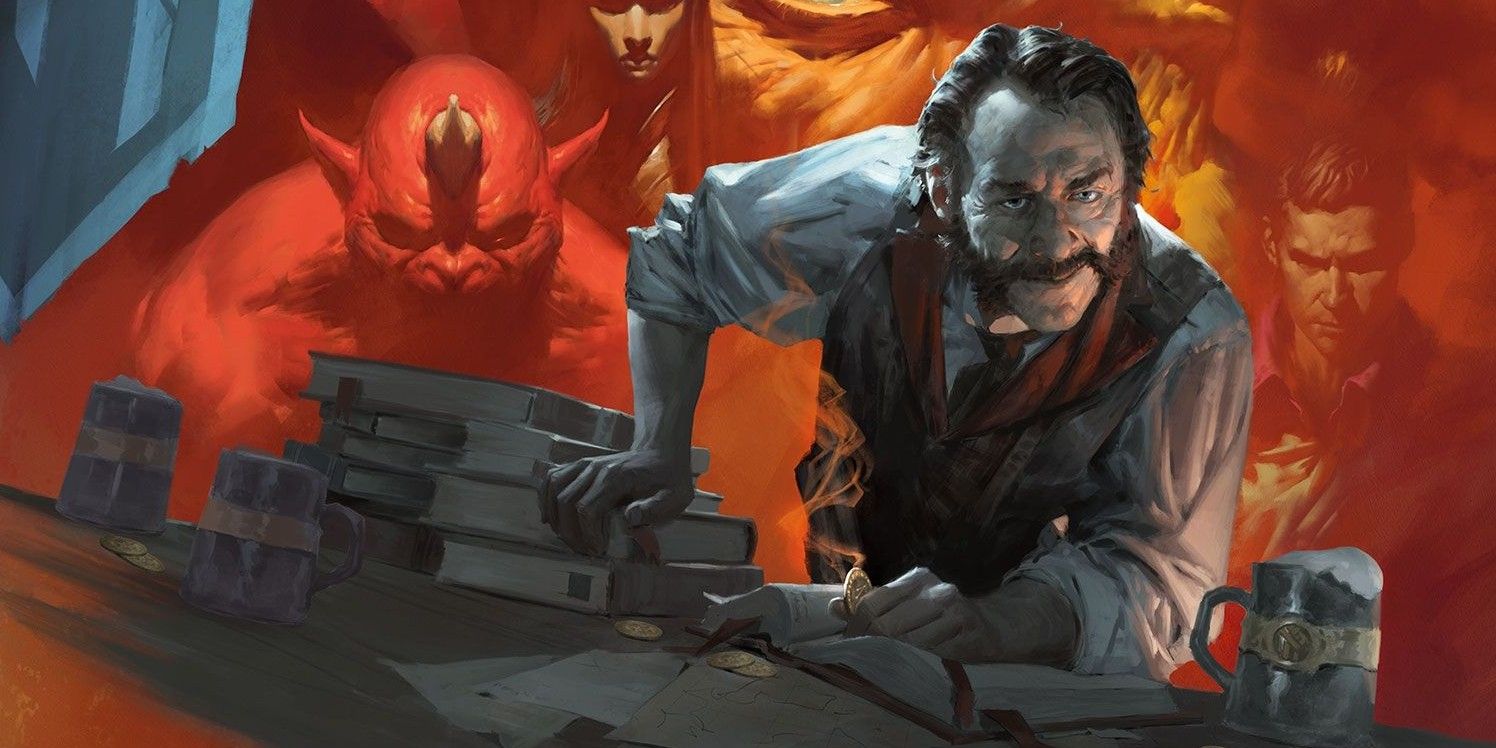
Everyone has done it at least once. In order to keep the Dungeon Master from using their character’s past against them, players make their Dungeons and Dragons characters have a tragic backstory and have them motivated by nothing more than the prospect of wealth. They give them dark and mysterious personas to fill in a need to be edgy, or they let their characters fall into stereotypes within the game just because it’s easier.
That gets boring for everyone involved quickly. In more plot-heavy games, there’s only so much that can be done with the same cookie-cutter character that has been played all the way through the Nine Hells and back again. So, might as well have fun with the next one by shaking it up a bit and making something a little more unique.
10 Flesh Out Their Family Lives
Everyone had to come from somewhere, and that includes the player character. When trying to make a more unique character than one where everyone died and nobody loves them- let them have parents, siblings, cousins, even spouses, and children waiting for them back at home.
After that, flesh out their relationships with them. Perhaps they are on great terms with their siblings but haven’t spoken to their parents in a decade. Maybe their great grandmother was a hero in their own right and they got their +1 Longsword as an heirloom. Little things like that help add just a little more depth to the character.
9 Give Them More Friends Than What’s In The Party
Not everyone is an introverted hermit, especially those bards who are well known for trying to seduce everything and everyone. Somewhere around there, they had to have friends. Perhaps they still do out there somewhere, people that can be called upon for information or a little wind-down session.
Additionally, let some of those friends be exes that the player is still on good terms with. Let them have a significant other, best friend, or someone they’d just be willing to help under any circumstance and it becomes a little more full in their lives.
8 Let Them Have Had A Job Before Adventuring
Chances are, the character is an adult. They had to have gone through training to get their necessary class skills, but maybe they weren’t tossed into that immediately. Perhaps that thief was initially an appraiser or a shopkeeper who learned how to cook the books and swindle their customers. Maybe that fighter was once a blacksmith and now they go about using their own weapon. Maybe that bard was once a minstrel for a lord and now they want to go see the world.
Letting them have had some experiences that weren’t solely adventurous gives them another layer of realism and helps explain how they are the way they are. It can also help decide where to put those straggling skill points into or decide exactly what languages they could possibly know.
7 Think Of Reasons Why They Chose Their Class
The long and short of it is that the character has that class because that’s what the player wanted to play. However, in their lives, there is no player. It’s just them. So decide why they chose their class.
It could have been a family tradition, maybe they had a hero they idolized, or maybe that kleptomania was found to be useful in a rogueish career. That bard could have just loved the spotlight or gotten good at an instrument in an attempt to woo someone back in the day. Maybe that paladin always dreamed of being a knight in shining armor, or that wizard accidentally found a spellbook when they were in college for something entirely different.
6 Decide On Their Religious Beliefs
The 5th edition did away with a lot of the religious systems that were put forth by previous generations. They were dulled down, merged, and even removed entirely. That doesn’t mean that they can’t still be used and considered, and not just for holy classes like clerics and paladins.
On top of it all, not every single practice is going to be identical. Determining how strict someone is in their religious beliefs, what that allows them and prevents them from doing, and how much they are willing to fight for these systems can really help decide how they go about tackling issues. In a world that’s heavy with divine magic, there could even be someone more scientifically minded and desperate to find a more solid reason than the gods said so. Alternatively, in ones that are low in divinity, it could be someone looking hard for a higher calling. Perhaps the ranger has a ritual they do before they go out to hunt, or that pirate keeps some superstitions close to them.
5 Figure Out What Motivates Them
When trying to be more unique than having an adventure who lusts only for gold, it’s extremely important to figure out why the character is going out in the first place. Maybe there is a religious quest beckoning them, the call of an ancient artifact, or the quest for answers.
Maybe that bard wants to become famous, or that rogue wants to become a guild master, or that druid wants to cleanse the area of all unnatural impurities. That wizard might have heard of an ancient relic, or that fighter wants to prove to their former general of a father that they are worth their praise. The possibilities are endless.
4 Pick Skills Based On Their Experiences
One thing that is always a pain is picking out skills. There are only so many that can be put in at once, and it always seems that there is some leftover just taunting the player. While it might be tempting to min-max and only pick skills or feats that would give a serious tactical advantage, consider instead putting points into skills that they would logically have been perfecting. Granted, not every edition has quite as many options for this, but it can still be worked with.
Someone who was formerly a merchant might have better skills in appraising and information gathering skills, whereas a pickpocket who has always lived on the street might not actually be good at talking to people. Someone who had a carpenter for a parent might be good at fixing things, and maybe throughout the game it feels like the character has been trying to do something more often than they used to.
3 Ask A Lot Of Who, What, When, Where, Why, & How Questions
The easiest way to get more in-depth with characterization is to ask a lot of who, what, when, where, why, and how questions. Find ways to ask them about concepts and then find ways to answer them. Suddenly the character becomes just a little fuller when they’re all filled in.
Then, take it another step and ask them again. Build from the questions, become curious about their lives, explore them to the fullest. Take the concept to someone else and have them ask questions too so they can be built into and answered. It really works.
2 Know That It’s Okay To Not Have A Tragic Backstory
A lot of more inexperienced players will make tragic backstories so they can be edgy, cool, or to keep the DM from using something that was supposed to be nice and innocuous against them. The thing is, a good DM can use anything against the player if they want to, so the player might as well have fun making something unique that they can get invested in.
While some Dungeon Masters love to drink the tears of their players and collect stacks of character sheets, not all of them do. Even if that is the case, being invested in a character makes the player want to actually play harder to try and keep them from the demon who is the DM. It’s a lot more satisfying when they’re fleshed out and they still get to conquer everything the DM throws at them.
1 Feel Free To Give Them More Interests Than Loot
While everyone wants loot, letting a character have more interests than just becoming rich really helps give them a little bit of something they would have otherwise been lacking. Nobody cares about only one thing, so neither should the characters.
Perhaps they are interested in a specific kind of loot, like gemstones, ancient artifacts, or tomes and that drives them to search for it. Maybe they are a scholarly sort and are adventuring to try and research something about the dungeons, or perhaps that ranger has that favored enemy because they find them absolutely fascinating. Maybe that bard is trying to collect as many fans as possible or that druid wants to see just how many cats they can get to follow them around. Experiment and have fun with it. It will definitely make for a more enjoyable game.
About The Author