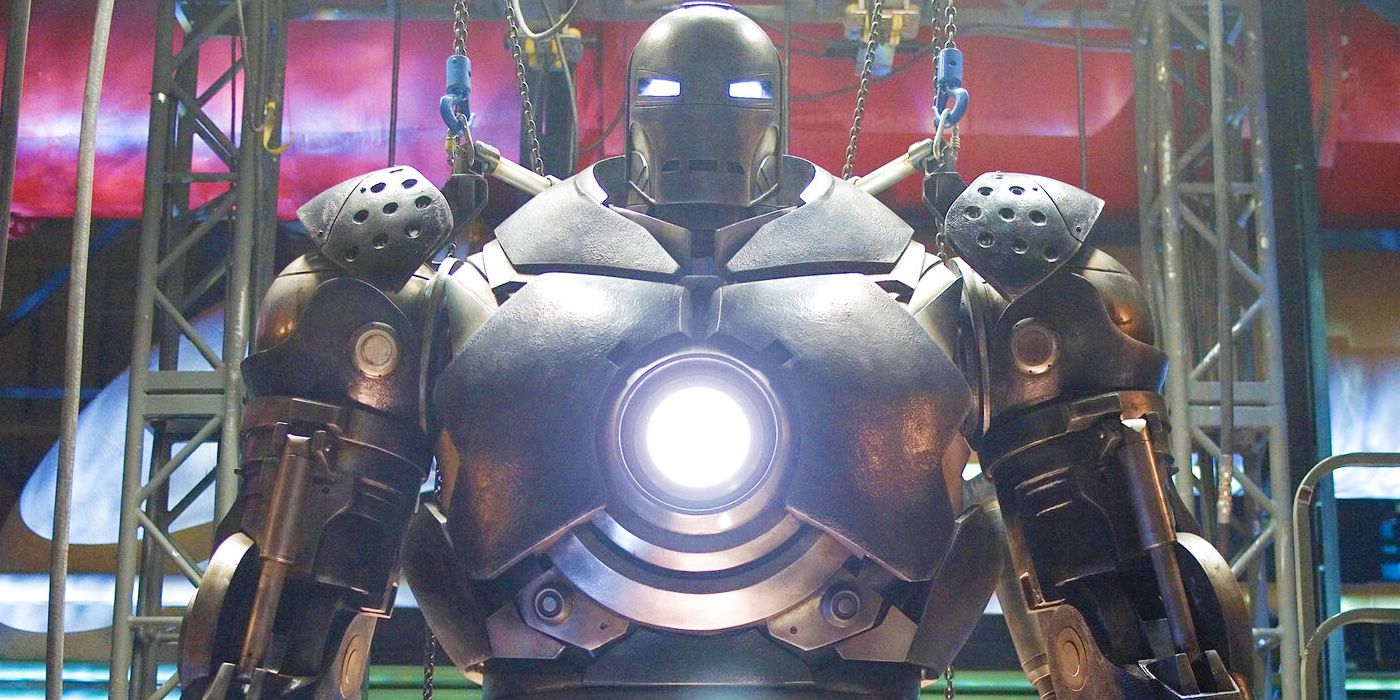
Iron Man‘s climactic Iron Monger battle was missing a key element that prevented its CGI from being finished until three weeks before the movie’s release.
Director Jon Favreau’s superhero adventure famously ends with Tony Stark donning his Iron Man armor to battle his mentor/business partner-turned enemy Obadiah Stane, the latter decked out in his fresh-and-shiny Iron Monger suit. As detailed in the newly-published book The Story of Marvel Studios: The Making of the Marvel Cinematic Universe (via /Film), the film’s climax didn’t originally have Tony defeating Obadiah by getting his opponent to fly after him to the highest altitude, knowing the atmosphere would affect his suit’s ability to function (as it had with Tony’s suit earlier in the film).
With the movie’s post-production deadline approaching, Industrial Light & Magic needed Iron Man‘s creatives to figure out the missing piece to the Iron Man/Iron Monger showdown so it could complete the necessary visual effects shots in time. As such, it fell to Favreau, associate producer Jeremy Latcham, and editor Dan Lebental to determine what the climax required to make sense from a narrative perspective.
Here’s how the book describes what happened: “Latcham made a DVD rough cut of their current edit. He slung it into his backpack and raced to the Santa Barbara Film Festival, where two of Iron Man‘s writers, Mark Fergus and Hawk Ostby, were in attendance as members of the festival jury. Arriving in a blur at Fergus and Ostby’s room, Latcham loaded the DVD and played the cut on their hotel TV screen. It took the writers one viewing before they both said: ‘The Icing Problem.’ Latcham gave them a confused look, so they quickly laid it out: Tony Stark’s high-altitude icing problem with the Mark 2 suit is explained during the test flight. But then, it never amounts to anything. So, at the very end, when Stark and Obadiah are up in the sky, Stark knows his foe is going to have the same icing problem, which is why he lures Obadiah up so high. ‘And that is why you’re writers!’ exclaimed Latcham before he raced back to Favreau and Lebental. In what Latcham describes as a ‘total madhouse,’ those hugely important CGI shots didn’t get finished until just three weeks before the movie was released.”
Iron Man would go on to become a critical and box office success upon its release in 2008, launching the Marvel Cinematic Universe in the process. The tentpole’s creatives didn’t go unrecognized for their efforts either, with the movie landing Oscar nods for Best Achievement in Visual Effects and Sound Editing.
Source: The Story of Marvel Studios: The Making of the Marvel Cinematic Universe, via /Film
About The Author
