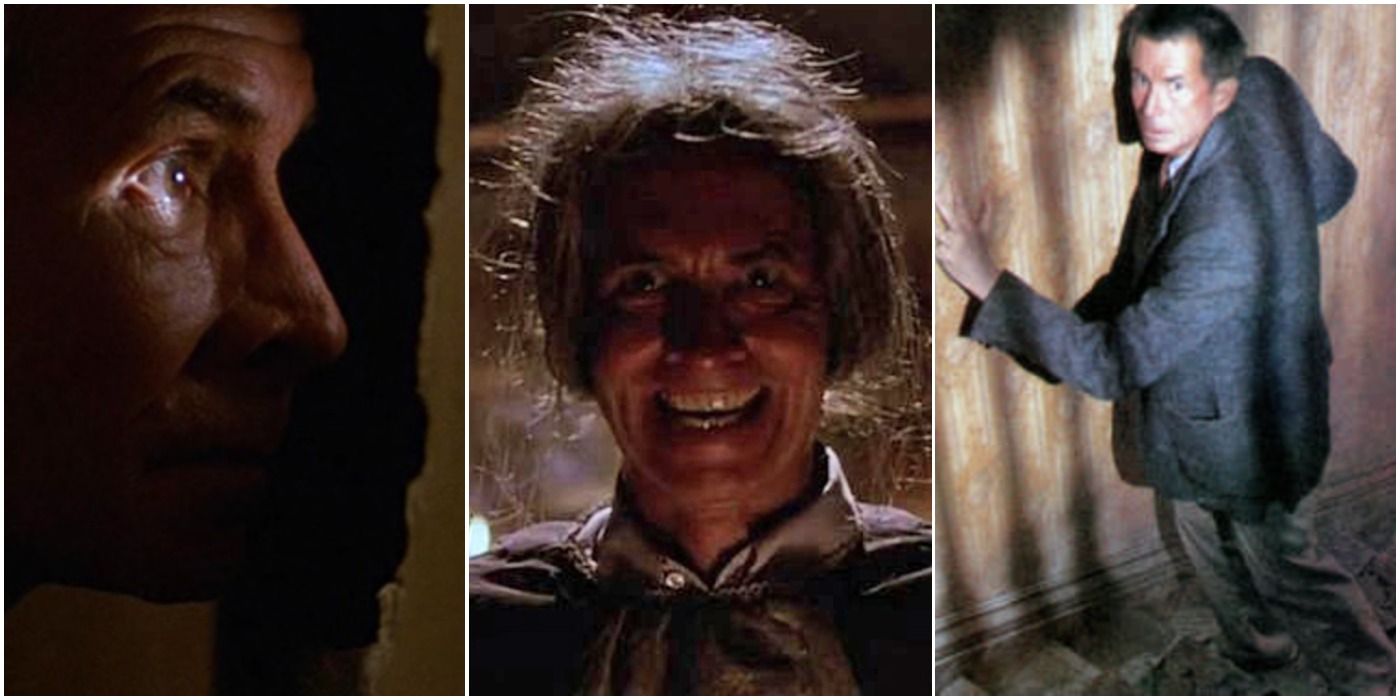
Alfred Hitchcock is responsible for many beloved pieces of cinema, but 1960’s Psycho is not just an iconic movie, but a prototype for what would go on to become the slasher subset of the horror genre. Psycho is an all-time classic, so it should come as no surprise that the movie’s sequels have more contentious reputations.
It’s easy to hate Psycho II and III just because they’re not their Hitchcock predecessor, but there’s still a lot to appreciate from these maligned sequels. 1986’s Psycho III is definitely a messy example of a slasher movie, but there’s an entertaining horror sequel hiding within.
10 Anthony Perkins’ Committed Performance As Norman Bates
Psycho III, as well as the previous sequel, might lose Alfred Hitchcock as director, but they remain as fascinating as they are because Anthony Perkins returns as Norman Bates. Despite any questionable writing or direction, Perkins shines as Bates at every opportunity.
It’s extremely rare for an actor to continue to play a character for this long and Norman’s internalized pain is truly felt. It feels like Perkins loses himself in the role and like he has a genuine investment in the character, which helps empower Psycho III into something greater.
9 It Makes Maureen Coyle The Heart Of The Movie
Psycho III borrows a lot from the first sequel in the series, but a major difference between them is the addition of Diana Scarwid’s Maureen Coyle as a lost soul who enters Norman’s orbit. Norman’s internal conflict is still front and center, but Psycho III is just as much–if not even more–Maureen’s story.
She’s the heart of the movie and a major component in its success. Maureen also ties back to Marion Crane and it feels like a justified way to bring back Norman’s repressed trauma and this major trigger in his life.
8 Its Introduction Of Religion Into The Franchise
Horror and religion have a fascinating relationship and some of the most powerful movies combine the two concepts, like The Exorcist or The Omen. Religion is essentially absent from the first two Psycho movies, even if Norman struggles with identity, belief, faith, guilt, and repression, which can commonly be tied to the subject matter.
Psycho III brings religion into the franchise in a natural way through Maureen and this extra dimension gives some extra weight to the murders in the movie. It’s a fitting extension to Norman’s journey.
7 It Reverses Psycho II’s Twist
Psycho II is also an exceptional horror film that deconstructs the sequel and slasher concepts in inspired ways. As good as the movie is, it plays with Psycho’s lore in some controversial ways, one of which is that Norman’s actual mother is Emma Spool, not Norma. This turn certainly works for what Psycho II accomplishes and the story that it’s interested in telling.
However, Psycho III adds even more wrinkles to Norman’s past, which are equally controversial, but at least reverse Psycho II’s decision and regain some favor in that regard.
6 Anthony Perkins’ Atypical Impulses As A Director
Anthony Perkins doesn’t just return as Norman Bates in Psycho’s subsequent sequels, but his commitment and love for the character become truly apparent when he steps into the director’s chair for Psycho III. Perkins only directs two movies throughout his career, so he’s a very untested talent in this regard.
This makes Psycho III technically more flawed in some respects, but it benefits from how Perkins’ impulses aren’t typical of most directors. It gives Psycho III a unique quality that feels just off-kilter enough, like Norman Bates himself. There’s also gorgeous cinematography from Bruce Surtees, which makes an impression.
5 It’s Full of Hitchcock References
Psycho III is no Alfred Hitchcock movie, but there’s an obvious reverence for the director of the original movie that’s present in this sequel. One of the more creative choices that Perkins makes as a director is to feature numerous visual nods to some of Hitchcock’s most popular works.
There are visual allusions to the original Psycho, especially when it comes to the movie’s depiction of the iconic Bates mansion. However, there are cinematic references to Vertigo and The Birds during some of Psycho III’s more intense sequences. Evoking Hitchcock’s energy is not a bad route to take.
4 Its Final Shot Brings The Trilogy Full Circle
An element that makes the Psycho trilogy so heartbreaking as a whole is that they stick with Norman Bates and depict his continually frayed mental state. It’s brutal to watch Norman avoid his murderous impulses, but it’s even worse to understand that he feels most comfortable in this state of delusion.
The ending of Psycho III, even though it was forced by the studio, brings a level of symmetry to the franchise and evokes the original movie’s conclusion. Norman returns to a place of insanity, but he at least feels free in this acceptance and submission.
3 Jeff Fahey’s Breakthrough Performance
Many fantastic actors make their debuts in horror films and it remains a strong area for budding performers to hone their skills. Psycho III largely coasts on Perkins’ undeniable energy as Norman Bates, but he’s far from the only powerful performance in the sequel.
Jeff Fahey, who’s gone on to become a consistently reliable character actor in both television and film, makes one of his first film appearances here as shifty drifter musician, Duane Duke. Fahey creates empathy for this character, who Psycho III teases as a possible murderer, and watching this early performance from him is a lot of fun.
2 It Uses Blood Simple As A Visual Influence
Anthony Perkins was well aware of his shortcomings as a director and that there would be very high expectations for whoever helms a highly anticipated sequel like Psycho III. Perkins doesn’t just phone in his directorial work and he really tries to do the movie’s script justice and bring as much promise to the project as any seasoned horror director.
Perkins reviewed the work of not only Alfred Hitchcock, but also the Coen Brothers, specifically their first film, Blood Simple, for the inspiration for Psycho III’s visual language. It was enough to impress some individuals to be involved with the project.
1 It Has The Highest Body Count Out Of Any Of The Movies
Psycho and its sequel are undeniably horror movies, but they’re fairly restrained when it comes to what can be a very gratuitous genre. A lot of Psycho’s minimalism in the horror department has to do with how 1960 was a very different time for what was allowed to be shown in cinema.
Psycho III benefits from its 1986 release and it operates with a very ‘90s mentality when it comes to sex and violence. Psycho III features the most in both of these departments, which makes it feel like a very era-appropriate horror movie.
About The Author
