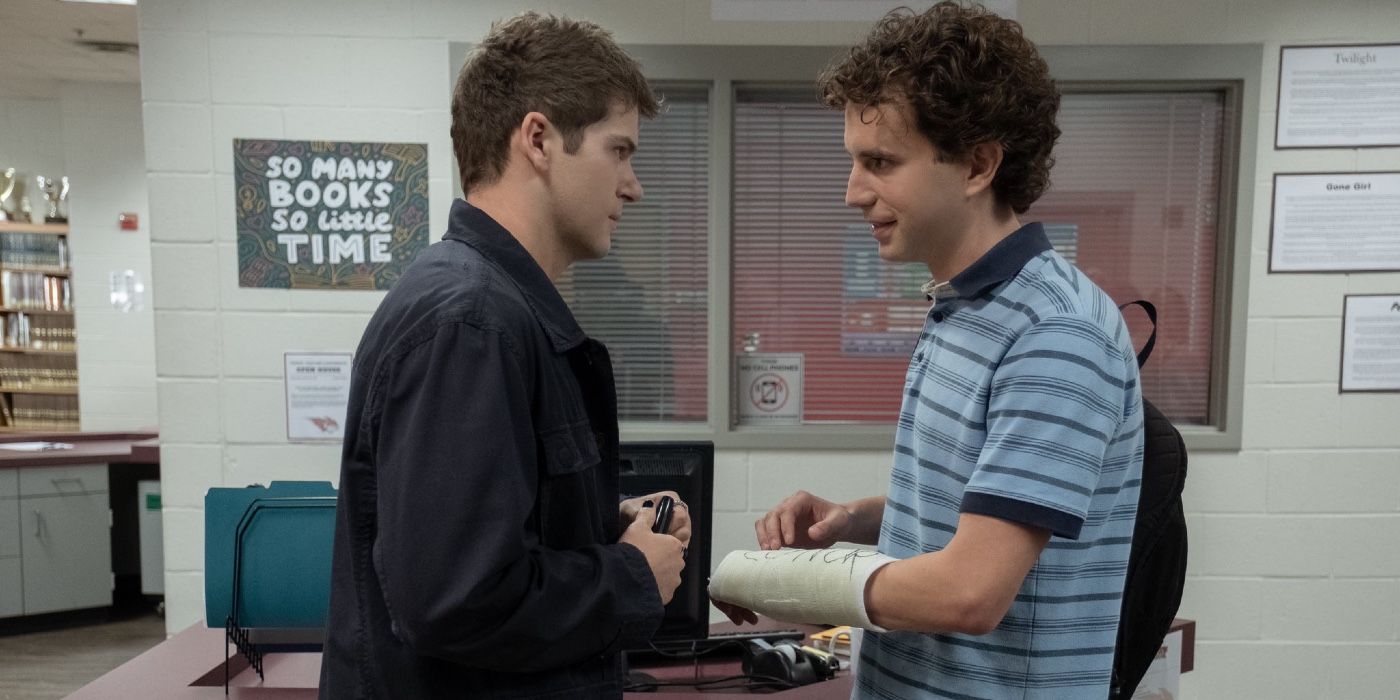
WARNING: This discussion of Dear Evan Hansen includes a character’s suicide. This article also contains spoilers for the film and musical.
For more information on the warning signs and prevention of suicide, click here. If you or someone you know is in emotional distress or considering suicide, call the National Suicide Prevention Lifeline at 1-800-273-TALK (8255). If you live outside the U.S., click here for a list of international hotlines.
Five not-so-short years ago, Dear Evan Hansen became a Broadway sensation, winning six Tony Awards and winning over millions of devoted fans, many of them teenagers who played the emotional soundtrack on a loop. The hit musical — with songs by Benj Pasek and Justin Paul of La La Land and The Greatest Showman fame — was even adapted into a YA novel. Anything that popular eventually gets pitched as a movie, and this week, the film version of Dear Evan Hansen premiered, to less-than-sensational reviews. Though audiences haven’t had much of a chance to weigh in yet, it’s not looking like the movie will have the same impact. So what changed? In some cases, not enough, and in other cases, too much.
Both the stage show and the movie revolve around the same basic plot. A boy, Connor Murphy, takes his own life and happens to have what amounts to Evan’s therapy homework — a letter written to himself, hence the title — on him at the time. Connor’s parents mistake this for a suicide note and believe Evan and their son must have been close. The new attention Evan receives from the Murphy family and his classmates is too enticing for the 16-year-old to tell the truth, but of course, his initial lie begins to spiral out of control. Along the way, the story addresses issues of mental health and social media and the effects they have on young people. These are the major differences between Dear Evan Hansen on stage and screen.
Dear Evan Hansen Cuts Four Songs but Adds Two More
In the Broadway production, the curtain opens on Dear Evan Hansen‘s two moms: Heidi Hansen and Cynthia Murphy. Though the women are very different and don’t know each other, they sing a duet together called “Anybody Have a Map,” in which they express their frustrations about parenting their troubled sons, Evan and Connor. The opening scene occurs split-stage between the Hansen’s very working-class household and the Murphy’s more affluent one, and much of the remainder of the show is set in those two homes. The film cuts that well-liked song entirely, presumably because the actors playing the mothers — Julianne Moore and Amy Adams — aren’t necessarily known for their singing voices. Three other songs have been cut as well: “Disappear,” “To Break in a Glove” and “Good for You.”
Instead, the movie opens with the musical’s second song, and one of its best known, “Waving Through a Window,” which is primarily sung by Evan (Ben Platt). In some ways, the more familiar showstopper makes for a strong start, but the omission of “Anybody Have a Map” diminishes the mom characters, who are some of the easiest to identify with in the morally complicated script. “Disappear,” which is sung by an imaginary Connor in the stage musical, is replaced with a new song called “A Little Closer” that Connor (Colton Ryan) has written in the world of the movie. Another new tune, “The Anonymous Ones,” is performed by Alana Beck (Amandla Stenberg) and gives that character more of a presence in the story.
Some Characters Have Undergone Minor Changes
On stage, Connor’s family consists of his mom, Cynthia, his dad, Larry, and his sister, Zoe. For the film, Larry becomes Connor’s stepdad, and his last name is changed to Mora. A plot point is added that Connor can remember his father, who passed away, but his little sister cannot. Similarly, Evan’s friend Jared Kleinman gets a new name — Jared Kalwani — as well as a new sexual preference. This might be to reflect actor Nik Dodani’s Indian heritage and LGBTQ+ status. Though Evan isn’t a queer character, the impression that Dear Evan Hansen is a queer musical has long persisted, and this updated Jared lends a new perspective to Evan and Connor’s made-up relationship.
The role of Alana Beck is expanded in the film, as is her friendship with Evan. Not only does she have her own song, but her own elaborated-upon anxieties and insecurities. On stage, she’s more of a one-dimensional goody-two-shoes who seeks out opportunities to build up her college credentials and moves the plot along. Consequently, the roles of Jared and Connor, the latter of whom interacts with Evan throughout the stage show as a sort of imaginary friend, are both reduced.
Dear Evan Hansen’s Ending Addresses Criticism of the Musical
Both the Broadway musical and the movie wind up in the same place — an abandoned apple orchard that’s dedicated in Connor’s memory — but how the characters get there differs, with one major change that seems meant to address a complaint about the original. In the musical, Evan’s lies eventually catch up to him when the Murphys become victims of harassment. He confesses to the family in a song called “Words Fail.” One by one, they walk away, hurt by his deception. His mother finds out the truth, too, but doesn’t give up on him and feels partially responsible for his anguish. On stage, however, Evan is never held accountable for his problematic behavior, and the public at large never learns the real story, which some audience members felt was irresponsibly handled.
In the movie, Evan comes clean with the same song and has a similar heart-to-heart with his mom, but he takes his apology tour a step further by posting an online video in which he attempts to set everything right. He also reaches out to people who actually knew Connor in an attempt to get to know him, which leads to Evan being sent a clip of Connor singing and playing the new song “A Little Closer.” Evan then shares it with the Murphys as a gesture of goodwill. Both versions end on a hopeful note, with Connor’s sister, Zoe, sort of forgiving Evan or at least pointing out the good that came from his ruse.
To see these differences in action, Dear Evan Hansen is now playing in theaters.
About The Author
