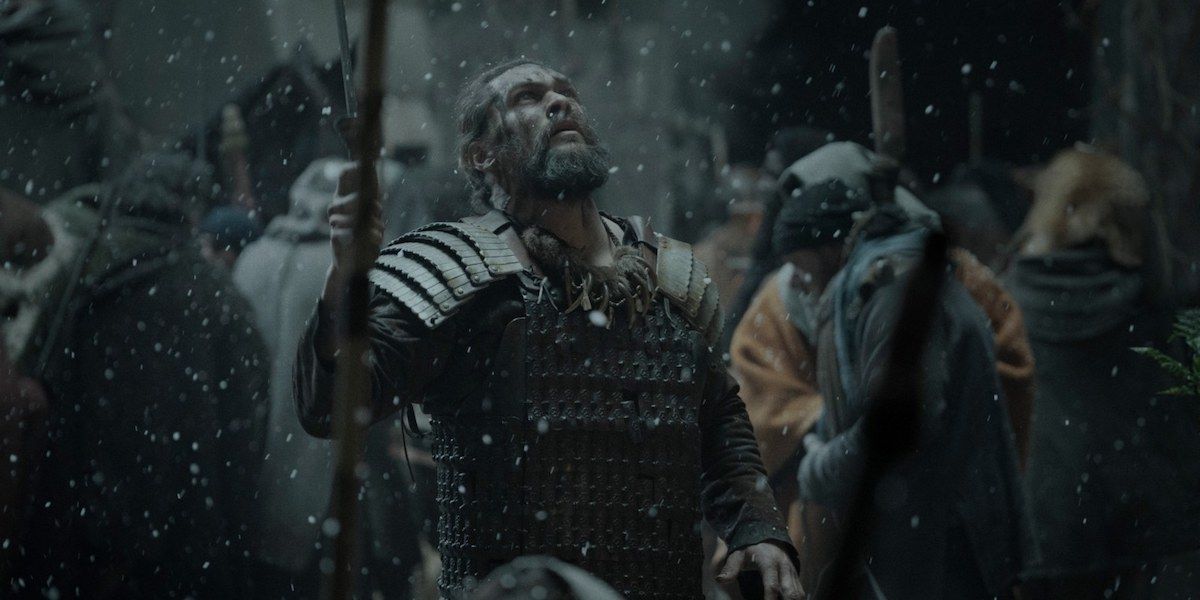
Apple TV+‘s acclaimed original series See is back for a new season. See Season 2 continues the epic of a mysterious condition that takes away the vast majority of humanity’s eyesight, which results in the collapse of civilization and warring tribes. Following Jason Moma’s tribe as they stand up to the villainous Queen Kane, See boasts sweeping battles in the untamed wilderness with tribes of soldiers who are visually impaired. In Season 2, associate producer and blindness consultant Joe Strechay takes on a more active role in See‘s production.
In an exclusive interview with CBR, Strechay discussed building the foundation of the series set, examined the fighting styles seen throughout the show’s numerous action set pieces, and shared how he worked with the cast to properly portray characters who are blind in See.
Now that you’ve laid the foundation for the series and this world where humanity’s sense of sight has been taken, what did you want to lean into and change up for Season 2?
Joe Strechay: It was exciting going into Season 2! Our production designer, props department, and all these different departments worked closely. They wanted me involved even more than I was involved in Season 1 as a co-producer. They made sure to bring me into all the art department meetings as we’re crafting these different worlds and they wanted to make the set decoration more specific so, when you go into a bar, there are notches built into the bar for your staff to connect with. In the props department, they built these liquid level indicators so that when you’re pouring hot tea, it strains the tea as well as a cork rising to hit the bell when it gets to the top.
[They] built these real things that we put into our world and spent so much time and effort really trying to make sure it was designed for individuals who are blind. They wanted my input and the input of others. If I didn’t know the answer, I reached out to a lot of my friends in the community to figure out what might be the best way to go and that’s how we built See.
At the start of Season 2 when we see these characters again, it’s winter and we see that affect haptics and echolocation. How was it bringing a wintry approach to the season premiere?
Winter brings benefits and negatives for people who are blind. It is a little bit of a different movement in how you use your staff. There’s more stabbing into the ground, just as I do as a person who’s blind when I go snowshoeing or something like that. With echolocation, it’s a clearer sound at times. You don’t have leaves on trees. It’s just different, not worse.
In the world of See, you’re not typically following sidewalks, but, in the real world, it might be harder to find the sidewalk. In our world, we’re typically using shapes and the surroundings as you’re moving through. It doesn’t impact that really too much.
To that point, this isn’t Daredevil‘s New York, where there’s constant sound and claustrophobic spaces, but a wide-open country. How is it working in that environment?
We’re very lucky because we’re in a world filled with people who are blind and not in the middle of a city. Cities have benefits too because they’re built in a certain way, but our whole world is built in a certain way. It’s a universal way, right from the start, for people who are blind. It’s people who are blind building it. We bring that into it but also when you’re traveling it’s quieter and there are less people so we can use our sound around us in a different way than you would in a city. I go out in the world hiking and use that sound hiking, whether it’s the sound of a river, and pick out the sound, through passive echolocation, of trees in front of it. You can follow those sounds and still use textures and how you use your cane or staff on certain rock formations and move through it. It’s what I do every day but we’re putting it into a TV show.
How is it working on the cast for their performances, now that the foundation is laid for Season 2?
I think we took it to a whole different level. I had a lot more say as we moved into Season 2. We were kind of building the plane as we went in Season 1 and Season 2 is really thought out. [Writer and executive producer] Jonathan Tropper really brought me into the writers’ room to bring input to the scripts right from the start. [Writers and executive produers] Dan Shotz and Jonathan Steinberg did that as we were developing our Season 1 stuff with [series creator] Steven Knight, but even more so.
We brought it to all the different departments and had time to figure things out and really work with the actors too and spend time with them to make sure that they had the training they need but also make sure we’re including actors who are blind or low vision, background performers who are blind, low vision or other disabilities as well. We had people who are deaf or hard of hearing, short of stature, persons who utilize a prosthetic leg, and so on.
Is there any specific cast member you’d like to shout out for being in the trenches every day to get that choreography and training down?
I think all of them bring it in a different way, whether it’s Alfre Woodard and her consideration and how she thinks about things and how detailed she is, or whether it’s Dave Bautista really internalizing it and really spending so much time outside of work developing out his character and working with Jason [Momoa] as well.
Jason came into Season 2 committed even more so than Season 1. He was committed in Season 1, but in Season 2, he was game on right from Day 1 and he wanted notes for every scene and every specific take, making sure he was bringing it. He set that standard in Season 2 and we have all these talented actors, whether they’re portraying blindness or not, we also brought in these actors who are blind or low vision like Shayla Brown or Adam Morris or anyone who brought their own specific energy and ideas and thoughts to their character.
The combat in both seasons is just bananas. How was it developing fighting styles, not just individually but for whole armies going at it in the story?
We had a lot of conversations about the fighting styles but also the military movements of the different groups, whether it was in the writers’ room or with my team of choreographers. I worked with a movement team for the formations and our stunt and fight choreography, our stunt team is just top-notch. You have Jon Valera, who did John Wick and all that stuff, who came in a really invested and took our input and also thought super creatively that made sure we stayed in the world of See but thought differently and creatively. Each day is fun and those stunt scenes are just unreal. If you liked Season 1, you’re going to love Season 2!
With you taking on a more active, prominent role in Season 2, what are you most excited for audiences to see?
It’s really important that we address ableism in our show. In Season 2 you’ll see a big theme where characters with sight are being a little bit ableistic towards the characters without sight or you’ll see characters who are blind being ableistic towards the characters with sight or even characters who are blind be ableistic towards other characters who are blind.
I experience that every day of my life — people trying to decide what I can do as a person who is blind, whether it’s people with sight trying to decide that or people in my own community. I’m excited for us to explore that and maybe create a conversation.
Now streaming on Apple TV+, See Season 2 releases new episodes every Friday.
About The Author
