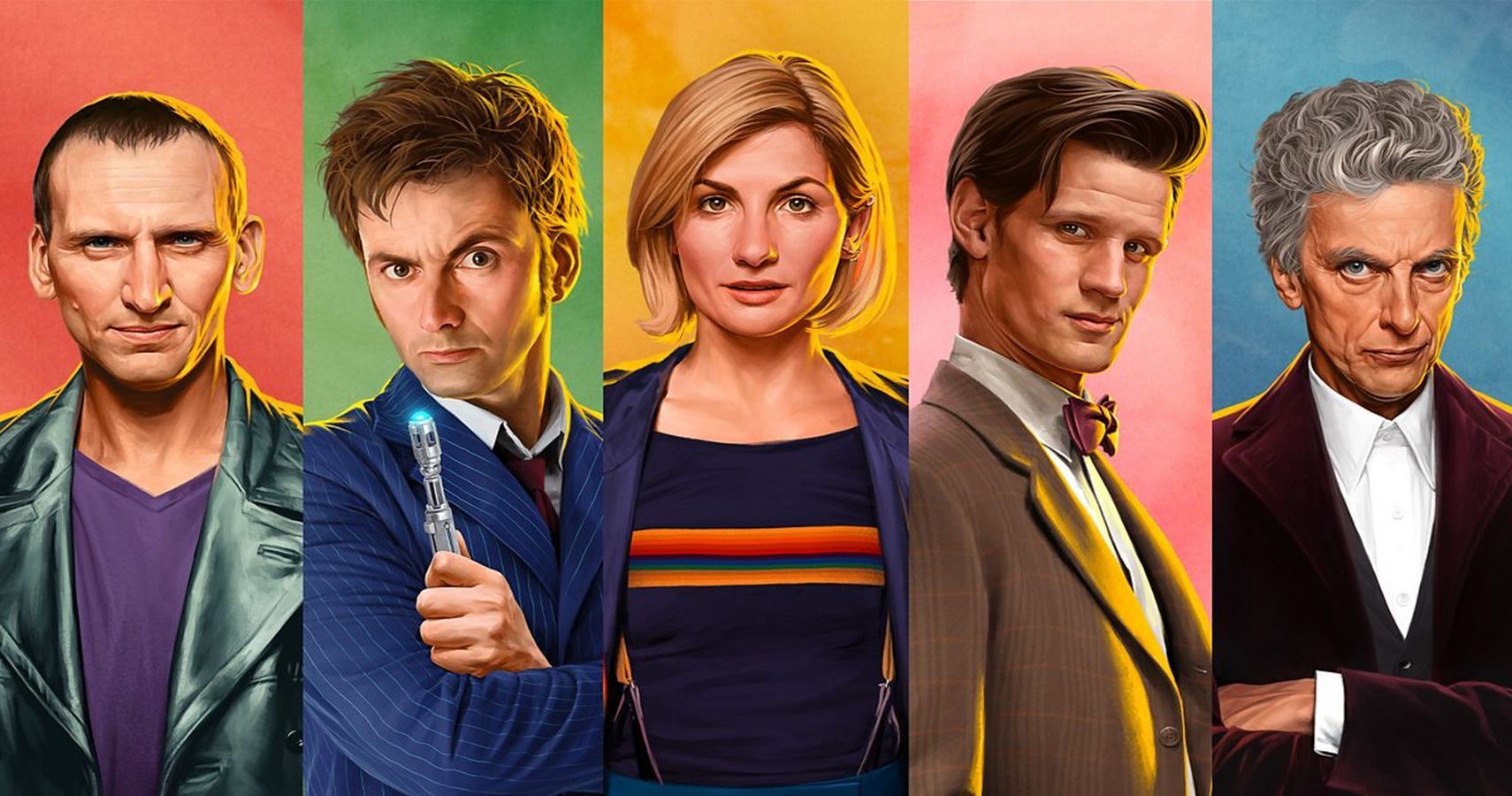
The Doctor is one of the most unique characters in science fiction. Part superhero, part scientist, part immortal, the character has been portrayed by over a dozen actors throughout the show’s run. Furthermore, Doctor Who has introduced devices and alien races that are now established in everyday culture.
This includes movies and television shows. Several franchises took the concepts from Doctor Who and utilized them in part for their own storylines. Some of these influences are subtle. Others seem like downright stealing.
10 Peter Potamus Took His Time Journeys In A Hot Air Balloon
It isn’t surprising an American cartoon is the first entry. Without the special effects and CGI of today, live-action shows couldn’t duplicate what the original Doctor Who did. Thus, in 1964, Peter Potamus was born.
The Hanna-Barbera cartoon reveals a few obvious inspirations from the BBC series. Peter doesn’t travel alone; instead, he pals around with an anthropomorphic monkey named So-So. Rather than a phone box, Peter’s time-travel device is a hot air balloon. By spinning a dial, he and So-So explore different historical eras.
9 Star Trek’s Gary Seven Is A Suaver Time Traveler
The first pair of Doctors aren’t exactly suave. The second incarnation in particular, portrayed by Patrick Troughton, is shabby and somewhat bumbling. Therefore, it was up to another classic sci-fi series to create a James Bond-like time traveler before Jon Pertwee became the Third Doctor.
This is where the original Star Trek‘s Gary Seven comes in. His introduction in the 1968 backdoor pilot episode “Assignment: Earth” reveals definite inspirations from Doctor Who. He has a pen-sized device that performs many of the operations the Doctor’s sonic screwdriver does. Seven’s companions are a shape-changing cat named Isis and his new secretary. At the end of the show, Seven believes they’re in for some more exciting adventures, one of the Doctor’s catchphrases when he brings on a new companion.
8 Star Wars Has The Wry Humor Of Doctor Who
Despite its tiny budget during the series’ first 15 years, Doctor Who tried to portray an expansive universe filled with Cybermen, Daleks, and hundreds of alien races. It encompassed this within a storyline rife with emotion, relationships, and humor. Star Wars took this concept and ratcheted up to 11.
The original trilogy has its share of strange alien races. It also contains a heavy dose of wry humor to complement the space opera action. The dry British wit of some characters, especially C-3P0, helps this along, especially in the first film.
7 Battlestar Galactica Takes The Cybermen To The Next Level
In the original incarnation of Battlestar Galactica, Commander Adama and his intrepid crew need to continually fight against the Cylons. The initial design of these metallic beings seems to be inspired by both the Daleks and the Cybermen. However, unlike the latter, the first Cylons are completely mechanical.
The 21st-century version of the show, rebooted by Ronald D. Moore, takes it one step further. Where the Doctor Who creations are humans augmented by metal shells, some of the Cylons in the modern Battlestar Galactica turn out to be disguised in human form.
6 The Hitchhiker’s Guide To The Galaxy Takes A Broader Look At Interstellar Travel
Hitchhiker’s Guide to the Galaxy is inspired by Doctor Who in its scope of storytelling. It introduces concepts like Milliways, otherwise known as the restaurant at the end of the universe, to reveal how old outer space gets. It provides expansive narrations on alien races. However, where Doctor Who takes most of these concepts seriously, Hitchhiker’s Guide goes for parody.
It starts with the Doctor-companion dynamic. Though it seems Arthur Dent is the main protagonist, he’s actually the initially clueless partner to Guide researcher Ford Prefect. The destruction of Earth by the Vogons to make an interstellar highway is similar to the constant alien invasions the planet encounters in Doctor Who.
5 Star Trek: The Next Generation Has Its Own Spin On Daleks With The Borg
The Daleks are the lead antagonists in Doctor Who. They don’t give a hoot about other races. They scorch planets as they scream “Exterminate!” Then, with machine precision, the Daleks move to their next conquest to assimilate another group.
This seems awfully familiar to the Federation’s main villain in Star Trek: The Next Generation. Although they’re more human in form, the Borg Collective has the same plan as the Daleks: conquer, assimilate, move on to the next. The main difference is the Borg are successful in turning the show’s hero, Captain Picard, into one of their own. This hasn’t happened yet with the Doctor.
4 The Sliders Travel To Alternate Universes Without A Phone Box
Throughout their history, the Doctor and their companions haven’t been shy about traveling to parallel universes. According to the Tenth Doctor, portrayed by David Tennant, every single decision made creates another existence. This represents billions, if not hundreds of trillions, of different dimensions.
The Sliders probably visited some of these during their run. The show is definitely inspired by Doctor Who with a mix of technology, soap opera, and humor. On top of this, the companions changed during the show’s run. In the end, the main protagonist is even regenerated in a way; after Jerry O’Connell left the show, an alternate universe version of the character took his place.
3 Back To The Future Has A Doctor, A Companion, And Timey-Wimey Issues
One of the main protagonists is a slightly unhinged doctor. He has a time machine that doesn’t look like something from a science fiction movie. His companion gets into trouble wherever he goes. After uttering his tagline of “Great Scott!” the doctor tries to correct the timey-wimey problems to reestablish a proper history.
If the synopsis sounds familiar to fans, it’s because they recognize it as the main concept behind Back to the Future. It’s also the main concept behind Doctor Who. The big difference is the method of time travel is a bit cooler — well, as cool as a British phone box is. The DeLorean certainly isn’t hip.
2 The Bill & Ted Series Is A Direct Offshoot Of Doctor Who
True, there are big differences between the Doctor Who series and the Bill & Ted film franchise. The main characters aren’t nearly as intelligent as even one of the Doctor’s incarnations, but what they lack in smarts, they make up for in intuition and kindness.
Of course, Bill and Ted’s mode of transportation is slightly different. They utilize a modern phone booth instead of a phone box. Plus, it really isn’t bigger on the inside. Other than that, throw them each a sonic screwdriver, because the pair are practically Time Lords.
1 Warehouse 13 Has Doctor Who’s Element Of Wonder
One of the concepts behind Doctor Who is its sense of wonder. Each Doctor has it in them to show others what the universe has in store for their companions. Even the protagonists with the shortest reigns, like the Fifth and Ninth Doctors, encourage exploration instead of sitting around.
This is the continual theme of Warehouse 13. Though firmly based on Earth, the concept of endless wonder is there from the first episode to the last. Even when the artifacts the warehouse team capture cause harm, there’s still a story that goes along with them. It’s even more special when someone like Claudia senses the birth of one such artifact. Overall, Warehouse 13‘s tagline is something everyone should experience.
About The Author