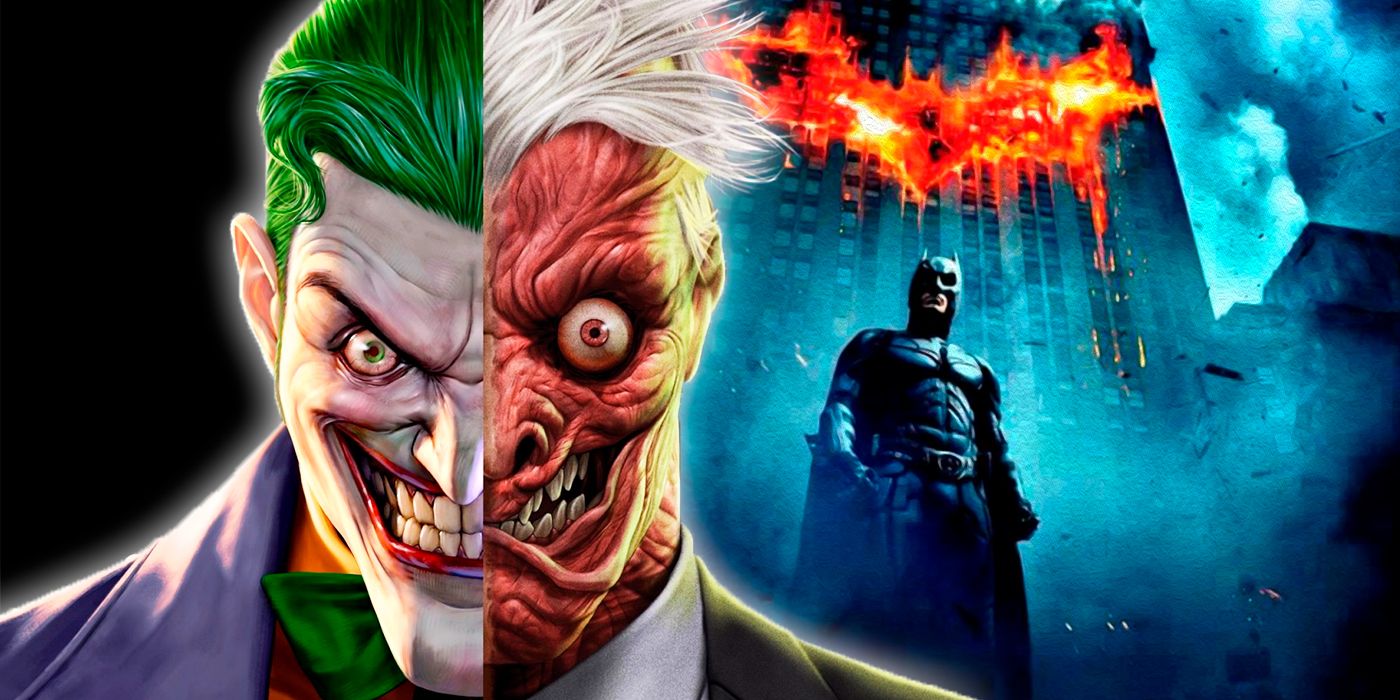
WARNING: The following contains spoilers for the comic and both parts of Batman: The Long Halloween, now available digitally and on Blu-ray and DVD.
It’s safe to say that Christopher Nolan’s Batman changed superhero movies, showing that apart from slapstick spectacles, they could also be great character studies. The Dark Knight stands as proof of that point, not just because of Heath Ledger’s Oscar-winning Best Supporting Actor performance as the Joker but because of how everything, from the mob war to the Gotham legal system breaking, was intricately woven together. Well, a lot of The Dark Knight’s story owes itself to Batman: The Long Halloween, a comic that just so happens to have been recently adapted for animation.
The limited monthly series in 1996 ran for 13 issues and is regarded as one of the best Batman stories ever. But what really appealed to fans wasn’t the sheer violence of the Holiday killings — it was about how well the heroes and villains were deconstructed, something Nolan’s move prides itself on.
The Dark Knight focuses a lot on Aaron Eckhart’s Harvey Dent becoming Two-Face. But while the film uses Joker’s bombing as the impetus for what turns him evil, the comic actually had Sal Maroni as the one who threw acid on his face in court. Sal still plays a part in the movie, helping orchestrate Rachel Dawes’ kidnapping at the behest of the Joker, but he doesn’t have the same impact.
But just like in The Long Halloween, Eckhart’s Dent feels justified in his hatred of gangsters, and he proceeds to murder Sal, which is similar to when Loeb had Two-Face kill Carmine Falcone. All of this scrubs away the Harvey persona, leaving behind Two-Face, which is what Nolan wanted all along. And to make the influence even more obvious, Nolan pulls other scenes from the comic, such as Ledger’s Joker burning the mob’s money in the same fashion as Gordan and Batman. In addition, there’s also Nolan’s bait-and-switch where Gordon’s revealed to be the masked soldier transporting Harvey, tricking Joker to arrest him. It’s a twist on the comic, which used the Bat as the plant during Sal’s transfer, luring the Holiday Killer out.
Perhaps the most prominent piece of creative inspiration, however, is Rachel herself being a substitute for Gilda Dent. Harvey’s wife, in the comic, was the real Holiday Killer, going after the mob so she and Harvey could have free time to start a family. Harvey eventually considers that future, which is what Nolan leans into when Rachel endangers her own life, seeking justice as an attorney. Sadly, Rachel’s death at the hands of the Joker sends Harvey over the edge. This is influenced by The Long Halloween attempting but failing to kill Gilda, which forces her to leave clues for Harvey.
So, while it’s not a physical death, Harvey knows the woman he married is gone, meaning both mediums use the loss of love and a happy future going up in flames as the district attorney’s turning point. Nolan ultimately draws heavily from the flexibility of Harvey’s moral compass and that sting of grief to paint a reflection of both Gordon and Batman. They both see how good men can become monsters and vice versa, informing the guilt they have when Harvey falls from grace.
To see how Batman: The Long Halloween influenced The Dark Knight, DC’s newest animated film is available digitally and on Blu-ray and DVD.
About The Author
