Editing is the core of cinematic storytelling; a raw set of footage can tell different stories depending upon how an editor assembles the pieces into a whole. Prior to the advent of digital video, the editing process was of course done with physical film stock.
While there are benefits to the physicality of film, footage being stored physically meant it was easier to lose. There are several recorded cases of deleted footage from classic films being lost or otherwise unavailable to the public.
10 A Set Piece Featuring A Giant Spider Pit Was Cut From King Kong
While Jaws created the modern summer blockbuster, the seeds were planted earlier with King Kong. Merian C. Cooper and Ernest B. Schoedsack’s monster movie debuted at the height of the Great Depression, a time when the American public desperately needed some escapism. It was a massive success (its $5.3 million Box Office haul is about $110 million in modern money); the special effects in bringing the monsters of Skull Island to life have been especially influential.
Originally, the film had even more effects; the first screened cut of Kong featured the Venture crew attacked by a variety of monsters in a pit. The sequence was too overwhelming for the film’s test audience and was removed by Cooper. Subsequently lost, the closest thing available is a reconstruction by Peter Jackson (director of the 2005 King Kong remake).
9 The Magnificent Ambersons Remains Orson Welles’ Lost Masterpiece
Citizen Kane may be the official “greatest movie ever made,” but in its time it was sunk by a campaign from William Randolph Hearst (not without reason, he believed the film was an attack on him). RKO Pictures thus kept Orson Welles on a tighter leash for his second picture, an adaptation of Booth Tarkington’s 1918 novel The Magnificent Ambersons. After Welles relinquished final cut authority, the studio ultimately removed about an hour worth of material from the film and included a new ending—”dismay” would be putting Welles’ feelings on this lightly.
Even worse, all reels of the original footage were destroyed, preventing a restoration of Welles’ original cut in the vein of The Other Side Of The Wind. Rumors of surviving footage have endured for decades, but Welles’ Magnificent Ambersons seems doomed to remain the film lovers’ Holy Grail.
8 A Star Is Born Features Clunky Reconstruction Of Missing Scenes
The longest version of A Star Is Born is the second, directed by George Cukor and starring Judy Garland and James Mason. Released in 1954, Warner Bros. was wary of the film’s 3-hour runtime and cut about 30 minutes. In 1983, a cut with most of the deleted footage was restored—emphasis on most, for some of the cut scenes were unrecovered.
To maintain narrative consistency, stills from these lost scenes were inserted into the film with the soundtrack playing over them. While the 1983 cut has become the standard for Cukor’s A Star Is Born, the still and soundtrack sequences can be a jarring experience.
7 The Red Badge Of Courage Was Cut In Half Over John Huston’s Objections
One of the most famous novels about the American Civil War is Stephen Crane’s The Red Badge Of Courage. It lacks the romanticization usually seen in Civil War stories, for it focuses on a soldier who flees rather than fights (the titular “red badge” is a bullet or bayonet wound).
In 1951, John Huston directed an adaptation of the novel. In a move that recalls Welles’ struggles on Ambersons, MGM cut 51 minutes from the movie. This outraged Huston and nearly halved the movie. The original will remain unseen forevermore—both MGM’s footage and Houston’s personal copy of the original cut have been lost.
6 The Original Cut Of The Wicker Man Has Yet To Be Reconstructed
Robin Hardy’s The Wicker Man is one of the most influential horror films released; the 2010s trend of “prestige horror” in particular owe Hardy a debt. The widely released cut runs a tight 87 minutes; however, Hardy had intended it to be about 100 minutes. The film’s British distributors had no confidence in the picture and made the cuts so that it could run as a B-Movie.
There have been multiple cuts of the film, each an intended restoration. In 2013, a discovery of a 92-minute reel at the Harvard Archive allowed Hardy to assemble his “Final Cut.” Despite this label, the cut is still not the version Hardy originally assembled, which the late director acknowledges is likely lost to the sands of time.
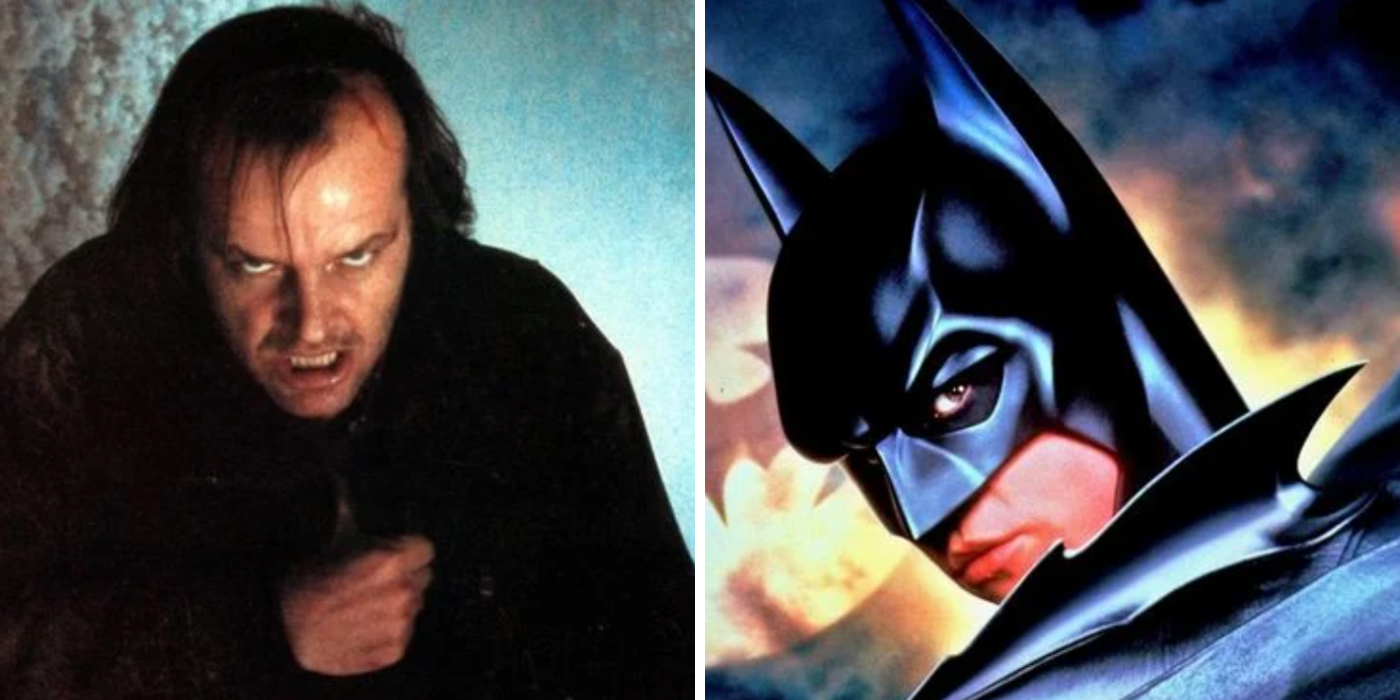
5 The Shining Originally Featured An Epilogue
Stanley Kubrick, the perfectionist that he was, wasn’t shy about excising material from his films. One of the more famous examples is the epilogue of The Shining clarifying the fates of Wendy and Danny; they escape to a nearby hospital and are visited by Mr. Ullman, who reports that Jack’s body has yet to be found.
The epilogue was poorly received by audiences who first saw The Shining in NYC and LA. Kubrick thus removed it before the film’s release went wide; Roger Ebert, who attended an original screening, praised this decision. However, Kubrick didn’t just remove the epilogue footage, but destroyed it, preventing future generations from seeing it.
4 Back To The Future Recast Marty McFly For Reshoots
One of the more audacious re-castings in film history is in Back To The Future. Marty McFly is famously played by Michael J. Fox, but for the first six weeks of filming, the role was filled by Eric Stoltz. Director Robert Zemeckis and writer/producer Bob Gale decided that Stoltz simply wasn’t right for the part; his dramatic instincts couldn’t sell the film’s comedy. Thus, the recast to Fox. While stills of Stoltz’s have popped over the years, none of the actual footage has.
Gale has confirmed the footage with Stoltz still exists, but is unlikely to ever see official release out of respect to the actor himself. In a 2020 interview with Den Of Geek, Gale said “[Stoltz] doesn’t deserve [ridicule]. He came to work. He did the best that he could. We made a mistake and we cast the wrong guy. We were able to rectify that, but we don’t want Eric Stoltz to go down in history… [as] the guy who wasn’t in Back to the Future.“
3 Bruce Wayne’s Entire Arc Was Cut From Batman Forever
While most prefer Tim Burton’s Batman duology to Joel Schumacher’s, the latter was clearly more interested in the Caped Crusader himself. In Batman Forever, Schumacher wanted to explore Bruce’s lingering guilt over his parents’ death; this would’ve paralleled Dick Grayson’s mourning of his own family and culminated with Bruce putting his guilt behind him, becoming Batman because he chooses to be.
All of this was cut from the theatrical version of Forever. There have been fan restorations over the year, most famously the “Red Book Edition,” which restores deleted scenes, cuts some of the camp, and redoes the film’s color grading with a fitting emphasis on red. However, despite fan efforts, there has been no official director’s cut released.
2 Event Horizon Had Studio-Mandated Edits
A trend with these cuts is the will of studio bosses triumphing over the directors. Yet another example of this is Event Horizon, Paul WS Anderson’s sci-fi horror Event Horizon. Anderson’s preferred cut was over 2 hours, but Paramount hastily cut this down to 96 minutes.
When the film became a home video success, Paramount contacted Anderson to oversee a restoration of his original version. Unfortunately, by that time, the footage had been lost.
1 The Theatrical Cut Of American History X Was Edited By Edward Norton, Not Tony Kaye
American History X may be acclaimed, but its production wasn’t close to smooth. Director Tony Kaye and star Edward Norton got off on a bad foot; Kaye’s original choice for Derek Vinyard was Joaquin Phoenix, who refused. Kaye thus settled for Norton, who he still felt lacked the “weight or presence” for the part.
Norton’s involvement wound up being Kaye’s undoing. After Kaye’s first two cuts of American History X were rejected by New Line Cinema, Norton stepped over the director to oversee the editing. Norton’s 2-hour cut is about 25-30 minutes longer than Kaye’s preferred version. Kaye has disowned the film as a result, though his cut has never been released.
About The Author