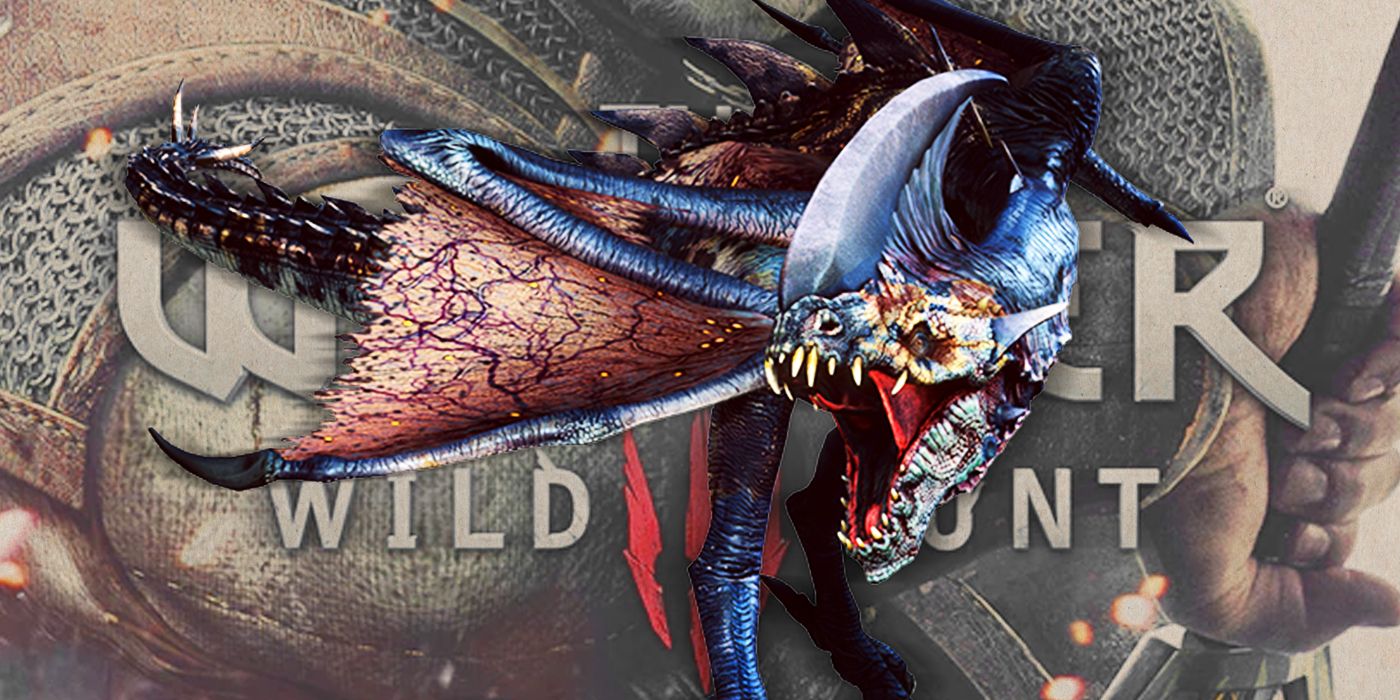
The Continent is filled with monsters in CD Projekt Red’s The Witcher 3 and Spokko’s The Witcher: Monster Slayer. If they aren’t skulking through woodlands, burrowing underground or lurking in ocean depths, they’re soaring through the skies. None of those winged beasts are more terrifying or ferocious than draconids — reptile-like creatures armed with powerful wings, razor-sharp teeth and a set of claws.
Witchers are likely to encounter more than one type of draconid throughout their adventures. If you’re playing as Geralt of Rivia, you can expect every other monster in the mountainous regions of the Northern Realms to be a draconid. If you’re hunting monsters in Monster Slayer, you won’t even have to be anywhere near the Blue Mountains to fight one of these creatures. Either way, you’re going to need as much information as you can get.
Wyvern
Wyverns may look like dragons, but they are much smaller, only possess two legs and cannot breathe fire. They can, however, spit venom and inject it into prey using their spiked tails. Wyverns have a tendency to swoop over farmlands and carry smaller prey off, but they don’t generally attack human settlements for much more than their sheep. In fact, there are druids on the Continent that have managed to tame wyverns.
However, players won’t be taming wyverns in Monster Slayer or The Witcher 3; you’ll be killing them. Facing them as Geralt can be challenging, especially since they can fly. Since crossbow bolts are quite ineffective, use Aard to bring them down, then move in to strike quickly. Their attacks are deadly, so you will have to parry. Thankfully, wyverns aren’t good at evading attacks when grounded. In Monster Slayer, you won’t have to worry about them taking flight. Parry their attacks, fire off the occasional shot of Igni and use constant strong attacks. They can be found virtually anywhere during the day.
Basilisk and Cockatrice
There are plenty across the Continent that believe basilisks can kill using simply their gaze. That may be untrue, but there are still plenty of other qualities that make basilisks deadly. For instance, their powerful, hardened wings and tail, which they can use to parry Geralt’s attacks in Witcher 3 and cut him down when they manage to land an attack. Since cockatrices act similarly to basilisks, you can apply everything here in any fight with the former in Witcher 3.
While a basilisk glides overhead, it can spit venom. Like most flying creatures, Aard will force it out of the air. Unlike most draconids, basilisks appear to be particularly vulnerable to fire in Witcher 3, so use Igni, a Dancing Star bomb or something similar. It is crucial that you are able to observe its pattern of attack and dodge, or it’ll make short work of Geralt. Since they can’t turn quickly use Quen and try to get around the beast to do some damage.
In Monster Slayer, basilisks can generally be found around bodies of water, at the edge of human settlements. A silver sword and strong attacks should be enough, especially if you can ready yourself with draconid oil. Casting Aard should help you in a fight considerably. For the cockatrice, use Igni.
Forktail
Depending on the difficulty you’re playing at in Witcher 3, you’ll want to use Golden Oriole to ready yourself against the forktail’s venomous tail strikes. Do not try and parry those attacks and just focus on dodging them. What Geralt can parry and counter is the monster’s bites. Like wyverns, forktails can be found almost anywhere during the day in Spokko’s AR game. You’ll need a steel sword for these beasts, draconid oil (if you have any), Aard and a series of strong attacks. They are one-skull creatures, so it shouldn’t be too difficult, but if you’re struggling, a basic bomb in battle should suffice.
Green and Blue Forktail
These variants of forktail are not particularly vulnerable to kinetic energy, so you can use Aard. However, it won’t do much in Monster Slayer, so rely on your silver sword, draconid oil and strong attacks. Basic bombs should help for both as well. The only real difference between the two is that the blue forktail does not tend to appear around human settlements.
The green forktail doesn’t appear in The Witcher 3. Instead, the toughest variant of forktail Geralt encounters in the game is the The Dragon of Fyresdal, mistakenly named so on account of the villagers in Fyresdal believing the creature to be a true dragon. Geralt will need Golden Oriole for this fight, a few grapeshot bombs and Aard to bring the creature out of the air, and (of course) draconid oil.
Slyzard
These creatures appear in The Witcher 3‘s Blood and Wine expansion. They don’t have eyes, but they do have powerful jaws, wings and they can spit fire. They also strike with their tails and cannot be parried when they do. Focus on alternating between dodging and striking fast. If you see it preparing to fly, stop it with a crossbow bolt. Look out for the glow in its mouth so you can time your dodges.
Slyzards are rare in Monster Slayer. They generally stay away from populated areas, but can be found during the day. Tackle them with strong attacks with a steel sword, coupled with basic bombs and use of Aard. Unlike most of their fellow draconids, slyzards are two-skull creatures, so approach with caution and make sure you’ve got some decent equipment on you.
About The Author
