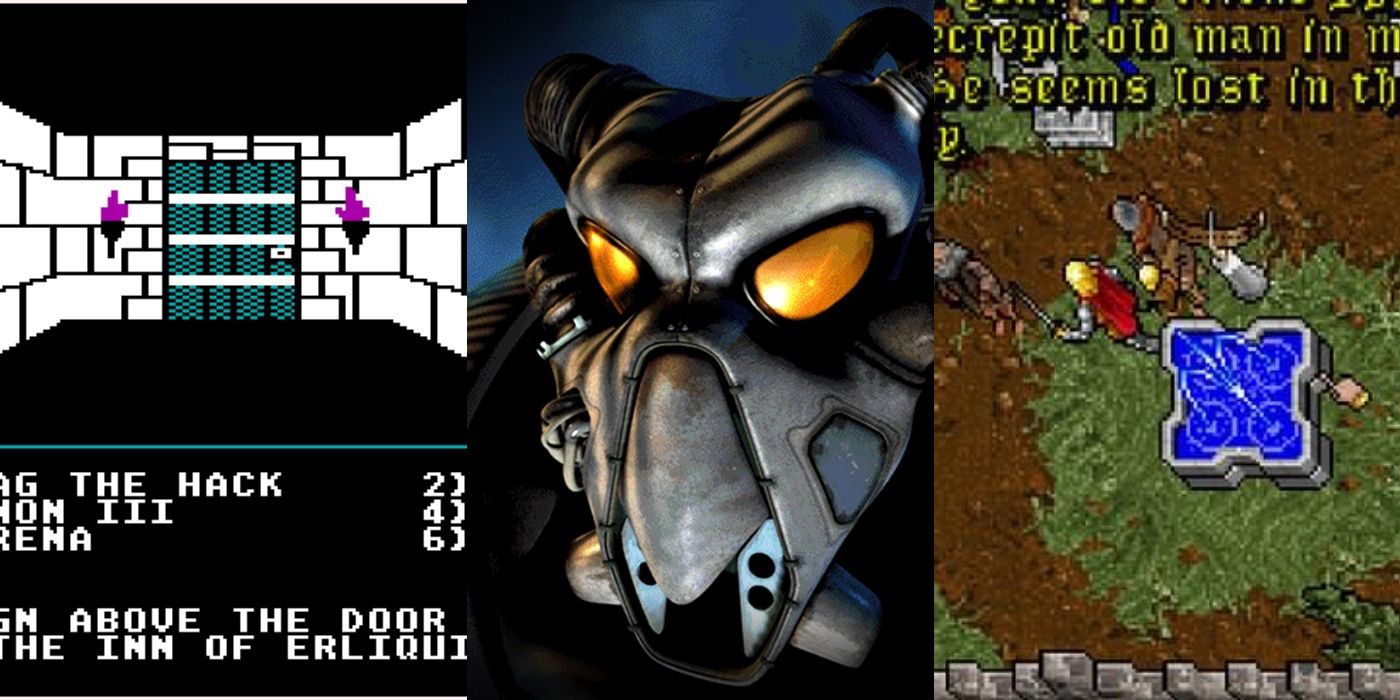
Dungeons & Dragons is the most popular tabletop roleplaying game in the world, and it’s one of the most influential by far. The game allows players to enter a fantasy world where they forge their own identities and strike out against dangerous foes. The system that D&D uses can be transposed to just about any setting and story concept. It’s a versatile and brilliant setup.
Several videogames have adapted a version of the D&D system over the years. Most have altered the idea to a certain degree, but the core idea remains similar. No D&D-inspired videogame has stayed as popular and celebrated as Star Wars: Knights of the Old Republic.
10 Star Wars: Knights Of The Republic Incorporates D&D Elements
Star Wars: Knights of the Old Republic and Knights of the Old Republic II: The Sith Lords both adopt a version of the D&D system, including randomized attacks, secondary effects, saving throws, and a timed turn-based combat system.
One of the main differences between the two would be the fact that KOTOR doesn’t allow the player to choose a different race; the protagonist must be a human being–which is strange considering the ample amount of alien species in the Star Wars franchise.
9 Pathfinder: Kingmaker Transfers The TTRPG Concept To A CRPG Setting
This one may be cheating somewhat, as Pathfinder is already a D&D-esque fantasy TTRPG game. In fact, many players use Pathfinder in lieu of D&D with the intent of having a D&D-like experience.
That said, Pathfinder has still provided a videogame experience in Pathfinder: Kingmaker that will evoke the feeling of Dungeons & Dragons for players who choose to check it out. In fact, a sequel is currently in beta in Pathfinder: Wrath of the Righteous for players to check out.
8 Pillars Of Eternity Aims To Be A Spiritual Successor To Baldur’s Gate
Pillars of Eternity I and II are a pair of videogames by Obsidian Entertainment that aim to be successors to Baldur’s Gate, an official Dungeons & Dragons videogame RPG series that ran throughout the 1990s and 2000s.
Pillars of Eternity aims to have players explore a varied and deep fantasy world with plenty of different classes and gameplay options as the player explores the mysteries of its fantasy world in the manner of a pen-and-paper RPG.
7 Divinity: Original Sin II Allows Players To Explore The World With A Party Of Their Friends
Larian Studios’ Divinity: Original Sin II is yet another CRPG that takes its inspiration from pen-and-paper RPG’s such as Dungeons & Dragons. While the player can explore the world on their own, they also have the option of having a party of up to four as they explore the wonders of the world.
Divinity: Original Sin II allows the player to choose from a variety of races and backstories, or they can choose a premade character and explore that individual as they adventure through Rivellon.
6 Wasteland 3 Takes The D&D TTRPG Concept To The Post-Apocalypse
Wasteland 3 is a post-apocalyptic RPG that has players struggling to survive in the remains of Colorado. It comes from inXile Entertainment and is the sequel to the critically-acclaimed Wasteland 2. The original Wasteland came out in 1988 from Interplay Games, but the series laid dormant until it was resurrected through Kickstarter with Wasteland 2.
Wasteland 2 and 3 also maintain the spirit of the original Fallout games, which were far more reminiscent of a TTRPG before being totally redesigned with Fallout 3.
5 Fallout 1 And 2 Were Very Different Games From 3, New Vegas, And 4
The original Fallout games aimed to be much more akin to a TTRPG, with attacks being far more randomized, and the game allowing the player to approach the world without a strict combat focus like its successors.
The original Fallout games were actually inspired by the first Wasteland, and it shows in the earlier Fallout titles. FPS shooting wasn’t an element in those first games, which had a top-down perspective.
4 Tyranny Is Another Celebrated Obsidian Entertainment Hardcore RPG
This is another title that prides itself on player choice, RPG randomization, and the attempt to allow the player to explore and change the world around them from Obsidian Entertainment.
Tyranny takes the player to a world ruled by the authoritarian Overlord Kyros as technology is in the process of being upgraded from the Bronze Age to the Iron Age. The player character, the Fatebinder, can choose the fate of the world of Tyranny.
3 The Ultima Franchise Helped Shape CRPG’s And Was Inspired By D&D
The Ultima series of games covers nine mainline games and countless spinoffs. However, the main series is made up of CRPGs that follow the player as they shape the future of Sosaria.
Ultima was a very foundational series in the evolution of CRPGs. Games still drip out from the Ultima franchise here and there, but it doesn’t have nearly the foothold it once had. However, they are worth checking out if someone is itching for a harder fantasy RPG than, say, Skyrim.
2 Elder Scrolls: Arena And Daggerfall Took More TTRPG Inspiration Than Their Successors
Speaking of Elder Scrolls, the series started off far more like dungeon-crawling TTRPGs than the likes of Morrowind, Oblivion, and Skyrim. The worlds were procedurally generated and, in the case of Arena, theoretically infinite.
Random generation and sudden encounters were way more randomized and chaotic in the original Elder Scrolls games, showing the D&D inspiration for games such as these.
1 Might And Magic Is Another Foundational CRPG With D&D Inspiration
Might and Magic is one of the oldest videogame RPGs, and it also took heavy influence from Dungeons & Dragons in terms of its design. The original game allowed the player to choose and create an entire adventuring party and then roll for their stats.
Might and Magic also allows players free exploration and a lot of leeway on how they interact with the world around them. This series had 10 main entries and several spinoffs, including Heroes of Might and Magic, which resembled more of a turn-based strategy game.
About The Author