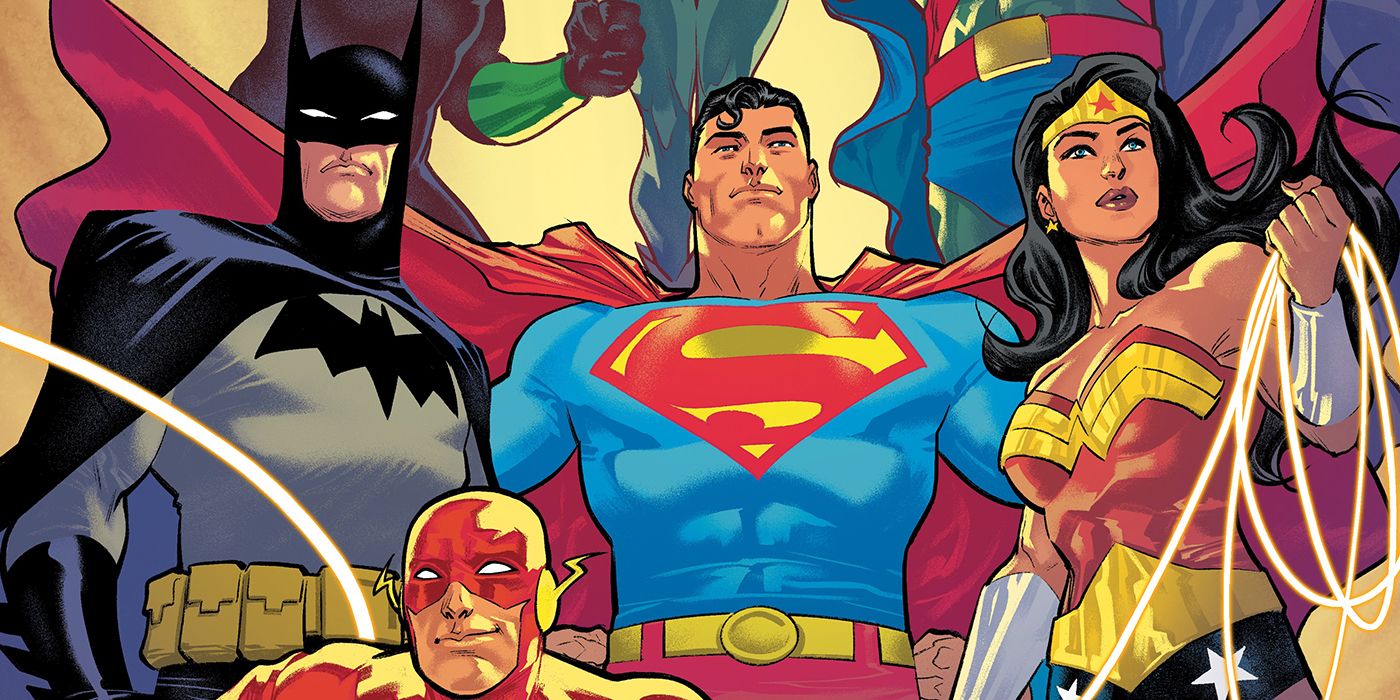
After DC Comics’ success of Batman: The Animated Series, DC is once again revisiting the DC Animated Universe with a revival of Justice League Unlimited. Written by JLU series producer James Tucker and its legendary show writer J.M. DeMatteis, Justice League Infinity #1 follows the League post-2006’s series finale. Known for its ambitious and character-driven stories, JLU was the capstone for decades of television storytelling, featuring a sprawling tour of the DC universe that was friendly to comic and non-comics readers alike. JLU became the definitive take on DC’s characters for generations of fans. Justice League Infinity‘s debut issue, with art by Ethen Beavers, colors by Nick Filardi and lettering by Tom Napolitano brings the same level of quality and frenetic action as the beloved animated series.
Justice League Infinity #1 is narrated by Martian Manhunter, who has stepped away from active Justice League duty to travel the world and connect with humanity. He traces the journey of the all-powerful Android Amazo in its search for meaning and encounters a mysterious void. Meanwhile, the Justice League unite on Earth to celebrate the Flash’s birthday, only to be attacked by warring factions of Apokolips attempting to fill the void left by Darkseid’s absence at the end of Justice League Unlimited. However, Apokolips is the least of their worries. Amazo’s journey has unleashed something that threatens the fabric of reality.
Focusing on Amazo and J’onn J’onnz, the Martian Manhunter, gives this debut issue a melancholic bent from the start. J’onn’s narration is torn between his nostalgia and love of his team and his desire to connect more deeply with the people of his adopted planet. Both characters experience deep loneliness, mirroring each other’s journeys as they search for something to make them feel whole. The presence of Amazo is particularly welcome, as his journey of self-discovery created some of the best stories of the original animated series. Amazo’s infinite powers and emotional arc provides great fodder for further development in this revival series. Emphasizing the sorrow within these two characters throughout the issue is an unexpected choice, but it sets the book apart from the mainline Justice League series and capitalizes on the strong characterization that was the original show’s strength.
Including creators who were involved in the writers’ room gives the book a consistency of tone and voice for its revived characters. DeMatteis, in particular, with his experience in writing team books (including Justice League), gives the story, despite all the characters present, a sense of balance and even pacing. Big events are punctuated by smaller character moments and quips that bring each member of the cast to life while sounding distinct from one another — which isn’t an easy feat with as many heroes present as there are in this debut issue.
Beavers’ artwork is just as critical in furthering the authentic DCAU feeling. As a storyboard artist for JLU, Beavers is familiar with both the visual language of the series and its characters and that knowledge is on full display here. The minimalist designs can sometimes look flat if drawn poorly, but Beavers gives the characters a sense of life and movement. There are impressive psychedelic layouts, particularly around Amazo in space — impressively depicting Amazo’s inner emotional turmoil on the page. Filardi’s colors pop with a simple cel-shaded look of the animation. The characters and their world are visually familiar, and Filardi smartly avoids adding too much texture that would otherwise bring the art closer to realism.
For those who fell in love with the DC heroes through watching Justice League Unlimited, this premiere issue of Justice League Infinity is a welcomed return that feels like a natural extension of the compelling original series with the promise for even bigger adventures ahead.
About The Author
