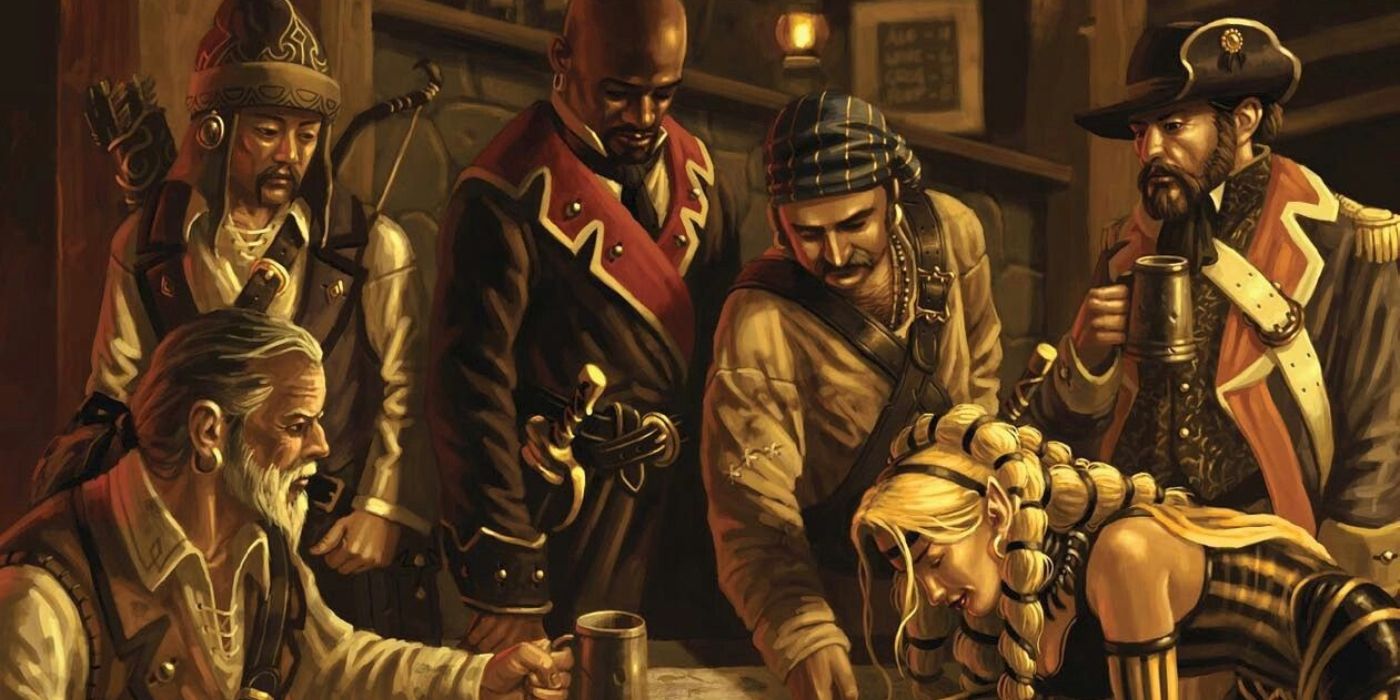
Many people start playing D&D with different expectations and attitudes towards the game. It serves as many people’s introduction to TTRPGs because of its popularity, but it isn’t the easiest game to start learning. There are many mechanics in D&D that are easy to forget and pay attention to, especially when just getting into it. The game is as beginner-friendly as the person running it and the player’s determination to learn it.
While there are no wrong moves when roleplaying, necessarily, there are a few things that players will do unintentionally to put themselves at a disadvantage. It’s important to know how things work on a surface level but with so much information to keep up with, it can be difficult to know what mistakes to avoid.
10 Thinking Their Character Is A Higher Level Than They Actually Are
During the character creation process, many new players think that their character is a person who is next to perfect. A person with a rich backstory of saving their hometown, or a legendary thief that has to hide their identity is very far-fetched for a level 1 character. Nobody is going to pass all their ability checks and attack rolls the first time through.
Everyone has to start as a rookie, and when a character has so much going on for themselves, it’s hard to roleplay as them. New players should keep this in mind when starting out to avoid accidentally making an out-of-place or even dull character.
9 Not Writing Down Items They Pick Up
There will be many treasures, items, and weapons to find and take in any given campaign. Each of these things can be sold or used, but in between sessions, unless it is written down, it’s very likely that the group will forget what is in their inventory. Not everything has to be written in detail, but it’s important to be able to back up claims of finding something valuable with proof.
DMs have many things to keep track of, and it’s not likely they will keep track of every player’s belongings. “If it isn’t written down, you don’t have it” is a very common saying and a lesson in learning to keep track of what is picked up.
8 Be Wary Of Opportunity Attacks
An opportunity attack is a reaction attack from a nearby creature in melee range. This occurs when a creature moves out of reach from another creature’s melee range. It’s something many players forget when planning their movement or trying to get away from something that just attacked them.
To avoid opportunity attacks players can use the Disengage action by sacrificing their action to move away up to their movement speed. Just as well, it’s important to remember that everyone can make a reaction once per turn and it doesn’t have to be their turn to use an opportunity attack.
7 Expending All Their Spell Slots
Spell slots are the number of times a spell of the corresponding level can be cast before taking a long rest. Some classes can regain spell slots through other means like sorcery points or short rests but every class regains all expended uses after their 8-hour long rest.
Many players will continually use spells not understanding that they have limited use. A spell can be used as many times as the number of spell slots the character has and shouldn’t be misunderstood as every spell having one single use.
6 Misunderstanding Cantrips & Never Using Them
Unlike spells, cantrips are free to use spells that can be repeatedly used by the caster. Cantrips increase in power as the player levels up to keep up with the higher-level spell slots unlocked at later levels. There is a misunderstanding that cantrips follow the same rules that spells do, but cantrips can be used turn after turn in succession.
If a bonus action is taken, a regular action of a cantrip or melee attack may be made as well. Having cantrips cast more frequently will save uses of spell slots as well without having to be forced to get into melee range with a frailer class.
5 Not Reading Spell Descriptions Can Get The Team Killed
Movement and positioning are hard to imagine for new players when combat starts. Having miniatures or grid paper can help remedy this issue. In the game, there exists area of effect attacks and for spells, this can be rather large.
Knowing how far away a group of enemies is from the melee attacker in the party is important— otherwise, one cast of a spell can end up getting that teammate caught in the blast. No one in the group wants to be the reason for their party member making death-saving throws.
4 Overestimating The Abilities Of Their Character
With some decent stats, it can be easy to think that a +2 or +3 modifier can save every roll and ability check. Jumping into situations that could cause trouble with the thought that proficiency in persuasion and a high Charisma is an easy way out is not wise. Proficiency gets stronger as characters level up and there are going to be unfavorable rolls that modifiers won’t help with.
Players can become overconfident when comparing stats with but a reality check will inevitably happen when missing their first attack or ability check. For players thinking they are stronger than they are, simply refer them to a legendary creature’s stat block.
3 Taking Everything At Face Value
NPCs are nonplayable characters controlled and acted by a campaign’s DM/GM. They are unique in personality and class, but new players struggling to get into roleplaying may struggle to see the NPC as anything other than their DM. Not everything has to be taken at face value and NPCs will lie, cheat, steal, and sometimes fight the player depending on who they are.
D&D often takes place in cities and towns with crime and it’s important not to take the smile of the friend across the table to mean they are to be trusted. That isn’t to say there won’t be nice NPCs either, but new players should differentiate their DM from the characters they are playing.
2 Offering “Backseat Gaming” Advice When It Wasn’t Asked For
If a player has trouble deciding on what to do for their turn in combat or buying something from a merchant, it’s okay to offer input and lend them a hand. It is not okay, however, to tell them what to do and take away the guiding hand and replace it with a steering wheel.
Many people read up extensively on what they are going to play and it’s only natural. However, this can cause some players to start to feel as though they know better than everyone else. Circumventing this issue can be complicated as there are many ways a campaign can be ruined. “Mini-DMing” and backseating is not something others will tolerate for long when everyone is just interested in having fun with one another.
1 Not Asking Questions For Fear Of Looking Foolish
A good DM/GM should uphold the rules but never hide them. Rather than nodding along to everything and pretending as though all the knowledge has sunk in, new players shouldn’t be afraid to ask questions. Even if something has been repeated, it’s okay to ask for a rephrased explanation if it didn’t make sense.
Games are meant to be fun and D&D is full of so much information that it can feel overwhelming. It’s never too late to ask questions to the DM/GM or fellow players as sometimes other newbies might have the same question but be too shy to ask. There’s no pressure to know everything about the game, and no one should expect everyone involved to have an encyclopedic knowledge of a 47-year-old TTRPG.
About The Author
