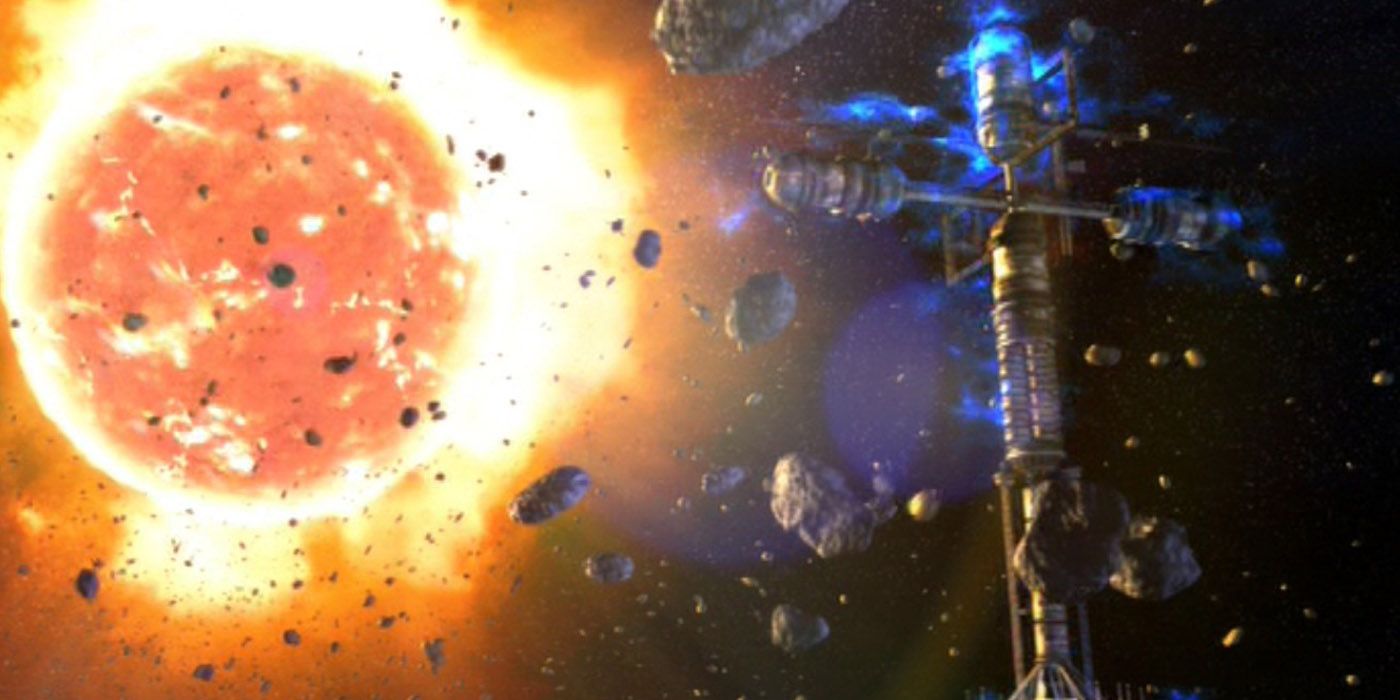
BBC’s Doctor Who can tell any story it wants, truthfully, as the Doctor and his companions can travel through time, space, and dimension with the TARDIS. Anything is up for grabs, including the end of the world. Surprisingly, this story was told in the second episode of the reboot – the writers wasted no time in prophesizing about the end of our home planet, Earth. Because the TARDIS can travel anywhere and anytime it wants, the Doctor takes advantage of this by showing just how far it can travel to his new companion, Rose Tyler. The second episode, aptly named “The End of the World,” brings Rose to the very threshold of her understanding and expands her knowledge of how vast the universe truly is.
What’s mind-boggling about this episode is how long the Earth seems to last. In a world where humanity pollutes the planet by the day, one might expect this event to take place sooner rather than later. But Doctor Who had other ideas – Earth ends up surviving for about five billion years, which actually aligns pretty well with when modern scientists predict the planet’s demise to be.
In the episode, the Doctor decides to take Rose to a space station five billion years in the future, where rich and powerful citizens of the universe gather to watch the destruction of Earth. As the Doctor explains, for hundreds of years, Earth has been devoid of life since mankind had long ago left the planet. At that point, Earth was taken over by the National Trust, a human-run organization dedicated to the preservation of Earth. The organization deployed gravity satellites to hold back the devastating effects of the ever-looming Sun, but they eventually ran out of money to keep them operational. This meant that Earth could now freely slip closer and closer to the Sun’s powerful rays. The Doctor then follows this explanation with the fact that he does not intend to save the planet.
It’s because of these gravity satellites that Earth survived for so long. Five billion years is a long way to go, with or without life surviving on the planet. But the Doctor ends the episode by commenting on how people always think things last forever, even the ground beneath their feet. The episode is a good reminder that everything is temporary. This also explains why the Doctor doesn’t attach himself to people, places or things. He has seen too much in his travels to hold anything in a state of permanence – seeing planets destroyed, including your own, will definitely shift your perspective.
While the destruction of Earth may seem like a depressing episode, especially to start off the reboot of the iconic Doctor Who, the writers pull it off with comedy and wisdom. The episode ends up giving Earth a long and justified lifespan and provides a sneak peek into what is predicted to actually happen to the planet in the far, far future. It encapsulates the dual nature of Doctor Who – real, possible stories with a touch of science-fiction.
About The Author