WARNING: The following contains minor spoilers for Pixar’s Luca, streaming now on Disney+.
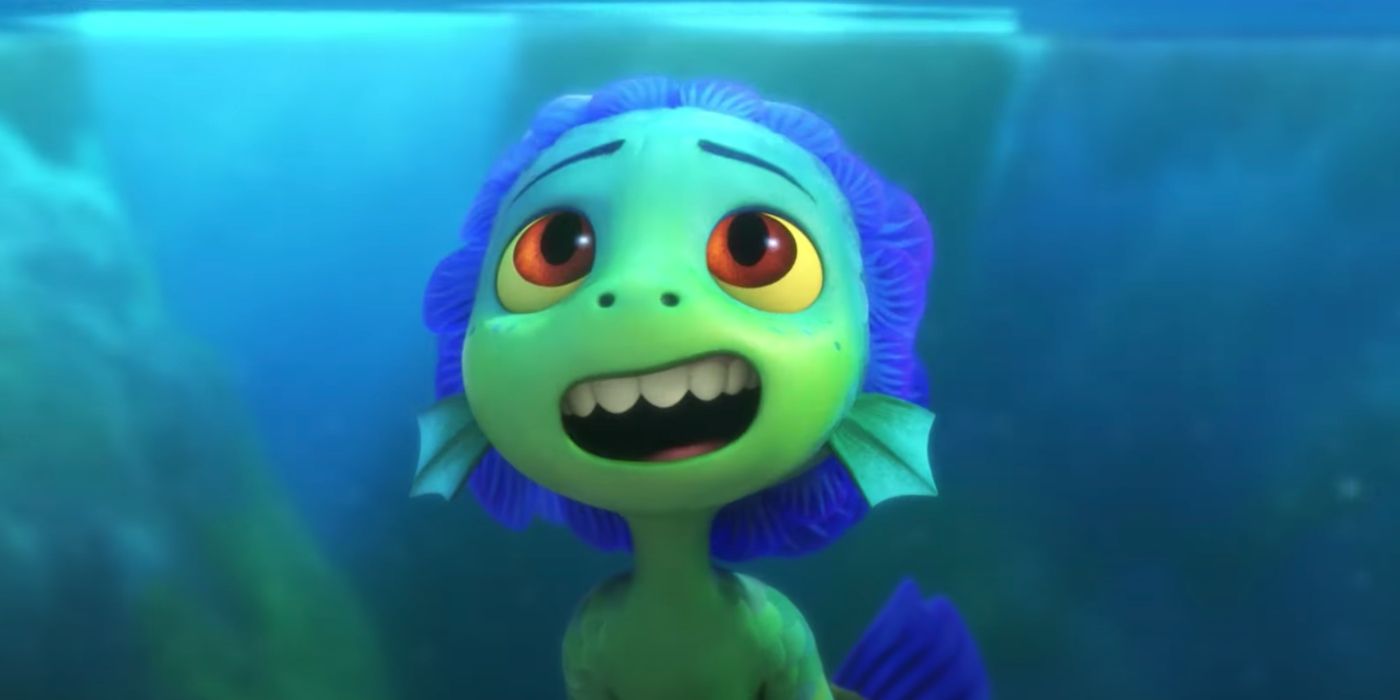
At the heart of Luca is the story of the titular boy and his new best friend, Alberto. The pair are sea monsters, having a naturally humanoid/amphibious body, but upon stepping onto dry land, the boys gain a fully human appearance — at least until they get wet, which reverts them back to their original forms. This power allows the boys to explore the Italian town of Portorosso without drawing the full attention of the monster-hating locals.
This is a major element of the film, with their attempts to remain dry serving as the basis for practical comedy and genuine drama, all building to the eventual revelation of their status. Alberto’s reveal is initially out of spite, while Luca’s is to help his friend in the climax of the film. Despite being at the center of the narrative, that element isn’t ever fully revealed to Luca’s betterment.
The ability for the sea-people to walk on land and assume a different form isn’t the result of some spell or curse, and it’s not suggested to be an element of the world that was forced upon them. It is simply an aspect of who these characters are, and they’re just a different community.
While in other films the lack of a clear explanation could be seen as a problem, Luca uses it to embrace a major part of the story’s message. The ultimate lesson of Luca stems from the fact there is nothing monstrous or unique about their transformation, just like Luca and his family are not truly different from Massimo and Giulia. At the end of they day, they’re just people who live slightly different lives than the people of the surface, and they also look different.
It helps that Luca never seems enamored with the rules of its own universe. Unlike Inside Out, Coco and Soul, Luca doesn’t necessarily want to spend time fleshing out the fantasy world and all the rules that govern it. Instead, the fantasy elements are just window dressing for a story far more concerned with characters overcoming their fears and prejudices.
Luca features the sea monster village being inherently similar to the townsfolk on land, with their fantastical attributes just serving as visual shorthand for any number of real-world parallels. The scales of Luca and Alberto are, in the view of the film, just a part of them — such as Giulia and her sweaty pits. The latter doesn’t need a full back-story, so neither does the former.
Notably, this seems to be something the filmmakers considered while producing Luca. In press materials released by Disney, Luca Director Enrico Casarosa said that, “sea monsters are a metaphor, really, for feeling different or excluded. I love the sense that all of our characters in some way feel different or unusual. Luca and Alberto so passionately want to be part of this other world — but they fear they won’t be accepted as they are. And yet, they love being sea monsters.”
It’s just an element of their lives, something that doesn’t need to be changed or even addressed so much as accepted — which is a central message to Luca’s narrative. It’s not a cheat that the film doesn’t contain any explanations of the sea monsters. In fact, Luca clearly made the right call by not diverting time or attention to that aspect of the world, instead allowing the film to further showcase the themes at the heart of the story.
Directed by Enrico Casarosa, Luca stars Jacob Tremblay, Jack Dylan Grazer, Emma Berman, Maya Rudolph, Marco Barricelli and Jim Gaffigan. The film is streaming on Disney+.
About The Author
