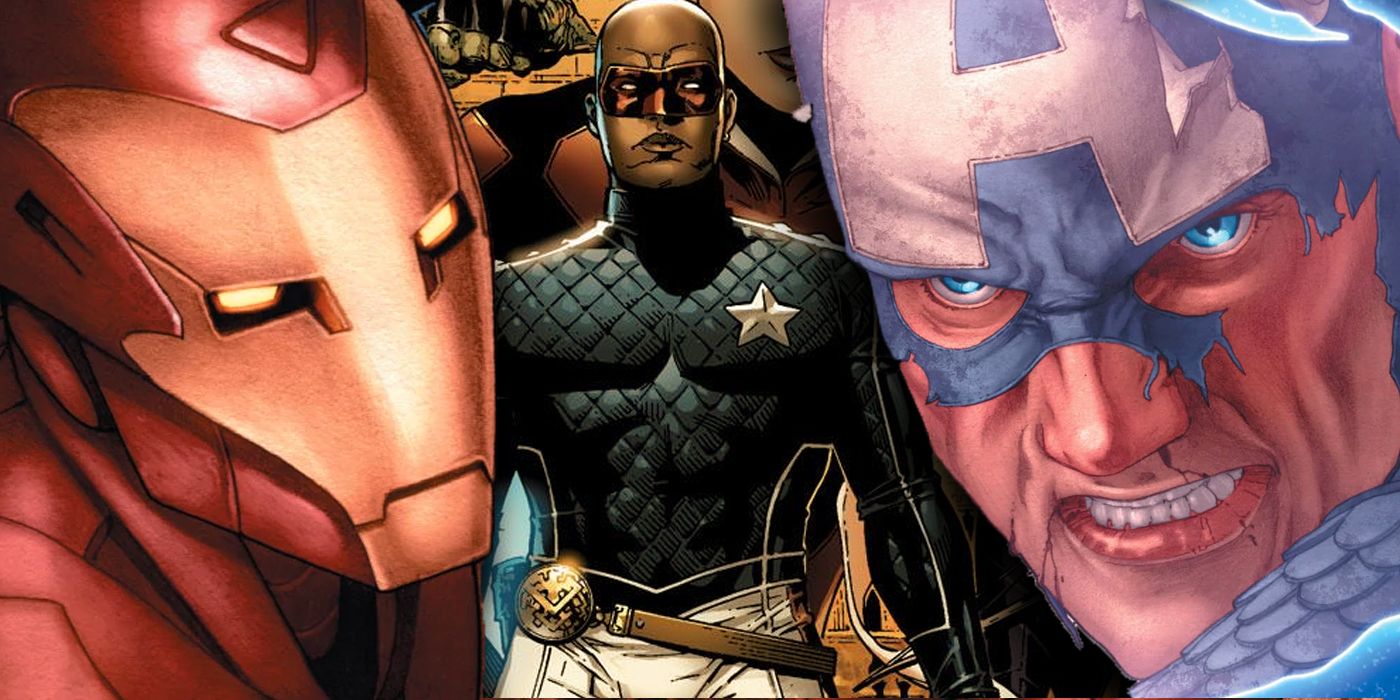
In the broader context of the Marvel Universe, the Young Avengers have been a relatively recent addition. After their introduction in 2005’s Young Avengers #1, by Allan Heinberg and Jim Cheung, these young heroes took a little while for Patriot, Stature, Hulkling, Wiccan, Speed, a younger Vision and Kate Bishop’s Hawkeye to find their place. It wasn’t until Marvel’s 2006 event, “Civil War,” that the Young Avengers firmly found their position in the broader Marvel Universe.
The Young Avengers fought legendary villains such as Kang the Conqueror and worked with the New Avengers to prevent another Kree/Skrull War. After these important accomplishments, the Young Avengers were finding acceptance among Earth’s Mightiest Heroes. Even so, the Young Avengers hadn’t quite had the chance to interact with heroes outside of the Avengers at this point.
However, 2006’s Civil War #1, by Mark Millar and Steve McNiven, truly brought the Young Avengers into the broader landscape of the Marvel Universe. The Superhuman Registration Act divided Marvel’s heroes into two camps: those who would register with the government and those who wouldn’t. As soon as the act went into effect, the Young Avengers were some of the first unregistered heroes captured by S.H.I.E.L.D. Fortunately, the Young Avengers were immediately rescued by Captain America‘s anti-registration forces. These events placed the Young Avengers in a good position, allowing them to work alongside iconic heroes such as Captain America and Hercules. Later on in the war, after the death of Goliath, Stature decided to switch to the pro-registration side. In the aftermath of this position, Stature joined the Fifty-State Initiative, integrating her into a wider cast of Marvel’s heroes.
Not only did the Young Avengers work alongside many Marvel heroes, they also proved just as formidable as their adult counterparts. Wiccan played a crucial part of Captain America’s anti-registration forces, acting as one of the group’s main teleporters. For this reason, Wiccan was immobilized at the beginning of the first major battle in the war. Hulkling also played a major role in the war, using his shape-shifting abilities to impersonate Hank Pym and infiltrate Iron Man’s pro-registration forces. This was a major boon for the anti-registration heroes, as Hulkling was able to use Pym’s credentials to free all of the captured anti-registration heroes. In the final battle, the Vision was a key player, compromising Iron Man’s armor and giving Captain America a big advantage.
In this way, the younger Vision got to work alongside Captain America, just like his older counterpart. Alongside the main event, the Young Avengers also played a major role in 2006’s Civil War: Young Avengers & Runaways #1-4, by Zeb Wells and Stefano Caselli. During this mini-series, the Young Avengers went to Los Angeles to rescue the Runaways from pursuit by S.H.I.E.L.D. Moreover, the Young Avengers helped the Runaways against a brainwashed Marvel Boy and the evil warden of the Cube, a maximum security prison. This part of “Civil War” did a lot to emphasize the Young Avengers as true heroes, who look out for those in the younger generation. At the same time, the Young Avengers became further integrated into the larger bastion of Marvel’s heroes.
Overall, Civil War brought the Young Avengers into the broader Marvel Universe, allowing them to fight alongside older heroes. From this point forwards, the Young Avengers became part of major events such as Secret Invasion and Siege, showing their importance in the greater Marvel Universe. If the Young Avengers hadn’t already found their place among Marvel’s Heroes before Civil War, they certainly found it during this monumental event.
About The Author