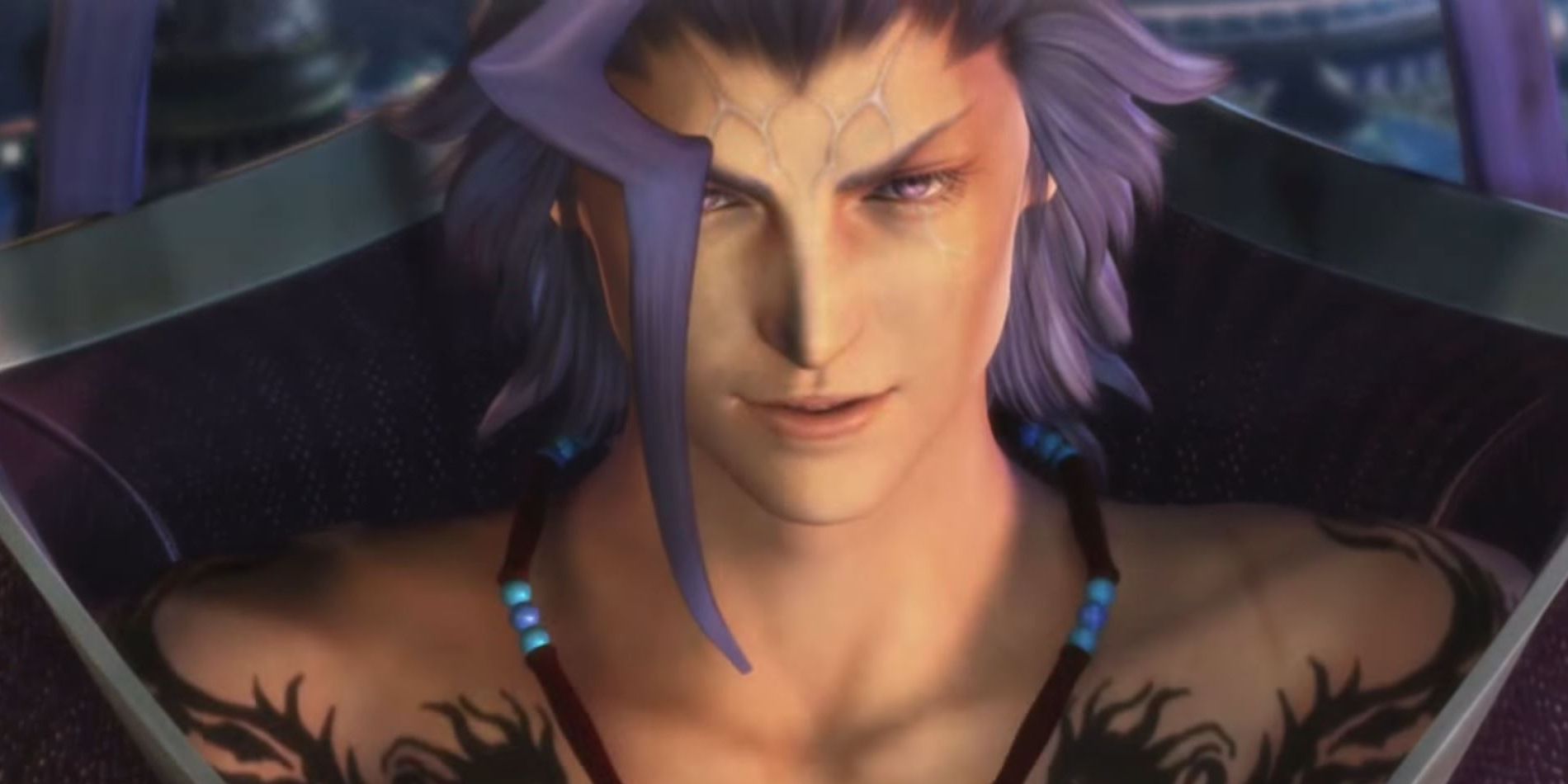
Final Fantasy X is a fan favorite in the famous RPG franchise, owing to its unique setting and some important changes to the series’ traditional gameplay. It does, however, have one critical narrative flaw. For all of the effort the game puts into its worldbuilding, making the land of Spira feel like a coherent place, it sadly doesn’t put as much thought into its antagonist.
Like a lot of past Final Fantasy villains, Seymour Guado seeks ultimate power for the purpose of ending the world. What sets him apart from them, however, is his motivation. Seymour was a victim of discrimination due to being a mixed-race child, and his frustrations with society are a big part of why he lashes out at it. While not the most original villain, Seymour could have been more than the sum of his parts if the game just had expanded on that backstory.
Click the button below to start this article in quick view.
Seymour is half-human, half-guado, making him a hybrid of two races that ostensibly have tensions between them. However, Final Fantasy X barely depicts that tension. It points out his mixed-race status and tries to draw parallels with the also-biracial heroine Yuna, but it doesn’t explain why this would be a problem. There are no cutscenes in the main story that show one of these races persecuting the other, and both are depicted as ardent devotees of the Yevon religion. This can lead many players to assume the conflict simply doesn’t exist, especially since he counts members of both races among his followers.
While Final Fantasy X does show a flashback to Seymour and his mother, and the player can talk to the former about her regrets, these scenes don’t elaborate enough on either character’s suffering. Most of the important details about humanity’s persecution of the guado and how both races struggled to accept Seymour’s mixed status are relegated to the Ultimania Omega guide book. It’s therefore hard to credit the game with writing an interesting villain when most of his history is locked behind supplementary materials.
What makes this especially baffling is that Final Fantasy X does an excellent job of showing humanity’s discrimination against the Al-Bhed. This race eschews the Yevon faith in favor of science and technology and are loathed as heathens. The game is strongly sympathetic to the Al-Bhed, depicting them as being just as multi-faceted as humans. It generally comes down to them being flawed but ultimately well-meaning people who don’t deserve the scorn they get. It’s disappointing, then, that the guado didn’t receive a similar treatment.
With the Al-Bhed hated as apostates, Yuna and her companions have legitimate worries about her secretly biracial status being exposed. Seymour ostensibly lived through the discrimination she avoided through this sadly-necessary deception, and his experiences are the justification he provides for his genocidally nihilistic ambitions. With Yuna desperately fighting to preserve life on Spira, even at the cost of her own, the game had the perfect opportunity to create a tragic set of rivals. Sadly, Seymour’s lack of development robbed it of that chance, a problem that the HD remaster completely failed to amend.
It’s not uncommon for developers these days to enhance new versions of old games with new content. Square Enix themselves have a long history of this. Not only have they released several new versions of older titles, they’re also updating games as recent as Final Fantasy VII Remake via Intergrade. Final Fantasy X‘s HD remaster should have done something similar. It could have fixed what the original left broken by letting players see more of the clashes between human and guado, giving greater context to Seymour’s misanthropy. Alas, it had no ambition to expand the story in a meaningful way. As a result, a potentially interesting antagonist remained undeveloped and unsympathetic.
Square Enix has a reliable record of remastering and re-releasing their old games, so it’s very likely that Final Fantasy X will receive another update at some point in the future. When that happens, the company should absolutely take the time to amend Seymour’s writing problems. As he presently exists, the character is one of their least-impressive villains. His goal is nothing new and, compared to the unpredictable Kefka or the manipulative Sephiroth, he doesn’t have anything to make him stand out. A stronger backstory may not necessarily put Seymour on their level, but it could give him something worth discussing. At the very least, it would give players the chance to see the pain that he’s always talking about.
About The Author