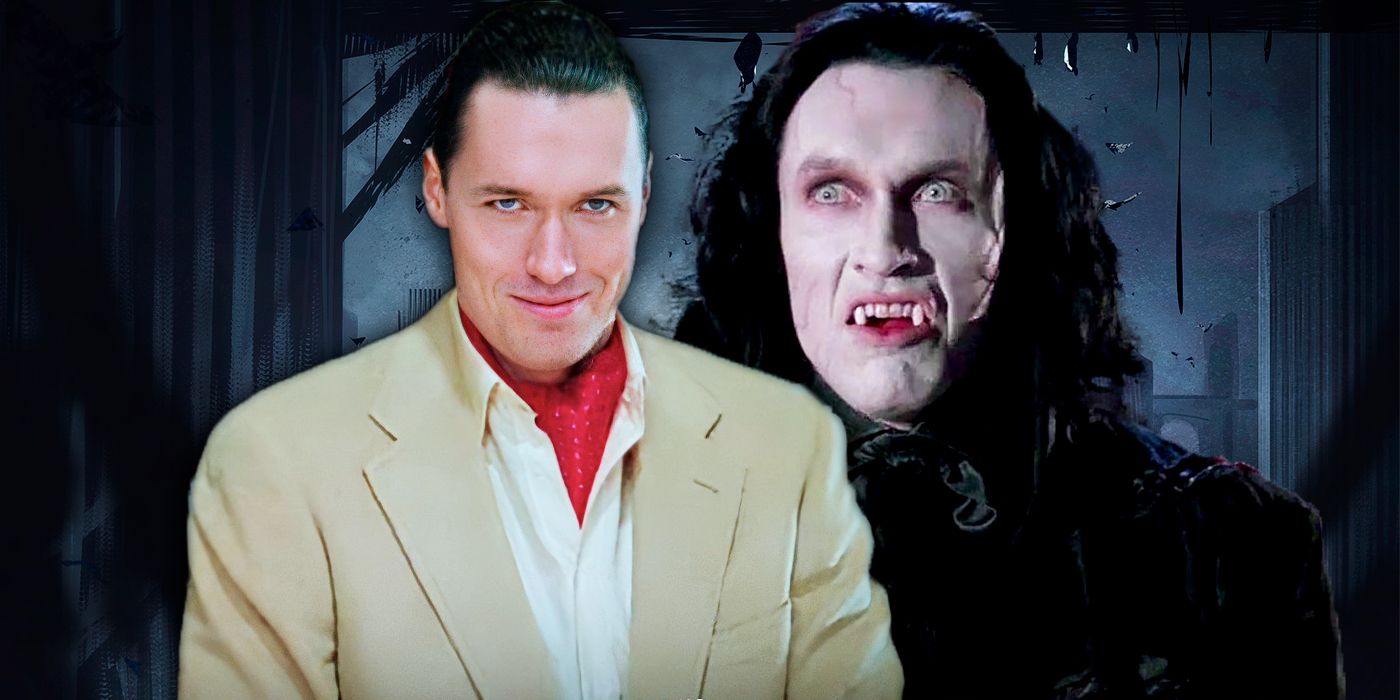
One week ago, Netflix and the Cobra Kai crew announced the return of Terry Silver to their upcoming fourth season. Played by Thomas Ian Griffith, his role in Karate Kid III was his breakthrough moment, and it gave him a solid place in a multitude of ’90s action films. Besides his delightful, scenery-chewing turn as John Kreese’s old military friend, Griffith’s best showing is inarguably John Carpenter’s 1998 cult horror flick Vampires.
Based on the novel by John Steakley, Vampires has a terrific premise that leans into the religious horror lurking underneath the modern mystery of the vampire. In both film and novel, the Catholic Church employs a crew of vampire hunters to control the secret scourge. The hunters are indulged in their hedonistic behavior, as the Church recognizes that their careers –and their lives — are dangerously brief. James Woods plays the crew’s leader, Crow, as they stumble across the original vampire, Jan Valek (Griffith), and need to stop his plan to acquire a holy relic that will make him immune to daylight.
Click the button below to start this article in quick view.
Vampires was the last theatrical hit for director John Carpenter, who’s still an enthusiastic force behind today’s new Halloween films. However, Vampires took some serious hits from critics. But Griffith’s Valek is a terrific showing as a former priest corrupted into something devilishly immortal. His remarkable height at 6’5″ made Valek intimidating by default, but vampires also benefit from a lean, predatory allure. Griffith kept nature documentaries in mind, telling the Calgary Sun in 1998 about the magnetism behind the eyes of a cougar on the hunt, using that sense of primal, implied violence to lure audiences in the same way.
Dressed in sleek blacks with wild black hair, Griffith’s vampire wasn’t just a visual mockery of the church that left him behind. It also predated the aesthetic of the Underworld franchise, still five years away. The mix of expensive taste and animal violence is a common trope, but Griffith manages to be both intelligently evil and smoothly graceful in his scenes, despite the ludicrous gore and Woods’ often crass dialogue. Like previous vampire tales, the film also relied on sexual taboo, with a number of Valek’s victims and loyal vampire thralls taken from the ranks of sex workers. Easily forgotten by both police and community leaders, it’s the sole bit of real nuance that made it into the film.
Vampires may not be the strongest Carpenter film, but it serves two causes brilliantly. First, it’s a suggestion to read Steakley’s underrated original novel. Secondly, it’s a showcase for Griffith’s durable niche as a coldly calculating villain for the heroes to contend with. Beyond that, it’s still a wild romp that’s worth the time of any dedicated John Carpenter fan. The new Western aesthetic makes it a good B-roll follow-up to its thematic predecessor, From Dusk till Dawn. The mixture of faith and seedy taboo sets up a fairly consistent theme for the plot to ride along.
Griffith has since been a quiet but consistent presence in the industry. It’s hard to not see his Vampires experience in his behind-the-scenes work for NBC’s supernatural police procedural Grimm. But with his return to the role that put him in the spotlight, it’s a fresh chance for audiences to be reintroduced to Griffith and to be reminded that the heroes are only ever as good as their best villain.
About The Author
