Anime and video games have a long history of complementing and harmonizing with each other. Either through the art styles, movesets, or box-art, the influence of anime is readily apparent in a number of franchises. Something else shared between these mediums is the shared demographic of young male audiences.
A focal point of the console-wars era cheese that made up most of 90’s gaming advertising, male machismo has quite literally driven console sales since the late 80’s 16-bit era. It should be no surprise then that Shonen, a genre of manga that focuses exclusively on the male coming-of-age story, usually through out-of-this-world brute force allegory, birthed quite a few character archetypes that have found their way into gaming.
9 Toon Link’s Got The Boyish Charm
The Legend of Zelda is an interesting case. The series has always sold better outside of Japan, perhaps in part due to the rigorous localization process of the first entry. Coupled with the Western fantasy elements in the series, one might not immediately think “Shonen” when they think Link. However, Link’s incarnation from The Legend of Zelda Windwaker, is just a kid when adventure finds him. Certainly, a plot device used to jumpstart the adventures of many Shonen protagonists.
A staple of the Shonen genre, Link is ripped from familiarity as a young boy and forced into the role of hero. His Windwaker incarnation is especially expressive in a way that others were not and the flashes of personality in his eyes call to mind similar child heroes like the entire Digimon and Pokémon cast or Hunter X Hunters’ Gon.
8 Sora’s Got The Look And The Attitude
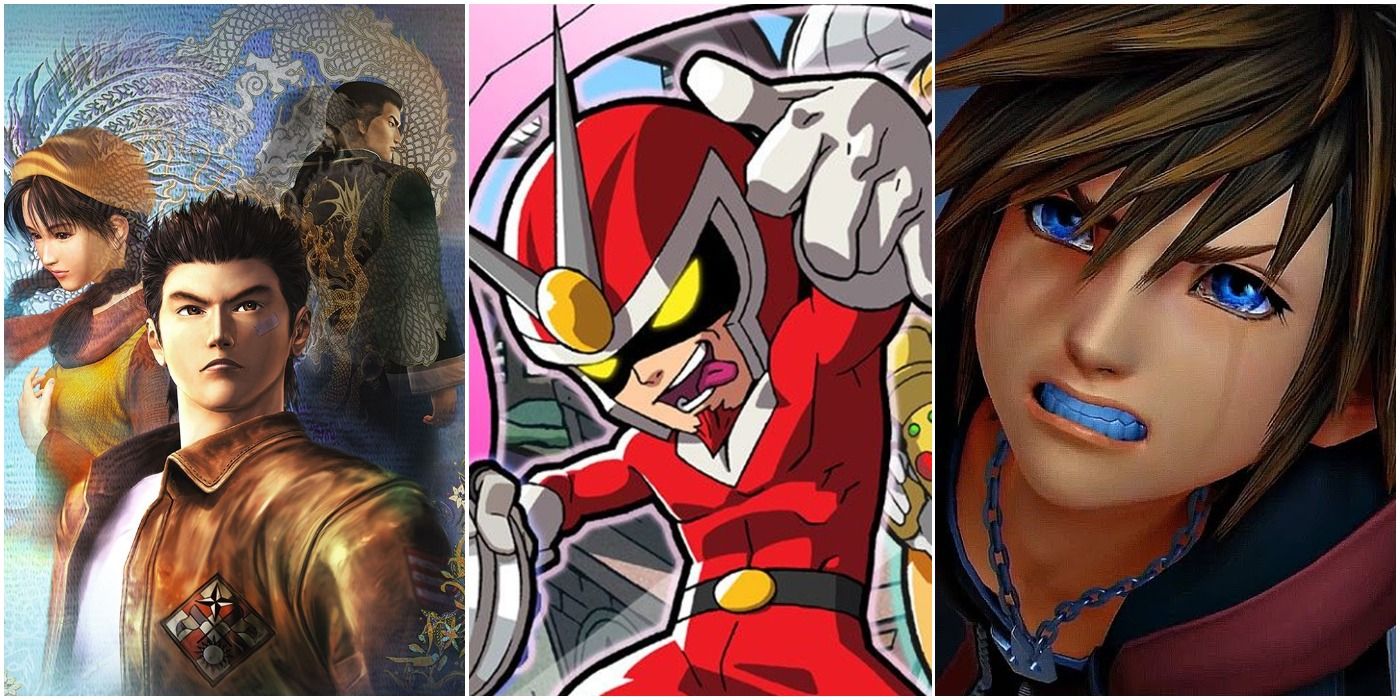
The cult-classic Disney X Square collaboration series Kingdom Hearts features numerous Disney properties that have become animation icons of the West. However, the series protagonist, Sora, has characteristics seemingly ripped from the pages of a Shonen manga.
Sora’s undying optimism and love for his friends keeps the convoluted Kingdom Hearts plot moving. Like any good Shonen protagonist, Sora’s true power can only be realized in tandem with the power of friendship. With his unkempt spikey hair and youthful ignorance at the onset of his adventure, Sora’s journey throughout the Kingdom Hearts series, along with his appearance, mirrors many character arcs and designs that resonate with fans of Shonen Manga.
7 Sonic The Hedgehog Might Be From Planet Vegeta
There is no gaming hero who owes more to their shonen inspiration than Sega mascot, Sonic The Hedgehog. Created in the USA by Japanese Sega employees, Sonic’s existence, and success, is a true testament to the mass appeal of Shonen heroes.
So much of Sonic’s world is right out of the Dragon Ball playbook. He’s got the ubiquitous spiky hair, which is known to change from blue to gold after a transformation into Super Sonic and is an obvious homage to Goku’s legendary Super Saiyan transformation. Even the process of turning into Super Sonic, hunting down 7 chaos emeralds, is directly reminiscent of the 7 Dragon Balls. Sonic is so Dragon Ball to his core that he even has two former-foes-turned-friends in the form of Knuckles and Shadow, stepping in for Piccolo and Vegeta, respectively. It’s bewildering to think that with all this Shonen influence, the Archie Sonic comic is still his darkest representation in media.
6 Mega-Man X Loves The Thrill Of Getting Stronger
The blue bomber sequel series, Mega Man X, made its debut on the SNES in 1993. With the advent of 90’s rad-itude, the Mega Man series got a fresh paint of coat that did away with the goofiness of Robot Masters in favor of the, much cooler, Reploids. It’s clear from the start that X is a different breed of robot than his predecessor and, unlike the original Mega Man, Mega Man X seems to seriously enjoy the thrill of combat.
After being saved by Zero at the tail end of the intro level, X states his latent goal of one day wielding the great power of his red compatriot. X continues down the path to power like a blue Yuske Urameshi from this moment on, gaining abilities along the way. Skilled players even got a chance to solidify the Shonen connection by unlocking a Light capsule that enables X to perform a haduken, the famed energy ball attack from Street Fighter with a distinctly Shonen hand motion.
5 Ryo Hazuki Is Sega’s First Avenger
Sega’s Shenmue was an ambitious title that attempted to tell a sweeping tale of revenge. A technical marvel upon its release, Shenmue is one of those “you had to be there” moments in gaming. Sega’s attention to detail, right down to recreating weather patterns, distracted many from the narrative blemishes that are more apparent upon a replay. The simple blockbuster tale is all set in motion after Ryo Hazuki witnesses the death of his father, setting off groans of familiarity the world over.
While his clunky movement would undoubtedly put him at a disadvantage against the likes of Goku or Saitama, Ryo’s arc is yet another brick in the wall for the tired trope of father-centric revenge tales in Shonen. Between this backstory, and the constant fighting he finds himself in, Ryo Hazuki is a walking Shonen Jump serial.
4 Travis Touchdown is The Amorous Adventurer
Travis Touchdown first appeared in SUDA51’s No More Heroes for the Nintendo Wii. While he has not been with the gaming community long, Travis has garnered a sizable fandom since the series debut in 2007.
Two years earlier, and likely during the development cycle for No More Heroes, Sinchiro Watanabe’s Samurai Champloo had begun its’ anime run. This may have impacted the overall personality traits of resident Wii party-boy, Travis Touchdown. Physically, Travis shares a red jacket, black spiky hair, and swordsmanship with Mugen, Samurai Champloos‘ protagonist. The similarities between the two don’t stop there, however. Travis’s love for almost every female he meets is comparable to Mugen’s wandering eye for women throughout his series, a tired trope that often keeps people away from both mediums.
3 Phoenix Wright Is Both Bumbling And Competent
Phoenix Wright of the Ace Attorney series has an anime art style that lends itself well to visual novels. It becomes immediately apparent when playing the games why it would eventually get an anime adaptation.
While he may be an extraordinarily competent defense attorney, it’s his clumsy brand of confidence outside of the courtroom that makes him an endearing protagonist. Bringing to mind characters like Monkey D. Luffy, Phoenix Wright pisses off just about everyone he crosses paths with, a trait that is part and parcel with bar standard legal practice.
Parappa The Rapper Has The Power Of Belief
Hip-Hop hero Parappa The Rapper may not have the traditional spiky-haired Shonen look but he certainly has the right attitude.
Throughout his series, Parappa is always able to find the strength to overcome any obstacles. He may battle with bars instead of swords, but his motto – “I gotta believe!” – is a clear demonstration of courage that only a Shonen hero could exhibit on a regular basis. While Parappa did eventually get the anime treatment, his televised adventures ended up being geared more toward small children than young men.
2 Viewtiful Joe Is The Ascended Fanboy
While Viewtiful Joe’s influences can be more directly traced to the Sentai genre that gave us Ultraman and Power Rangers, Joe himself is an ordinary otaku.
His transformation into the spiky suited titular hero is a Shonen characteristic in itself that draws parallels to the entire My Hero Academia cast and his intense admiration for Captain Blue is his main inspiration for wanting to be a hero. Additionally, like One Piece hero Luffy’s obsession with Shanks, Viewtiful Joe just wants to emulate, and eventually surpass, his personal hero.
1 Beat Serves Street Ready Fashion
Jet Grind Radio for the Sega Dreamcast was ahead of its time in many ways. Popularizing cel-shaded graphics, the vibrant world of the game is still hard to turn away from today.
While the game technically has an ensemble cast of heroes, the leader of the GG’s, Beat, has gone on to become the franchise mascot. With his bright orange shirt, matching rollerblades, headphones, and bright green clout shades, Beats’ memorable style would be right at home next to the inspired fits of the Yu-Yu Hakusho cast or the street clothing adorned by the Z-fighters when they’re not doing battle.
About The Author
