Translating something from one language to another can be a lot harder than it seems. Translating something too literally might not make sense but changing it could still lose a little something in the translation. Certain words might not even exist in one language, meaning a translator has to use the next best equivalent. And certain words might have different associations that don’t appear in other cultures.
Anime and manga fans know this too well, as they sometimes learn that a translated version of a story was actually quite different from its original version. Often, quirks about language meant that it was nearly impossible to keep the original meaning. Sometimes, translating an issue in a specific way can become a trend in itself.
10 Japanese Pronouns Can Say A Lot About A Character
In the Japanese language, there are different personal pronouns and they can help showcase someone’s identity, especially in anime. For example, a female character might use a more masculine pronoun, like “ore” or “jibun,” to show that she’s a tomboy. On the other hand, it also isn’t unheard of for a character’s gender to be revealed to other characters or the audience by how they address themselves.
For example, in the classic anime series, Hime-Chan no Ribon, the heroine’s love interest realizes she’s a girl when she addresses herself with the feminine “atashi.” In Yu-Gi-Oh!, Mai is also known for using the elegant “atakushi” pronoun. This especially doesn’t translate well into English, as characters would be limited to referring to themselves simply as “I.”
9 Given Names Can Be A Very Personal Thing
In Japan, addressing someone by their given name can be seen as disrespectful, even among classmates. That said, people addressing each other by their given names can also be a sign that they have a close relationship. In anime, a character always being addressed solely by their family name can conversely be a sign that they are disliked.
This implication is sometimes lost in English translations, especially as it’s more common for characters to be addressed by their given names. In the Cardcaptor Sakura manga, it’s a plot point when Syaoran Li finally addresses Sakura by her given name. This becomes confusing in the English translation, as he’d addressed her as such before.
8 A Character’s Name Could Be A Pun
Often in anime, a character’s name could be a pun. This leads to an issue for translators, whether or not the name should be translated to its literal meaning or if the original Japanese pronunciation should be retained remains an issue.
This became an issue during the translation of Princess Tutu. The heroine is a duck transformed into a human girl called “Ahiru,” which means “duck.” As “Ahiru” is not a common name in itself, the English dub of the anime series translated it literally to “Duck,” confusing fans familiar with the Japanese name but not its meaning.
7 Tanukis Aren’t Actually Raccoons, They’re Closer To Foxes
Tanukis are canids found in East Asia, later introduced in parts of Europe. They are often called “raccoon dogs,” although their closest relative is actually the fox. In Japanese fairy tales, tanuki yokai often appear as shapeshifting tricksters.
Tanukis are often mistakenly translated as “raccoons” or “badgers” in other languages, which might cause people not to realize they are a different animal. This might be in part because the animal’s name differed in different parts of Japan, which could refer to other animals in other regions.
6 Japan Often Has Its Own Take On Certain Dishes
Japanese cuisine often adopts recipes and dishes from other countries and makes its own variation of it, even if the name is kept. This is especially true of Japanese curry, which is notably different from its Indian counterpart, usually being sweeter, less spicy, and containing ingredients that could be considered unusual or even taboo in parts of India, like beef or eggs.
While food was often localized in the ’90s dub of Sailor Moon, like Usagi’s famous “odango” hairstyle being compared to “meatballs,” references to “Serena” making curry were retained in a few episodes. In the Western world at the time, curry was mostly known as an Indian dish, making it surprising for English-speaking fans that Serena used beef to make the dish.
5 Yokai Aren’t Exactly Demons
Yokai are supernatural beings from Japanese mythology who appear frequently in anime, to the point where it’s practically its own genre. Often, they are spirits of the dead, but this isn’t always the case. Some yokai are even believed to be discarded inanimate objects that somehow came to life. Because of this, it can be hard to pick a word to properly translate “yokai.”
Some English translations of anime and manga, like the dubs for Yu Yu Hakusho and Inuyasha, translate these beings as “demons,” which often made these shows seem more occult than was probably intended. The English dub of Yo-Kai Watch was dubbed into English, the trailer had to explain what yokai were.
4 There Are Polite Ways Of Talking
When it comes to Japanese speaking conventions, there is a polite form of address called “keigo.” In anime, a character can speak this way to convey that they are polite or old-fashioned.
In Yu-Gi-Oh!, for example, various characters speak in ways that reflect their personalities, like Joey speaking without honorifics, making him sound rough, or Bakura using a polite speech pattern.
3 There Are Different Writing Systems
Japanese can be written in different ways. It can be written right-to-left as well as the more Western style. It can be written in kanji (which borrows characters from Chinese), kana (which are based on phonetic sounds), and romaji (which uses Roman letters).
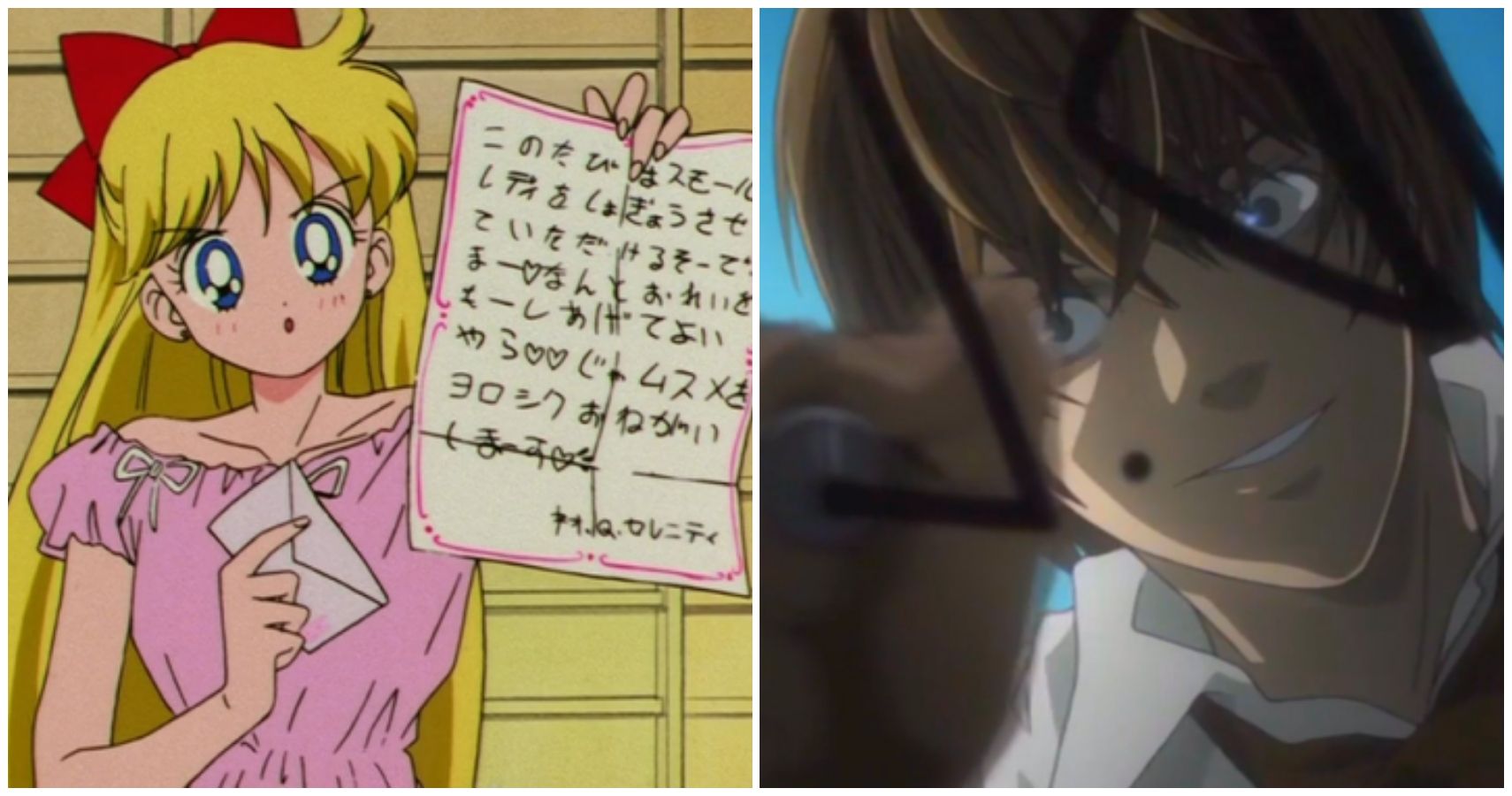
In Sailor Moon, for example, the characters read a letter from Usagi’s future self, Neo-Queen Serenity, that features katakana and hiragana, which are grouped as kana, but no kanji, essentially meaning that Usagi is functionally illiterate in the future.
2 The Number Four Often Spells Bad Luck
In the Chinese language and languages influenced by it, the words for “four” and “death” can be written and pronounced similarly. Because of this, the number four and similar numbers can often represent bad luck or an omen of death.
In Death Note, for example, this is possibly why it takes 40 seconds for someone to die of a heart attack when their name is written, unless another cause was given, and it also takes six minutes and forty minutes, or 400 seconds, to write details about the death.
1 Colors Can Be Different Depending On The Language
Colors are not universal depending on what language a person is speaking. For example, in some languages, green and blue are considered the same color. On the other hand, what would be considered different shades of a color in English could be considered outright different colors in another language.
In Mermaid Melody, for example, where each of the seven mermaid princesses is defined by a color, at least two of the mermaids, Hanon and Noel, have colors that would correspond to shades of blue in English. Some international translations got around this by translating Noel’s color as “indigo.”
About The Author