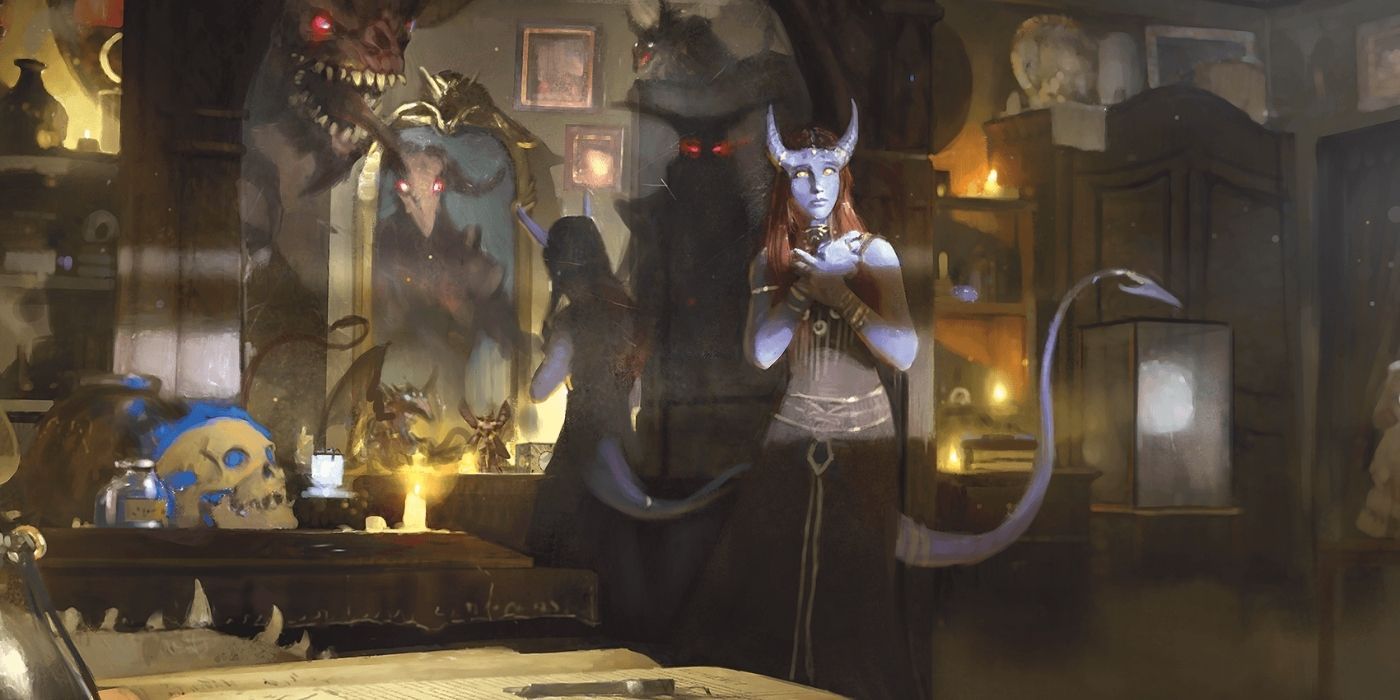
One of the most highly anticipated features in the new Dungeons & Dragons book Van Richten’s Guide to Ravenloft is the inclusion of Dark Gifts–supernatural abilities granted to characters that come with unnerving and unforeseen drawbacks. A person might inherit such abilities as part of an ancestral curse. Others could make a bargain with one of the Dark Powers or Darklords who rule the mist-haunted domains of Ravenloft.
Whatever their origin, Dark Gifts offer the players mysterious powers. Ravenloft is a setting rooted in horror, and the cost of these boons is more than many are willing to pay.
Click the button below to start this article in quick view.
From deals with the devil to the monstrous rage that accompanies a werewolf’s supernatural strength, Dark Gifts are an inherent part of the horror genre. In the context of D&D, most players whose character has a Dark Gift will work out the details with their DM at character creation. Ensuring that both a player and DM are in agreement is crucial in incorporating these into any game. However, if people want to incorporate Dark Gifts into existing characters, the book lists a few options. When someone is dying and has zero hit points, they might hear a whispered voice offering to save them. Alternatively, a Darklord might agree to help an adventuring party provided one of them accepts a Dark Gift. Breaking an oath or touching a cursed object might also impart such a cursed boon.
Van Richten’s Guide to Ravenloft has eight Dark Gifts that players can choose from. The first of these is Echoing Soul, in which a person is not entirely in possession of their own soul. Perhaps they have been reincarnated many times and have the knowledge and burdens of past lives, or they were merged with the soul of another being, or maybe time cracks around them and they bump into their past or future self. Echoing Soul grants a character proficiency in two additional skills and knowledge of another language (based on what languages or skills would be known to whoever they share their soul with). But whenever a player rolls a 1 on a D20 during an attack roll, saving throw or ability check, they trigger Intrusive Echoes. The player rolls a D6 to determine any of six possible effects the Echoes cause. The person could be frightened or charmed by a nearby creature, begin hallucinating that they are in another time or place (causing blindness to their actual environment) or become incapacitated as memories of another life completely overwhelm them.
Another particularly striking Dark Gift is Living Shadow, which causes a person’s shadow to operate independently. It moves on its own, perhaps appearing to hold a weapon or sporting a wound the player does not have, or the shadow could have a delayed time following the character’s movements. This Dark Gift allows a player to cast a shadowy version of Mage Hand. Additionally, their shadow can make a melee attack in place of a character but do so with an increased range of ten extra feet. However, as with Echoing Soul, rolling a 1 on an ability check, attack, or saving throw triggers an unpredictable effect where a player’s shadow operates independently to either assist or hinder them or someone else within 30 feet of them.
The final Dark Gift worth discussing here is Second Skin. This allows a person to manifest a second hidden aspect of themself, functioning like the Alter Self spell. Perhaps they take on the appearance of an angel or demon, or a fey with all the wild passions and moody dispositions, or their body could become living stone or machinery. Afterward, some vestigial part of the appearance will remain, such as glowing eyes or shriveled flightless wings. These features vanish after a long rest. However, characters with Second Skin can also be triggered to change involuntarily. Players select their trigger, such as a certain melody, the touch of silver or a specific phase of the moon. When encountering this trigger, the character must make a Charisma saving throw. If they fail, they will lose control and manifest this part of themself against their will. These are just some of the Dark Gifts included in Van Richten’s Guide to Ravenloft, and all of them are bound to add dramatic new dimensions to any game.
About The Author
