WARNING: The following contains spoilers for Star Wars: The Bad Batch Season 1, Episode 3, “Replacements,” which is streaming on Disney+.
Star Wars: The Bad Batch wasted no time delving into Star Wars‘ Galactic Civil War, or at least its origins. It began with Admiral Tarkin’s appearance in the inaugural episode, though it didn’t quite look that way at the time. With Crosshair’s assault on Saw Gerrera’s camp on Onderon in Season 1, Episode 3, “Replacements,” there can no longer be any doubt: the first shots of the Galactic Civil War have been fired.
The Bad Batch is essentially a continuation of Star Wars: The Clone Wars. However, with Order 66 completed and the Empire now firmly in control, the question remained of how much of a role the nascent Rebellion would play in the storyline. “Replacements” answered it in clear terms. Thanks to Crosshair, the fate of the Bad Batch is now irrevocably tied to the beginning of the Rebellion, though precisely how remains to be seen.
Click the button below to start this article in quick view.
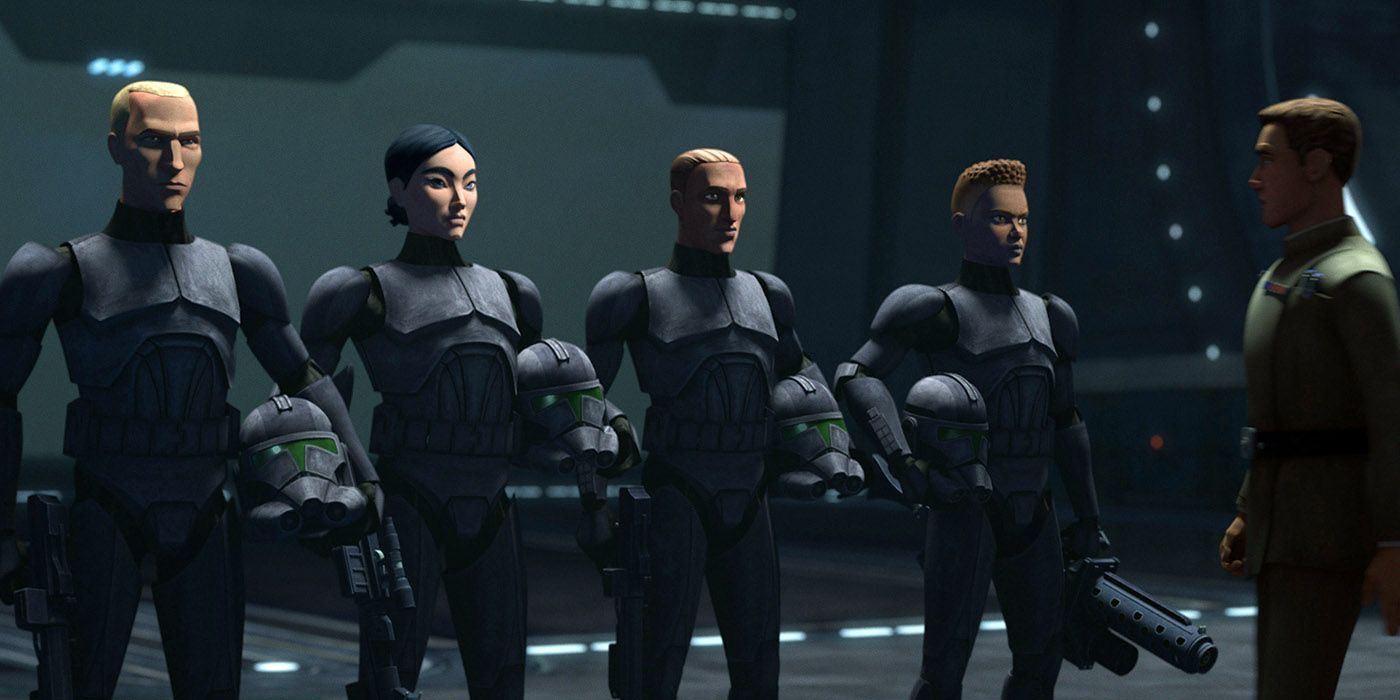
The break between the past conflict and the coming one was on full display this week, in both small ways and large. Crosshair’s regiment is the most obvious example. They are essentially the first Stormtroopers, who volunteered for the position of their own free will, and give the episode’s title a larger meaning as they step in to take the place of the Clones. They also demonstrate the same kind of brutality seen from the Stormtroopers in Rogue One: A Star Wars Story and Star Wars: Episode IV – A New Hope, and their collective principles are essentially snuffed out when Crosshair shoots the dissident in their ranks.
Similarly, Gerrera’s group represents the first real core of the Rebellion or at least one of them. Politicians like Mon Mothma and Bail Organa are out there too, as are surviving Jedi like Yoda, but all of them have reasons to keep themselves or their motives hidden. Gerrera has no such compunctions, and his open defiance of the Empire in “Replacements” marks not only the start of open conflict, but also – with Crosshair’s execution of civilians – the dire need to fight back against Palpatine’s rule.
Subtler cuts arrive as well, informing the nature of the conflict to come. “Replacements” quietly notes that the Stormtroopers are cut-rate replacements for Clones, which the Kaminoans don’t hesitate to point out. While Crosshair’s squad may be dangerous combatants, the seeds are planted for future batches of less-than-competent Imperial legions. For example, the emphasis on loyalty and obedience over all other qualities is likely a contributing factor to Stormtroopers’ notorious inaccuracy during the original trilogy. Similarly, the Kaminoans’ scheming demonstrates how the Empire makes enemies where none had previously existed and feeds fuel to a rebellion in the barest stages of infancy.
The Bad Batch remains as central to that as they do to Crosshair, setting them up as major players in the next stage of Star Wars’ history. Indeed, their connection to their former squadmate all but ensures their participation in these larger galactic events, if for no other reason than to rescue their friend from himself. Furthermore, their status as Clones leaves them uniquely suited to observe the transition from the Republic to the Empire: veterans of the earlier conflict forced to deal with a new war on entirely different terms.
It’s a tighter focus than The Clone Wars, which used a wide variety of protagonists across every aspect of the conflict. But that doesn’t preclude the same epic scope, and with “Replacements,” The Bad Batch announces its intention to portray huge events with far-reaching implications. There’s nothing bigger than the Rebellion, and the first shots fired speak to a great deal more to come. That means fans will get a lot more details about that still-murky part of Star Wars history as The Bad Batch moves forward.
Created by Dave Filoni, Star Wars: The Bad Batch stars Dee Bradley Baker, Andrew Kishino and Ming-Na Wen. New episodes premiere Fridays on Disney+.
About The Author
